
Introduction
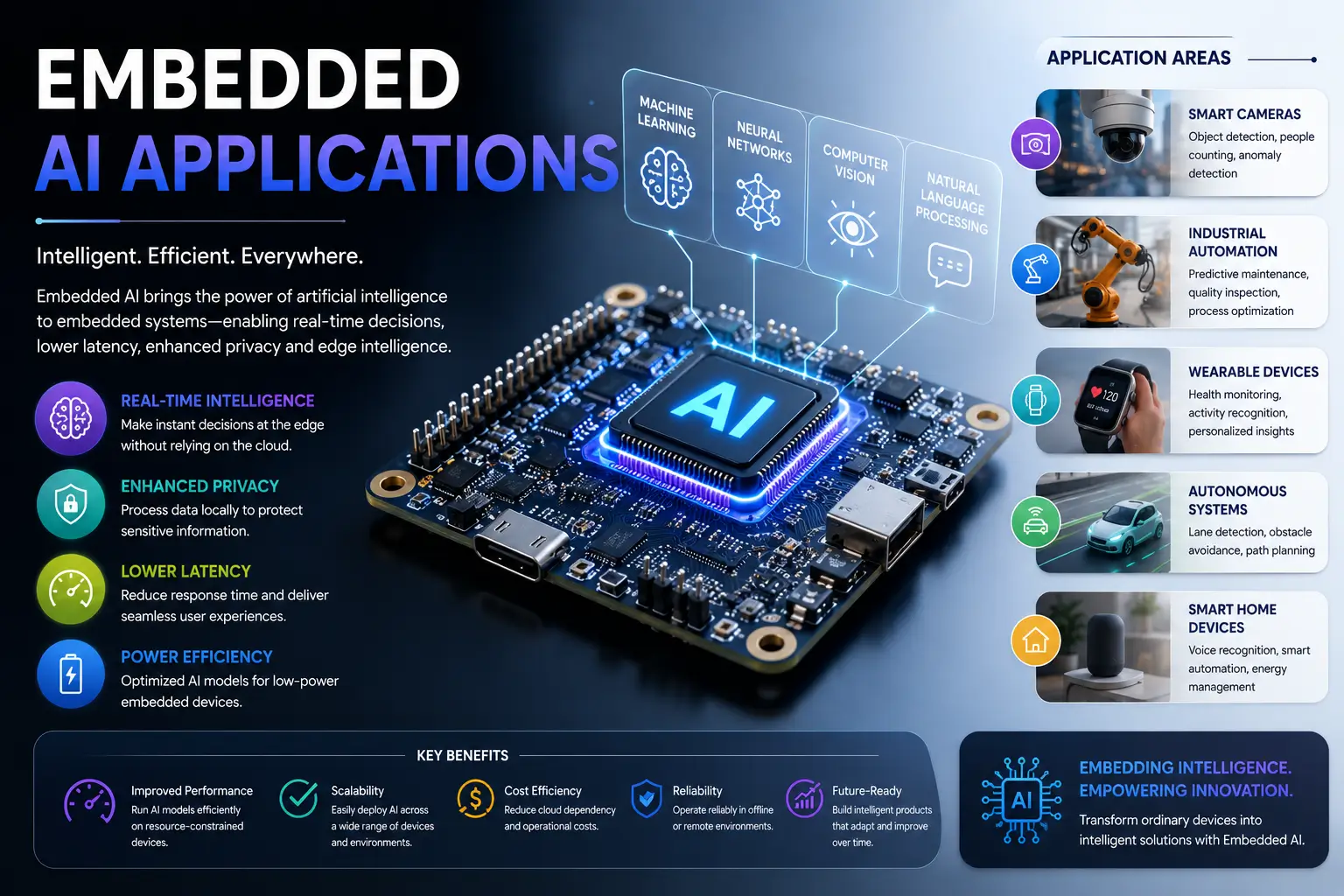
Artificial intelligence is transforming the way modern devices operate. From smart cameras and autonomous systems to industrial machines and healthcare equipment, AI is enabling devices to analyze information and make intelligent decisions. Embedded AI combines artificial intelligence with embedded systems to create powerful solutions that work efficiently in real-world environments.
The Embedded AI Applications Course introduces learners to the concepts, technologies, and practices required to develop AI-enabled embedded systems. The course explains how machine learning models are integrated into devices to perform intelligent tasks with speed and accuracy.
Embedded AI allows devices to process data locally through edge computing. Therefore, it reduces dependency on cloud platforms and improves response time, privacy, and reliability. As a result, organizations increasingly use embedded AI in automation, robotics, smart devices, and industrial applications.
Throughout this course, learners explore embedded system architecture, AI model deployment, hardware integration, sensors, edge computing, machine learning optimization, and real-time applications. Moreover, they understand how AI algorithms interact with embedded hardware to deliver intelligent functionality.
In addition, participants develop skills in AI implementation, system design, problem-solving, data processing, and technology integration. These abilities prepare learners for careers in artificial intelligence, embedded engineering, robotics, automation, and smart technology development.
By completing this course, learners will gain a strong foundation in embedded AI applications and understand how intelligent systems are designed for modern industries.
Course Overview
The Embedded AI Applications Course provides comprehensive training on artificial intelligence integration with embedded systems, edge computing, machine learning deployment, and intelligent device development. Furthermore, the course explains how AI-powered embedded solutions are created and optimized.
Fundamentals of Embedded AI
The course begins with embedded AI concepts, including artificial intelligence basics, embedded systems, edge intelligence, and the role of AI in smart devices.
Embedded Systems Architecture
Learners explore hardware components, processors, microcontrollers, system architecture, and communication between hardware and software components.
AI and Machine Learning Integration
This section explains how machine learning models are developed, optimized, and integrated into embedded devices.
Edge AI and Local Processing
Learners understand edge computing concepts, real-time data processing, local intelligence, and benefits of running AI models on devices.
Sensor Integration and Data Processing
The course covers sensors, data collection, signal processing, input handling, and preparing information for AI-based decision-making.
AI Model Deployment on Embedded Devices
Learners explore model conversion, optimization techniques, deployment workflows, and managing AI applications on embedded platforms.
Embedded AI Applications in Industries
This section explains applications of embedded AI in robotics, healthcare, automotive systems, smart homes, manufacturing, and automation.
Performance Optimization
Learners understand improving AI efficiency, reducing resource usage, enhancing accuracy, and managing embedded system limitations.
Security and Reliability in Embedded AI
The course covers device security, data protection, system reliability, and safe implementation of AI-enabled devices.
Future Trends in Embedded AI
Finally, learners explore emerging technologies such as edge intelligence, autonomous systems, smart devices, and next-generation AI applications.
Overall, this course combines artificial intelligence with embedded technology concepts. Therefore, learners develop the skills required to understand, design, and support intelligent embedded solutions.
What You Will Learn
The Embedded AI Applications Course equips learners with practical knowledge and skills required to understand AI-powered embedded systems.
Understand Embedded AI Concepts
Learners will understand artificial intelligence integration, embedded systems, edge computing, and intelligent device development.
Learn Embedded System Architecture
Participants will explore hardware components, processors, microcontrollers, and software interaction in embedded environments.
Apply AI Models in Embedded Devices
Learners will understand machine learning model integration, deployment methods, and AI optimization techniques.
Understand Edge AI Technologies
The course teaches local AI processing, real-time decision-making, and efficient data handling on embedded devices.
Work With Sensors and Data
Learners will explore sensor integration, data collection, processing methods, and AI-based analysis.
Develop Knowledge of Smart Applications
Participants will understand AI applications in robotics, automation, healthcare devices, automotive systems, and smart technologies.
Improve System Performance
Learners will learn optimization techniques for improving AI efficiency, speed, and reliability in embedded environments.
Understand Embedded AI Security
The course introduces device protection, secure AI implementation, privacy practices, and reliable system design.
Skills You Will Gain
After completing the Embedded AI Applications Course, learners will develop valuable AI, electronics, and technology skills.
Embedded AI Development Skills
Develop knowledge of integrating artificial intelligence with embedded systems and smart devices.
Machine Learning Deployment Skills
Learn AI model optimization, deployment processes, and machine learning implementation techniques.
Edge Computing Skills
Understand local data processing, real-time intelligence, and edge-based AI applications.
Hardware Integration Skills
Gain knowledge of sensors, processors, microcontrollers, and hardware-software communication.
AI Optimization Skills
Learn methods to improve AI performance, efficiency, and resource utilization.
Smart System Development Skills
Understand the development of intelligent devices for automation and industrial applications.
Problem-Solving Skills
Improve analytical thinking, system design, troubleshooting, and technology-based solution development.
Future Technology Skills
Gain awareness of emerging AI trends, robotics, automation, and intelligent device innovations.
Benefits of the Course
The Embedded AI Applications Course helps learners understand how artificial intelligence works with embedded systems to create smart and efficient devices. Moreover, the course develops practical skills required for designing, implementing, and managing AI-powered embedded solutions.
Understand AI-Enabled Embedded Systems
First, learners gain knowledge of how artificial intelligence is integrated into embedded devices. As a result, they understand how smart systems process data and make real-time decisions.
Develop Edge AI Knowledge
Edge AI is becoming important for faster and more reliable applications. Therefore, this course helps learners understand local AI processing, reduced latency, improved privacy, and efficient device operations.
Improve Machine Learning Deployment Skills
AI models require proper deployment for embedded environments. Additionally, learners develop knowledge of model optimization, integration methods, performance testing, and embedded AI implementation.
Learn Hardware and Software Integration
Embedded AI requires coordination between hardware and software components. Furthermore, learners understand processors, sensors, microcontrollers, and software frameworks used in intelligent systems.
Enhance Real-Time Data Processing Skills
Smart devices depend on accurate data handling. Consequently, learners gain knowledge of sensor data processing, real-time analysis, and AI-based decision-making.
Explore Industry Applications
Embedded AI is used in many industries. Moreover, learners understand applications in robotics, automotive systems, healthcare devices, industrial automation, and smart technologies.
Improve Problem-Solving Abilities
Developing embedded AI solutions requires analytical thinking. Therefore, learners improve their ability to identify challenges, optimize systems, and create effective technology solutions.
Understand AI Optimization Techniques
Embedded devices often have limited resources. In addition, learners explore techniques for improving AI model efficiency, reducing processing requirements, and enhancing system performance.
Build Future-Ready Technology Skills
Artificial intelligence and embedded technologies continue to grow. As a result, this course helps learners prepare for emerging opportunities in AI, robotics, automation, and intelligent systems.
Expand Career Opportunities
Organizations need professionals who can combine AI knowledge with embedded technology skills. Therefore, this course supports career growth in engineering, artificial intelligence, automation, and smart device development.
Who Should Enroll
The Embedded AI Applications Course is designed for individuals who want to understand artificial intelligence integration with embedded systems and intelligent devices.
Electronics Engineers
Electronics professionals can improve their understanding of AI-based embedded systems, hardware integration, and intelligent device development.
AI and Machine Learning Professionals
AI professionals can learn how machine learning models are optimized and deployed on embedded platforms.
Embedded System Developers
Developers can strengthen their skills in edge AI, sensor integration, device programming, and AI-powered applications.
Software Developers
Software professionals can understand how AI algorithms interact with embedded hardware systems.
Robotics Professionals
Robotics professionals can gain knowledge of intelligent control systems, automation, and AI-based robotic applications.
IoT Professionals
IoT specialists can learn how embedded AI improves smart devices, connected systems, and real-time decision-making.
Students and Graduates
Students pursuing computer science, electronics, artificial intelligence, robotics, or engineering fields can develop valuable industry skills.
Technology Enthusiasts
Individuals interested in AI, automation, smart devices, and emerging technologies can build practical knowledge through this course.
Career Opportunities
The demand for AI-powered devices and intelligent systems is increasing across industries. Therefore, professionals with embedded AI knowledge can explore various career opportunities in technology and engineering fields.
Potential career roles include:
- Embedded AI Engineer
- AI Engineer
- Machine Learning Engineer
- Embedded Systems Developer
- Edge AI Specialist
- Robotics Engineer
- IoT Engineer
- Automation Engineer
- Computer Vision Engineer
- AI Application Developer
- Hardware-Software Integration Engineer
- Research Engineer
- Artificial Intelligence Consultant
- Smart Device Developer
- Technology Specialist
Professionals can find opportunities in:
- Artificial intelligence companies
- Electronics industries
- Robotics organizations
- Automotive companies
- Healthcare technology firms
- Manufacturing industries
- IoT companies
- Research institutions
- Automation companies
- Semiconductor organizations
Furthermore, this course provides a strong foundation for advanced learning in artificial intelligence, robotics, IoT, machine learning, embedded systems, and automation technologies.
Certification
Upon successfully completing the Embedded AI Applications Course, learners will receive a Course Completion Certificate that recognizes their knowledge of embedded AI concepts, edge computing, machine learning integration, intelligent systems, and AI application development.
Moreover, the certificate demonstrates your commitment to learning advanced technology skills. It can strengthen your resume and showcase your ability to understand AI-powered embedded solutions.
Additionally, the certification validates your understanding of embedded architecture, AI deployment methods, sensor integration, performance optimization, and smart device applications. Consequently, it supports career growth in artificial intelligence, robotics, automation, electronics, and emerging technology fields.
Conclusion
Artificial intelligence and embedded systems are transforming modern technology by enabling devices to become smarter, faster, and more efficient. Organizations are increasingly adopting AI-powered devices for automation, robotics, healthcare, manufacturing, and smart applications. Therefore, professionals with embedded AI skills have valuable opportunities in the growing technology landscape.
The Embedded AI Applications Course provides comprehensive knowledge of AI integration, edge computing, embedded systems, machine learning deployment, sensor technology, and intelligent device development. Moreover, learners gain practical skills that help them understand how AI solutions operate in real-world environments.
Throughout the course, participants improve their technical knowledge, analytical abilities, problem-solving skills, and understanding of emerging technologies. In addition, they learn how AI and embedded systems work together to create innovative solutions.
Whether your goal is to build a career in artificial intelligence, robotics, embedded engineering, IoT, or automation, this course provides the foundation required for success. Ultimately, it prepares learners to support the development of smart devices, optimize AI applications, and contribute to the future of intelligent technology.
FAQ SECTION
1. What is the Embedded AI Applications Course?
The Embedded AI Applications Course teaches learners how artificial intelligence is integrated with embedded systems to create smart, automated, and intelligent devices.
2. Who should enroll in this course?
This course is suitable for AI professionals, engineers, developers, robotics specialists, IoT professionals, students, and technology enthusiasts.
3. Do I need prior AI or electronics experience?
Basic knowledge of technology concepts can be helpful. However, the course is suitable for learners who want to build understanding of embedded AI applications.
4. What topics are covered in this course?
The course covers embedded systems, edge AI, machine learning integration, sensors, AI deployment, smart devices, optimization, and real-world applications.
5. What skills will I gain after completing this course?
You will develop skills in embedded AI development, machine learning deployment, edge computing, hardware integration, automation, and intelligent system design.
6. Why is embedded AI important?
Embedded AI enables devices to process information locally, make faster decisions, improve efficiency, and support advanced automation solutions.
7. What career opportunities are available after completing this course?
Graduates can pursue careers as Embedded AI Engineers, AI Engineers, Robotics Engineers, IoT Developers, Automation Engineers, and Machine Learning Specialists.
8. Will I receive a certificate after completing this course?
Yes. Learners who successfully complete the course will receive a Course Completion Certificate validating their knowledge of embedded AI applications.
9. How does embedded AI differ from traditional AI systems?
Embedded AI runs intelligence directly on devices, allowing faster responses, better privacy, and reduced dependence on cloud processing.
10. How can this course benefit my career?
This course develops advanced AI and embedded technology skills, improves your professional profile, and prepares you for opportunities in emerging technology industries.





Reviews
There are no reviews yet.