
Introduction
Artificial intelligence has become an essential technology for modern businesses, research organizations, and industries. However, developing an AI solution is only one part of the process. Organizations must also manage AI systems throughout their entire lifecycle to ensure accuracy, reliability, security, and long-term performance.
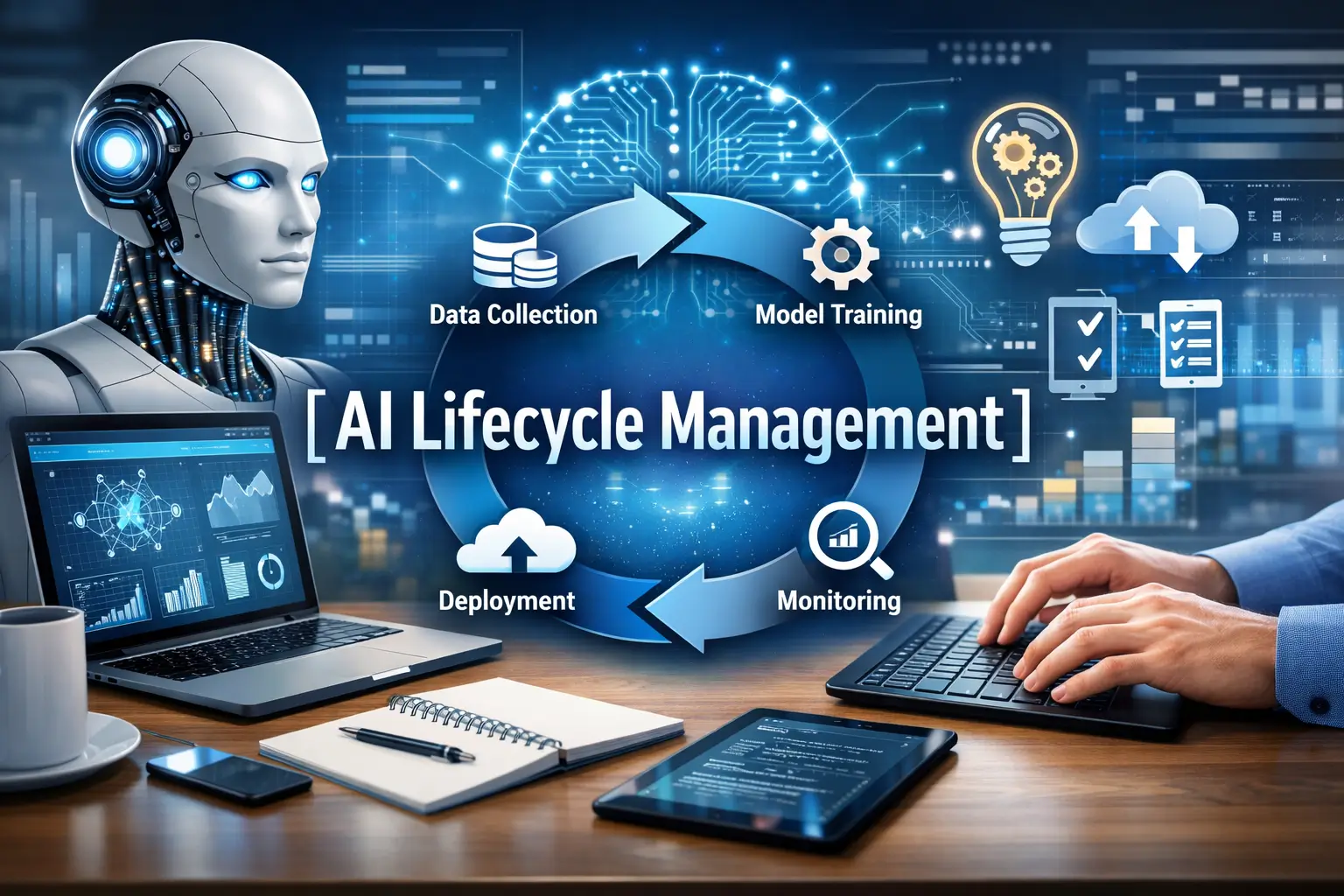
The AI Lifecycle Management Course introduces learners to the complete process of managing artificial intelligence systems from initial planning to continuous improvement. The course explains how AI projects are designed, developed, deployed, monitored, and optimized over time.
Effective AI lifecycle management helps organizations maintain high-quality AI solutions. Therefore, professionals need to understand data management, model development, deployment strategies, performance tracking, governance, and improvement techniques.
Throughout this course, learners explore AI lifecycle stages, machine learning workflows, data preparation, model training, evaluation methods, deployment processes, monitoring systems, and responsible AI practices. Moreover, they understand how organizations manage AI risks and improve AI performance.
In addition, participants develop skills in AI operations, analytical thinking, technology management, problem-solving, and decision-making. These abilities prepare learners for careers in artificial intelligence, data science, machine learning operations, and technology management.
By completing this course, learners will gain a strong understanding of AI lifecycle management and develop the ability to support efficient, ethical, and successful AI implementation.
Course Overview
The AI Lifecycle Management Course provides comprehensive training on managing artificial intelligence systems across different lifecycle stages. Furthermore, the course explains how organizations develop, operate, monitor, and improve AI solutions effectively.
Fundamentals of AI Lifecycle Management
The course begins with the basics of AI lifecycle management, including AI concepts, lifecycle stages, AI project planning, and the importance of managing AI systems effectively.
AI Project Planning and Strategy
Learners explore AI project objectives, requirement analysis, resource planning, data strategies, technology selection, and implementation approaches.
Data Preparation and Management
This section explains data collection, data cleaning, data processing, data quality management, and preparing datasets for AI development.
AI Model Development Process
Learners understand model creation, machine learning workflows, training methods, testing processes, validation techniques, and performance evaluation.
AI Model Deployment
The course covers deployment strategies, AI integration, production environments, scalability, automation, and managing AI applications.
AI Monitoring and Performance Management
Learners explore model monitoring, performance tracking, accuracy evaluation, system analysis, and identifying improvement opportunities.
AI Governance and Risk Management
This section explains responsible AI practices, ethical considerations, security management, compliance requirements, and AI risk control.
Machine Learning Operations (MLOps)
Learners understand MLOps concepts, automation workflows, model versioning, continuous integration, and AI system maintenance.
AI Optimization and Improvement
The course covers model updates, performance enhancement, feedback analysis, system optimization, and continuous AI improvement methods.
Future Trends in AI Lifecycle Management
Finally, learners explore emerging AI technologies, automated AI management, advanced analytics, responsible AI development, and future industry trends.
Overall, this course combines artificial intelligence concepts with management practices. Therefore, learners develop the skills required to manage AI systems efficiently and support successful AI-driven solutions.
What You Will Learn
The AI Lifecycle Management Course equips learners with practical knowledge and skills required to manage AI systems throughout their lifecycle.
Understand AI Lifecycle Stages
Learners will understand AI planning, development, deployment, monitoring, and improvement stages.
Manage AI Projects Effectively
Participants will learn AI project planning, requirement analysis, resource management, and implementation strategies.
Handle AI Data Processes
Learners will understand data collection, preparation, quality management, and data processing techniques.
Understand AI Model Development
The course teaches model training, testing, evaluation, validation, and performance improvement methods.
Deploy AI Solutions
Learners will explore AI deployment strategies, system integration, scalability, and operational management.
Monitor AI Performance
Participants will learn model tracking, performance analysis, accuracy monitoring, and optimization techniques.
Apply AI Governance Practices
Learners will understand ethical AI, security, compliance, risk management, and responsible AI implementation.
Learn MLOps Practices
The course introduces automation workflows, model management, continuous monitoring, and AI operations practices.
Skills You Will Gain
After completing the AI Lifecycle Management Course, learners will develop valuable artificial intelligence and management skills.
AI Lifecycle Management Skills
Develop the ability to manage AI systems from planning and development to deployment and improvement.
AI Project Management Skills
Learn AI planning, workflow management, resource coordination, and implementation strategies.
Data Management Skills
Gain knowledge of data preparation, quality control, processing methods, and AI data workflows.
AI Model Management Skills
Understand model evaluation, deployment, monitoring, version control, and optimization techniques.
MLOps Skills
Learn automation, continuous integration, model tracking, and AI operational practices.
AI Governance Skills
Develop knowledge of ethical AI, compliance, security, risk management, and responsible AI practices.
Analytical Skills
Improve data analysis, performance evaluation, problem-solving, and technology-based decision-making abilities.
Future Technology Skills
Gain awareness of emerging AI trends, automation solutions, intelligent systems, and modern AI management practices.
Benefits of the Course
The AI Lifecycle Management Course helps learners understand how artificial intelligence systems are created, managed, monitored, and improved. Moreover, the course develops practical skills required to support successful AI implementation in modern organizations.
Understand Complete AI Management Processes
First, learners gain knowledge of every AI lifecycle stage, including planning, development, deployment, monitoring, and optimization. As a result, they can understand how AI solutions operate from beginning to end.
Improve AI Project Management Skills
AI projects require proper planning and coordination. Therefore, this course helps learners understand AI project requirements, workflows, resource planning, and implementation strategies.
Develop Data Management Knowledge
High-quality data is essential for successful AI systems. Additionally, learners understand data preparation, data quality improvement, processing methods, and effective data management practices.
Enhance AI Model Monitoring Skills
AI systems require continuous evaluation. Furthermore, learners develop skills in model performance tracking, accuracy analysis, error identification, and improvement planning.
Learn Responsible AI Practices
Ethical AI development is becoming increasingly important. Therefore, learners explore AI governance, security practices, compliance requirements, fairness, transparency, and responsible AI management.
Build MLOps Understanding
Modern organizations use MLOps to manage AI operations efficiently. Moreover, learners gain knowledge of automation workflows, model updates, version management, and continuous AI delivery.
Improve Decision-Making Through AI Insights
AI systems provide valuable business insights. Consequently, learners understand how AI performance data supports better decisions and improves organizational efficiency.
Develop AI Optimization Skills
AI solutions require regular improvements to maintain performance. In addition, learners learn model optimization methods, feedback analysis, system updates, and performance enhancement techniques.
Prepare for Future AI Careers
Artificial intelligence continues to grow across industries. Therefore, this course helps learners build relevant skills for careers in AI management, machine learning operations, data analytics, and technology leadership.
Expand Professional Opportunities
Organizations need professionals who can manage AI systems effectively. As a result, learners can explore career opportunities in technology, analytics, automation, and AI-driven business solutions.
Who Should Enroll
The AI Lifecycle Management Course is designed for individuals who want to understand AI operations, artificial intelligence management, and modern technology implementation.
AI Professionals
AI professionals can improve their understanding of AI workflows, model management, monitoring processes, and lifecycle optimization.
Data Analysts
Data analysts can develop knowledge of AI systems, data processes, performance evaluation, and AI-driven decision-making.
Machine Learning Professionals
Machine learning professionals can strengthen their skills in model deployment, monitoring, MLOps, and AI system management.
Software Developers
Developers can understand how AI solutions are planned, integrated, maintained, and improved in real-world environments.
Technology Professionals
IT and technology professionals can gain knowledge of AI governance, automation, digital transformation, and AI operations.
Business Professionals
Business professionals can learn how AI systems support business decisions, process improvement, and innovation.
Students and Graduates
Students pursuing artificial intelligence, computer science, data science, technology, or management fields can develop valuable industry-ready skills.
Entrepreneurs and Business Owners
Entrepreneurs can understand how to implement and manage AI solutions for business growth and operational improvement.
Career Opportunities
Artificial intelligence adoption is increasing across industries. Therefore, professionals with AI lifecycle management skills can explore multiple career opportunities in technology, analytics, and business innovation.
Potential career roles include:
- AI Lifecycle Manager
- AI Project Manager
- Machine Learning Operations Specialist
- AI Operations Analyst
- Data Analyst
- AI Consultant
- Machine Learning Engineer
- AI Product Manager
- Data Science Associate
- MLOps Engineer
- AI Governance Specialist
- Technology Consultant
- Automation Specialist
- Business Intelligence Analyst
- Digital Transformation Specialist
Professionals can find opportunities in:
- Technology companies
- Software development organizations
- Healthcare industries
- Financial institutions
- Manufacturing companies
- Research organizations
- Consulting firms
- E-commerce businesses
- Government technology projects
- Artificial intelligence startups
Furthermore, this course provides a strong foundation for advanced learning in artificial intelligence, machine learning, data science, automation, MLOps, and digital transformation.
Certification
Upon successfully completing the AI Lifecycle Management Course, learners will receive a Course Completion Certificate that recognizes their knowledge of AI lifecycle processes, model management, deployment strategies, monitoring techniques, governance practices, and AI optimization methods.
Moreover, the certificate demonstrates your commitment to professional development and continuous learning in artificial intelligence and technology management. It can strengthen your resume and showcase your ability to support AI-driven projects.
Additionally, the certification validates your understanding of AI workflows, data management, machine learning operations, responsible AI practices, and performance improvement strategies. Consequently, it supports career growth in artificial intelligence, data analytics, technology management, and digital transformation roles.
Conclusion
Artificial intelligence systems require proper management throughout their lifecycle to deliver accurate, reliable, and valuable results. Organizations need professionals who can understand AI processes, manage AI operations, monitor performance, and improve intelligent solutions. Therefore, AI lifecycle management has become an important skill in the modern technology landscape.
The AI Lifecycle Management Course provides comprehensive knowledge of AI planning, development processes, deployment methods, monitoring systems, governance practices, and optimization strategies. Moreover, learners develop practical skills that help them support successful AI implementation.
Throughout the course, participants improve their understanding of artificial intelligence workflows, data management, model evaluation, automation, and responsible AI practices. In addition, they learn how organizations use AI technologies to improve efficiency and create business value.
Whether your goal is to build a career in artificial intelligence, enhance your technology skills, manage AI projects, or understand modern AI operations, this course provides the knowledge required for success. Ultimately, it prepares learners to manage AI solutions effectively, support innovation, and contribute to the future of intelligent technologies.
FAQ SECTION
1. What is the AI Lifecycle Management Course?
The AI Lifecycle Management Course teaches learners how to manage artificial intelligence systems through planning, development, deployment, monitoring, governance, and optimization stages.
2. Who should enroll in this course?
This course is suitable for AI professionals, data analysts, developers, technology professionals, business professionals, students, entrepreneurs, and anyone interested in AI management.
3. Do I need prior AI experience?
No. The course is suitable for beginners as well as professionals who want to understand AI lifecycle processes and management practices.
4. What topics are covered in this course?
The course covers AI planning, data management, model development, deployment, monitoring, MLOps, AI governance, security, and optimization strategies.
5. What skills will I gain after completing this course?
You will develop skills in AI lifecycle management, AI project planning, data handling, model monitoring, MLOps, governance, and AI optimization.
6. Why is AI lifecycle management important?
AI lifecycle management helps organizations maintain accurate, secure, reliable, and efficient AI systems throughout their operational life.
7. What career opportunities are available after completing this course?
Graduates can pursue careers as AI Lifecycle Managers, MLOps Engineers, AI Consultants, Data Analysts, AI Project Managers, and Technology Specialists.
8. Will I receive a certificate after completing this course?
Yes. Learners who successfully complete the course will receive a Course Completion Certificate validating their knowledge of AI lifecycle management.
9. How does this course help in AI implementation?
The course helps learners understand AI planning, development, deployment, monitoring, and improvement processes required for successful AI implementation.
10. How can this course benefit my career?
This course strengthens your AI and technology management skills, improves your professional profile, and prepares you for emerging career opportunities in artificial intelligence and digital transformation.





Reviews
There are no reviews yet.