
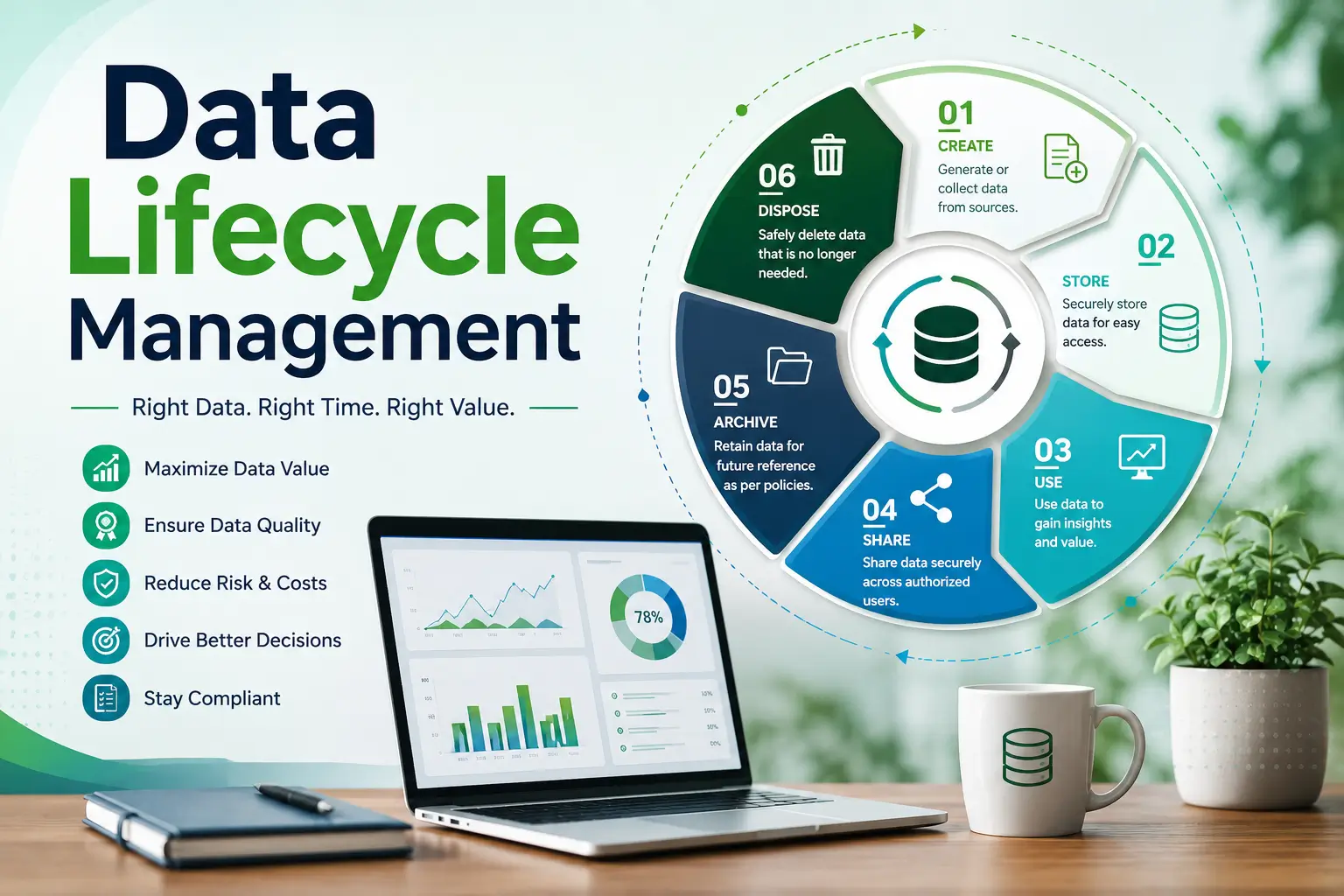
Data Lifecycle Management Course
Data has become one of the most valuable resources for modern organizations. Managing data effectively throughout its entire journey is essential for improving efficiency, ensuring security, meeting compliance requirements, and supporting better decision-making. The Data Lifecycle Management Course is designed to help learners understand how organizations manage data from creation and storage to usage, maintenance, archiving, and disposal.
This course provides practical knowledge of data management strategies, governance principles, security practices, storage methods, compliance requirements, and lifecycle optimization techniques. Whether you are a data professional, IT specialist, business analyst, database administrator, student, or technology enthusiast, this course helps you develop essential skills for managing enterprise data effectively.
Course Overview
The Data Lifecycle Management Course introduces learners to the complete process of managing information throughout its lifecycle. The course focuses on how organizations collect, organize, protect, use, maintain, and retire data efficiently.
You will learn about data creation, storage management, data quality, security controls, governance frameworks, retention strategies, backup processes, compliance requirements, and data disposal methods. The course explains how effective lifecycle management improves business operations and reduces data-related risks.
What You Will Learn
By completing this course, you will learn how to:
- Understand data lifecycle management concepts
- Manage data from creation to disposal
- Apply data governance principles
- Improve data quality and organization
- Understand data storage strategies
- Protect sensitive information
- Manage data retention policies
- Support compliance requirements
- Apply backup and recovery practices
- Understand data archiving methods
- Improve enterprise data management
- Follow data management best practices
These skills help learners manage valuable organizational information effectively.
Course Curriculum
The course begins with an introduction to Data Lifecycle Management and explains the importance of structured data management practices. Learners explore how data moves through different stages and how organizations maintain control over information.
As the course progresses, topics include data collection, storage, processing, security, governance, quality management, backup and recovery, retention strategies, compliance, archiving, migration, and secure data disposal.
Practical examples demonstrate how businesses manage large volumes of information while maintaining security, accuracy, and accessibility.
Skills You Will Gain
After completing the Data Lifecycle Management Course, you will be able to:
- Understand complete data lifecycle processes
- Manage organizational data effectively
- Apply data governance techniques
- Improve data quality standards
- Understand storage and backup methods
- Support data security practices
- Manage data retention requirements
- Apply compliance principles
- Organize enterprise information
- Understand data migration processes
- Improve data management workflows
- Support data-driven operations
These skills are valuable in modern data-focused organizations.
Benefits of the Course
The Data Lifecycle Management Course helps learners develop important skills for managing data in today’s digital environment. Organizations generate massive amounts of information and need professionals who can maintain data quality, security, and accessibility.
This course improves understanding of data governance, information management, compliance, and operational efficiency. Learners gain knowledge that supports better decision-making and helps organizations reduce risks associated with poor data management.
The course also provides a strong foundation for advanced topics such as data engineering, cloud data management, cybersecurity, and business intelligence.
Who Should Enroll
This course is ideal for:
- Data Analysts
- Database Administrators
- Data Engineers
- IT Professionals
- Business Analysts
- Data Governance Professionals
- Information Management Specialists
- Software Professionals
- Cloud Professionals
- Students
- Researchers
- Technology Managers
- Business Professionals
- Data Management Beginners
Basic computer knowledge is helpful but not required.
Career Opportunities
After completing this course, learners can pursue or strengthen careers such as:
- Data Management Specialist
- Data Governance Analyst
- Database Administrator
- Data Analyst
- Information Management Specialist
- Data Quality Analyst
- Data Engineer
- Business Intelligence Analyst
- IT Data Consultant
- Data Operations Specialist
These opportunities are available across technology, finance, healthcare, education, government, retail, and enterprise sectors.
Certification
Upon successful completion of the Data Lifecycle Management Course, learners receive a professional certificate recognizing their knowledge of data management processes, governance practices, security principles, retention strategies, and lifecycle management techniques. This certification enhances your professional profile and demonstrates your ability to manage organizational data effectively.
Why Choose This Course?
The Data Lifecycle Management Course combines essential data management concepts with practical organizational strategies to prepare learners for modern data challenges. Through flexible online learning, real-world examples, and industry-focused content, you will gain the skills needed to manage data efficiently throughout its lifecycle. Whether you are starting your data career or expanding your technology expertise, this course provides valuable knowledge for professional growth.
FAQ SECTION
1. What is the Data Lifecycle Management Course?
This course teaches how organizations manage data from creation and storage to usage, archiving, and secure disposal.
2. Who should enroll in this course?
Data analysts, database professionals, IT specialists, business analysts, students, and anyone interested in data management.
3. Do I need prior data management experience?
No. The course introduces data lifecycle concepts from the basics.
4. What skills will I gain?
You will learn data governance, storage management, security, retention, compliance, and lifecycle optimization techniques.
5. Is the course available online?
Yes. The course is available online with flexible learning options.
6. Will I receive a certificate?
Yes. A professional certificate is provided after successful completion of the course.
7. Why is Data Lifecycle Management important?
It helps organizations maintain data quality, security, compliance, and efficient information management.
8. What are the stages of the data lifecycle?
The stages include data creation, collection, storage, processing, usage, maintenance, archiving, and disposal.
9. What career opportunities are available after this course?
Learners can pursue roles such as Data Management Specialist, Data Governance Analyst, Database Administrator, and Data Analyst.
10. Does this course cover data security?
Yes. The course covers data protection, security practices, compliance, and safe data management methods.



Reviews
There are no reviews yet.