
Introduction
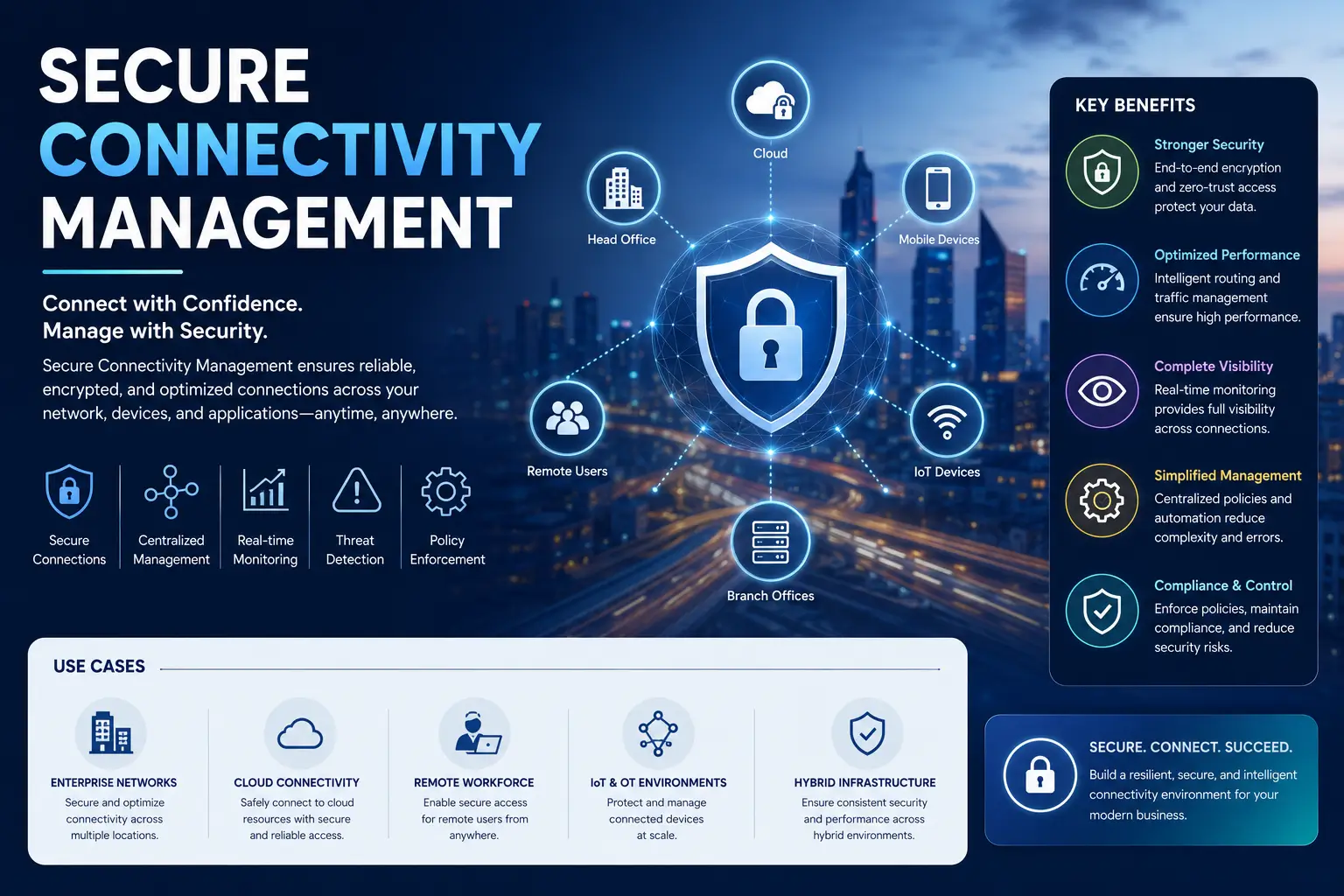
The Secure Connectivity Management Course is a comprehensive training program designed to help learners develop the knowledge and practical skills required to establish, maintain, and secure network connectivity across modern digital environments. As organizations increasingly rely on cloud computing, remote work, mobile devices, and distributed networks, secure connectivity has become essential for protecting sensitive information, ensuring uninterrupted communication, and defending against cyber threats.
This course introduces learners to secure network architecture, Virtual Private Networks (VPNs), firewalls, encryption, authentication, secure remote access, wireless security, network segmentation, access control, monitoring tools, incident response, and cybersecurity best practices. Participants also gain practical knowledge of maintaining secure communication channels while ensuring network performance and regulatory compliance.
Whether you are starting a career in networking or looking to strengthen your cybersecurity expertise, this course provides practical knowledge that supports long-term professional development.
Course Overview
Secure connectivity management focuses on designing, implementing, monitoring, and maintaining protected network connections that allow users, systems, and devices to communicate safely. Effective connectivity management reduces security risks, improves business continuity, and supports reliable IT operations.
Throughout this course, learners explore secure networking technologies, VPN implementation, firewall configuration concepts, authentication methods, encryption protocols, wireless network protection, network monitoring, access management, compliance requirements, and risk mitigation strategies. The curriculum combines theoretical concepts with practical applications to prepare learners for real-world networking and cybersecurity environments.
What You Will Learn
During this course, learners will study:
- Fundamentals of secure connectivity management
- Secure network architecture
- Virtual Private Networks (VPNs)
- Firewall concepts and management
- Encryption techniques
- Authentication and authorization
- Multi-factor authentication (MFA)
- Secure remote access
- Wireless network security
- Network segmentation
- Access control principles
- Network monitoring and logging
- Cybersecurity best practices
- Compliance and regulatory requirements
- Incident response fundamentals
Skills You Will Gain
Upon successful completion of the course, learners will develop valuable skills including:
- Secure network management
- VPN implementation concepts
- Firewall administration
- Network security monitoring
- Encryption management
- Authentication configuration
- Access control implementation
- Wireless security management
- Cybersecurity risk assessment
- IT troubleshooting
These skills are highly valued across IT companies, cybersecurity firms, cloud service providers, financial institutions, healthcare organizations, government agencies, telecommunications companies, and enterprise technology environments.
Benefits of the Course
This course provides learners with a comprehensive understanding of secure connectivity management and modern network protection practices. Participants strengthen their knowledge of secure communications, network monitoring, access management, cybersecurity principles, and infrastructure security while improving technical and analytical skills.
The program also enhances problem-solving abilities, risk assessment, security awareness, communication, and professional confidence. As cyber threats continue to evolve, professionals with secure networking expertise remain highly sought after across industries.
Who Should Enroll?
This course is ideal for:
- IT students
- Network administrators
- System administrators
- Cybersecurity professionals
- Cloud engineers
- Technical support professionals
- Infrastructure engineers
- Information security professionals
- Network support technicians
- Individuals interested in secure networking
No previous secure connectivity management experience is required, making this course suitable for beginners as well as experienced IT professionals.
Career Opportunities
After completing this course, learners may pursue opportunities such as:
- Network Administrator
- Network Security Analyst
- Cybersecurity Specialist
- Systems Administrator
- IT Infrastructure Engineer
- Cloud Support Engineer
- Security Operations Analyst
- Information Security Administrator
- Network Support Engineer
- IT Security Consultant
The knowledge gained through this course can be applied across enterprise IT departments, cloud service providers, cybersecurity companies, financial organizations, healthcare institutions, government agencies, educational organizations, and technology consulting firms.
Certification
Upon successful completion of the course, participants receive a professional certification recognizing their understanding of secure connectivity management, VPN technologies, firewall concepts, authentication methods, encryption, access control, network monitoring, and cybersecurity best practices. This certification enhances professional credibility and supports career advancement in networking and information security.
Why Choose This Course?
This course combines networking fundamentals with cybersecurity best practices to provide learners with a comprehensive educational experience. The curriculum focuses on secure network design, VPN technologies, firewall management, authentication, encryption, wireless security, network monitoring, compliance, and incident response.
Learners gain practical knowledge that prepares them to manage secure network connections while protecting digital assets and maintaining reliable business communications. Whether your goal is to begin a networking career or strengthen your expertise in secure connectivity management, this course provides the essential knowledge and confidence needed for long-term professional success.
Start Your Learning Journey
Secure connectivity is essential for protecting digital communication, supporting remote work, and maintaining business continuity. By completing this course, learners develop practical networking knowledge, cybersecurity skills, and professional confidence that prepare them for rewarding careers in IT infrastructure, cloud computing, enterprise networking, and information security.
FAQ Section
1. What is secure connectivity management?
Secure connectivity management involves establishing, managing, monitoring, and protecting network connections to ensure secure communication between users, devices, applications, and systems.
2. Is this course suitable for beginners?
Yes. The course is designed for beginners, IT students, networking professionals, and anyone interested in cybersecurity and secure networking.
3. What topics are covered?
The course covers VPN technologies, firewalls, encryption, authentication, secure remote access, wireless security, network monitoring, access control, compliance requirements, and cybersecurity best practices.
4. Will I receive a certificate?
Yes. Participants receive a professional certificate after successfully completing the course.
5. Do I need prior networking experience?
No. The course explains secure connectivity concepts in a beginner-friendly format.
6. Who should enroll in this course?
IT students, network administrators, cybersecurity professionals, cloud engineers, system administrators, technical support staff, infrastructure engineers, and individuals interested in secure networking.
7. Is the course available online?
Yes. The course is fully online with flexible learning, allowing participants to study according to their own schedule.
8. What skills will I gain?
You will develop skills in secure networking, VPN implementation, firewall management, encryption, authentication, network monitoring, access control, wireless security, cybersecurity, and troubleshooting.
9. Can this course improve my career opportunities?
Yes. Secure connectivity management skills are highly valued across IT companies, cybersecurity firms, cloud service providers, financial institutions, healthcare organizations, and government agencies.
10. Why is secure connectivity management important?
Secure connectivity management protects sensitive information, supports secure remote access, prevents cyber threats, improves network reliability, ensures regulatory compliance, and maintains business continuity.




Reviews
There are no reviews yet.