
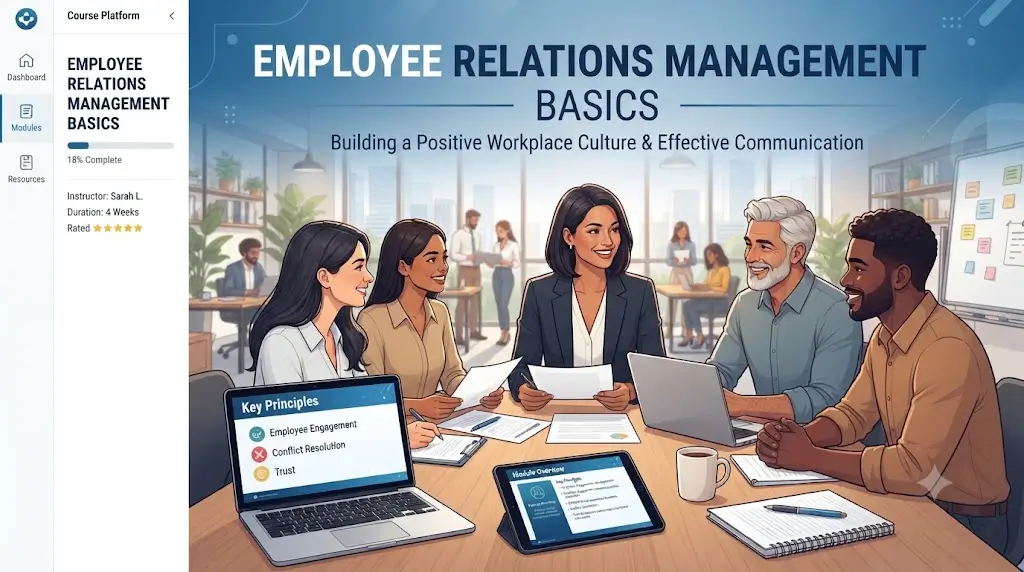
Course Overview
The Employee Relations Management Basics Course provides learners with essential knowledge of managing professional relationships between employees and organizations. Positive employee relations create a supportive workplace where individuals feel respected, valued, and motivated to contribute effectively.
Modern organizations understand that strong workplace relationships are important for improving employee satisfaction, reducing conflicts, increasing engagement, and maintaining a healthy organizational culture. This course explains the principles, practices, and communication approaches required to build effective employee relationships.
Understanding Employee Relations Management Basics
Employee Relations Management Basics focuses on developing strategies and practices that help organizations maintain positive interactions between employees, managers, and HR teams.
Learners will explore:
- Employee relations fundamentals
- Workplace relationship management
- Employee communication
- HR support practices
- Workplace policies
- Professional relationship building
Importance of Employee Relations
Strong employee relationships contribute to better teamwork, higher morale, and improved workplace performance.
Key benefits include:
- Improved employee satisfaction
- Better workplace communication
- Reduced conflicts
- Higher employee engagement
- Stronger trust between employees and management
- Positive organizational culture
Workplace Communication and Collaboration
Effective communication is the foundation of successful employee relationships.
This section covers:
- Active listening
- Professional communication
- Employee feedback
- Manager-employee discussions
- Collaboration techniques
- Workplace interaction skills
Managing Employee Concerns
HR professionals and managers must understand how to handle employee concerns fairly and professionally.
Topics include:
- Employee complaints
- Workplace issues
- Problem-solving approaches
- Fair decision-making
- Employee support methods
- Resolution practices
Conflict Management in Employee Relations
Workplace conflicts can affect productivity and employee satisfaction if not managed properly.
Learners will understand:
- Causes of workplace conflicts
- Conflict prevention
- Resolution techniques
- Mediation approaches
- Maintaining professional relationships
Building a Positive Workplace Culture
A healthy workplace culture encourages trust, respect, inclusion, and employee commitment.
Topics covered include:
- Organizational values
- Employee recognition
- Workplace ethics
- Team collaboration
- Employee wellbeing
- Supportive leadership
Role of HR in Employee Relations
Human Resources teams play an important role in maintaining fair and effective workplace relationships.
Learners will explore:
- HR policies
- Employee support systems
- Workplace guidelines
- Performance discussions
- Employee engagement practices
Skills You Will Gain
After completing this course, learners will be able to:
- Apply Employee Relations Management Basics concepts
- Improve workplace communication
- Support positive employee relationships
- Handle workplace concerns professionally
- Manage employee conflicts
- Strengthen employee engagement
- Promote a respectful work environment
- Support HR relationship practices
Who Should Enroll?
This course is suitable for:
- HR Professionals
- HR Executives
- HR Managers
- Team Leaders
- Supervisors
- Business Owners
- Entrepreneurs
- Students
- Working Professionals
Career Opportunities
Completing this course supports careers such as:
- HR Executive
- Employee Relations Specialist
- HR Manager
- HR Coordinator
- Employee Engagement Specialist
- Workplace Relations Consultant
- People Operations Executive
- Human Resources Officer
Certification Benefits
Completing this course demonstrates practical knowledge of employee relationships, workplace communication, conflict management, HR practices, and organizational culture development. These skills help professionals manage people effectively and support positive workplace environments.
Conclusion
The Employee Relations Management Basics Course equips learners with the knowledge required to build stronger workplace relationships, improve communication, manage employee concerns, and support organizational success. By understanding effective employee relations practices, professionals can contribute to a more productive and positive workplace culture.
Frequently Asked Questions (FAQs)
1. What is Employee Relations Management Basics?
Employee Relations Management Basics introduces the fundamental concepts and practices used to build positive relationships between employees, managers, and organizations through effective communication and support.
2. Who should enroll in this course?
This course is suitable for HR professionals, HR executives, managers, supervisors, team leaders, business owners, students, and working professionals who want to understand workplace relationship management.
3. Is this course suitable for beginners?
Yes. The course is designed for beginners and professionals who want to learn the basic principles of employee relations, workplace communication, conflict handling, and HR support practices.
4. What topics are covered in this course?
The course covers employee communication, workplace relationships, employee concerns, conflict management, HR practices, workplace culture, employee engagement, and professional relationship building.
5. Why is employee relations important in an organization?
Effective employee relations improve workplace trust, increase employee satisfaction, reduce conflicts, strengthen teamwork, and create a supportive work environment.
6. Will I learn how to handle employee concerns?
Yes. The course explains practical methods for understanding employee issues, improving communication, resolving workplace challenges, and supporting fair solutions.
7. What skills will I gain after completing this course?
You will develop skills in workplace communication, employee support, conflict management, relationship building, problem-solving, HR practices, and organizational culture improvement.
8. Does the course cover conflict management?
Yes. The course includes basic conflict handling approaches, prevention techniques, professional discussions, and methods for maintaining healthy workplace relationships.
9. What career opportunities are available after completing this course?
After completing this course, learners can pursue roles such as HR Executive, Employee Relations Specialist, HR Manager, HR Coordinator, Employee Engagement Specialist, Workplace Relations Consultant, People Operations Executive, and Human Resources Officer.
10. How will this course support my professional growth?
This course helps professionals improve their understanding of workplace relationships, strengthen communication skills, develop HR capabilities, and support a positive organizational environment.





Reviews
There are no reviews yet.