
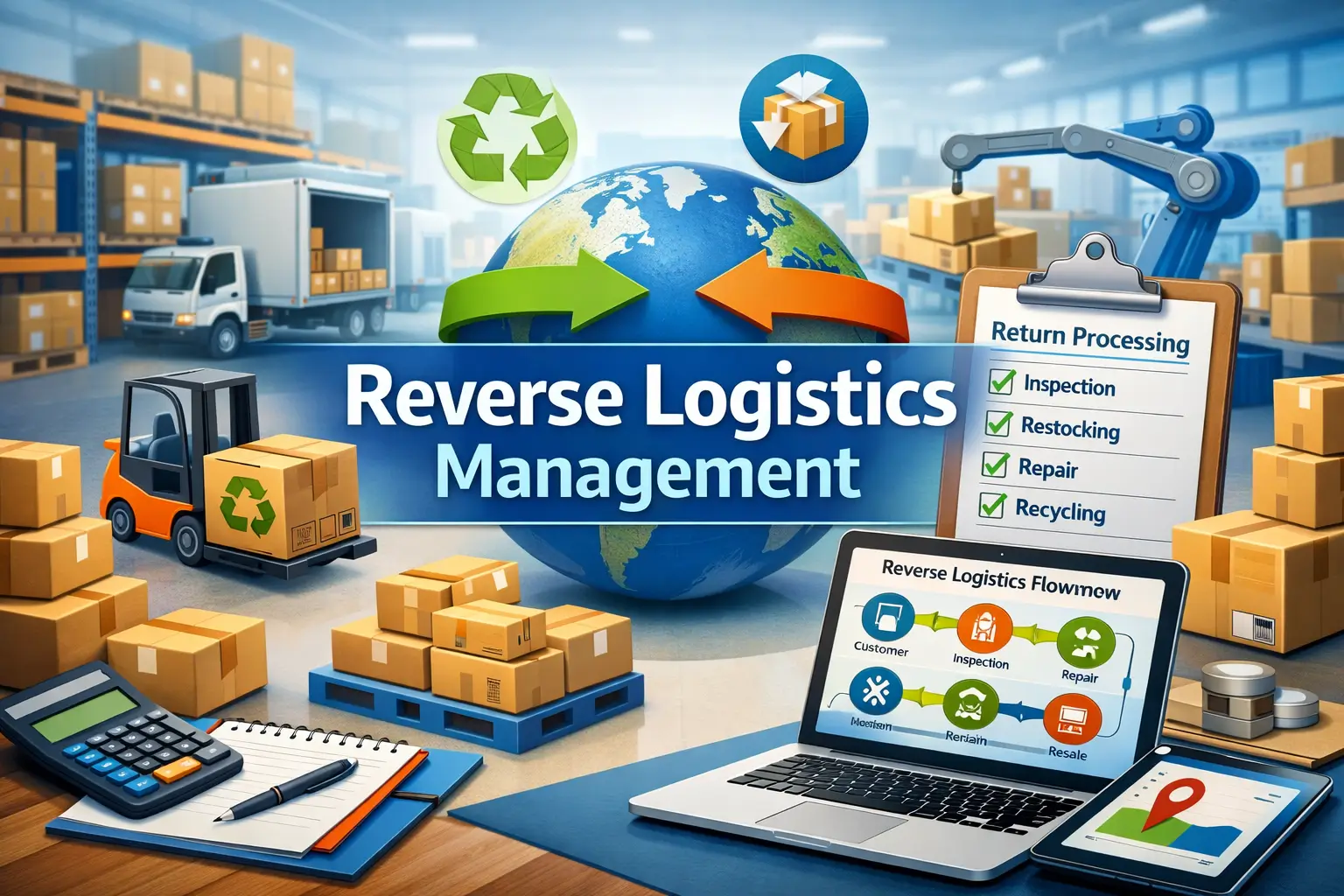
Reverse Logistics Management Course
The Reverse Logistics Management Course is designed to help logistics professionals, supply chain managers, warehouse supervisors, operations managers, procurement specialists, retail professionals, manufacturing personnel, entrepreneurs, students, and aspiring logistics professionals develop the knowledge and practical skills required to manage product returns, asset recovery, recycling, refurbishment, and reverse supply chain operations efficiently. Reverse logistics has become an essential part of modern supply chains by improving sustainability, reducing waste, recovering value, and enhancing customer satisfaction.
This course introduces the core concepts of reverse logistics management, including reverse supply chains, product returns, returns authorization, inventory recovery, product inspection, refurbishment, repair, recycling, disposal strategies, warehouse reverse operations, transportation planning, sustainability, circular economy principles, compliance requirements, performance measurement, and digital logistics technologies. Learners will gain practical knowledge of managing the complete reverse logistics process while improving operational efficiency and environmental responsibility.
Whether you work in logistics, manufacturing, retail, e-commerce, warehousing, transportation, distribution, procurement, supply chain management, or sustainability, this course provides a comprehensive foundation in reverse logistics management.
Course Overview
The course explores the complete reverse logistics lifecycle, from customer product returns and inspection to repair, refurbishment, recycling, inventory recovery, transportation, and performance optimization. Learners will understand how reverse logistics supports customer satisfaction, sustainability initiatives, cost reduction, and supply chain resilience.
The curriculum combines logistics theory with practical examples, industry case studies, operational best practices, and emerging technologies to prepare learners for modern reverse logistics roles.
What You Will Learn
By completing this course, you will be able to:
- Understand reverse logistics management principles.
- Manage product returns efficiently.
- Process return authorizations.
- Inspect returned products.
- Support refurbishment and repair operations.
- Apply recycling and disposal strategies.
- Recover inventory value.
- Improve warehouse reverse logistics.
- Optimize transportation planning.
- Apply circular economy concepts.
- Monitor reverse logistics performance.
- Support regulatory compliance.
- Use digital logistics tools.
- Improve customer satisfaction.
- Enhance supply chain sustainability.
Course Curriculum
The curriculum begins with reverse logistics fundamentals before progressing through returns management, product recovery, inventory recovery, warehouse operations, transportation planning, sustainability, compliance, digital technologies, case studies, and future trends in reverse supply chain management.
Practical assignments help learners apply reverse logistics principles using real-world supply chain scenarios.
Skills You Will Gain
After completing the course, you will develop skills in:
- Reverse Logistics Management
- Product Returns Management
- Reverse Supply Chain Operations
- Inventory Recovery
- Product Inspection
- Refurbishment Planning
- Recycling Management
- Warehouse Operations
- Transportation Coordination
- Sustainability Management
- Circular Economy Practices
- Compliance Management
- Logistics Performance Analysis
- Operational Planning
- Supply Chain Optimization
Benefits of the Course
This course helps learners improve returns processing, reduce operational costs, recover product value, strengthen inventory management, improve customer satisfaction, support sustainability initiatives, minimize waste, and optimize reverse supply chain operations. Effective reverse logistics contributes to operational efficiency, environmental responsibility, and long-term business success.
These competencies are highly valued across logistics companies, e-commerce businesses, retail organizations, manufacturing companies, distribution centers, warehousing operations, transportation firms, third-party logistics (3PL) providers, recycling organizations, and supply chain consulting firms.
Who Should Enroll
This course is ideal for:
- Logistics Managers
- Supply Chain Professionals
- Warehouse Supervisors
- Operations Managers
- Inventory Controllers
- Procurement Specialists
- Distribution Managers
- Transportation Coordinators
- Retail Professionals
- E-commerce Professionals
- Manufacturing Personnel
- Entrepreneurs
- Students
- Sustainability Professionals
- Anyone interested in logistics management
Career Opportunities
After completing the Reverse Logistics Management Course, learners may strengthen their qualifications for roles such as:
- Reverse Logistics Manager
- Supply Chain Manager
- Logistics Coordinator
- Warehouse Operations Manager
- Returns Management Specialist
- Inventory Control Executive
- Distribution Manager
- Transportation Planner
- Sustainability Coordinator
- Operations Manager
These skills are valuable across logistics providers, e-commerce companies, retail businesses, manufacturing organizations, transportation companies, warehousing operations, distribution centers, recycling firms, and supply chain consulting organizations.
Certification Details
Upon successful completion, learners receive a Certificate of Completion recognizing their expertise in Reverse Logistics Management and reverse supply chain operations. This certification enhances your professional profile and supports career advancement in logistics, supply chain management, warehousing, transportation, inventory management, sustainability, operations management, and distribution.
If you want to improve returns management, optimize reverse supply chains, and build expertise in sustainable logistics practices, the Reverse Logistics Management Course provides practical, industry-relevant knowledge for today’s evolving logistics industry.
FAQ SECTION
1. What is the Reverse Logistics Management Course?
It teaches how to manage product returns, reverse supply chains, inventory recovery, refurbishment, recycling, and sustainable logistics operations.
2. Is this course suitable for beginners?
Yes. The course starts with reverse logistics fundamentals and is suitable for beginners as well as experienced logistics and supply chain professionals.
3. What topics are covered?
Reverse logistics, product returns, inventory recovery, refurbishment, recycling, warehouse operations, transportation planning, sustainability, circular economy, compliance, and logistics performance measurement.
4. Do I need previous logistics experience?
No. The course is designed for beginners, students, logistics professionals, warehouse staff, supply chain specialists, entrepreneurs, and anyone interested in reverse logistics.
5. Is the course online?
Yes. The course is fully online and self-paced.
6. Will I receive a certificate?
Yes. A certificate is awarded after successfully completing the course.
7. Who should enroll?
Logistics managers, supply chain professionals, warehouse supervisors, inventory controllers, transportation coordinators, retail professionals, e-commerce personnel, entrepreneurs, and students.
8. What skills will I gain?
Reverse logistics management, product returns processing, inventory recovery, warehouse operations, transportation coordination, sustainability management, circular economy practices, compliance, and supply chain optimization.
9. Can this course help my career?
Yes. Reverse logistics management skills are highly valued across logistics companies, manufacturing organizations, retail businesses, e-commerce companies, transportation providers, warehousing operations, recycling firms, and supply chain consulting organizations.
10. Why is Reverse Logistics Management important?
Reverse Logistics Management helps organizations recover product value, reduce waste, improve customer satisfaction, optimize returns processing, support sustainability goals, lower operational costs, and strengthen overall supply chain performance.



Reviews
There are no reviews yet.