
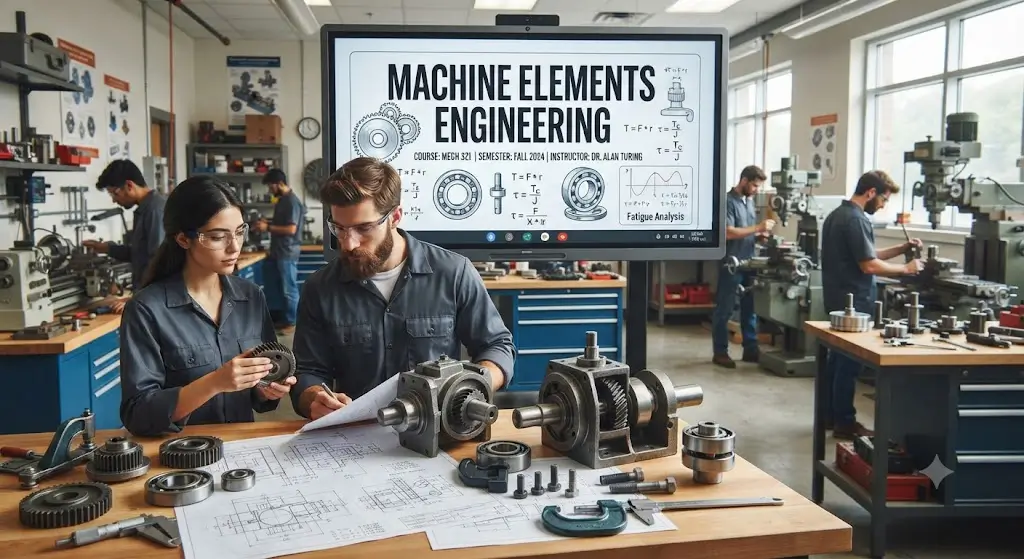
Machine Elements Engineering Course: Build Practical Machine Design and Mechanical Engineering Skills
The Machine Elements Engineering Course is a comprehensive, beginner-friendly, and career-focused training program designed to help learners understand the function, design, and application of machine elements used in engineering systems. Machine elements are the building blocks of mechanical equipment and play a critical role in ensuring efficient, reliable, and safe machine operation across industries.
First, this course introduces learners to the fundamentals of machine elements and explains how components such as gears, shafts, bearings, couplings, springs, brakes, clutches, and fasteners work together to transmit power and support mechanical motion. Understanding these components is essential for machine design, maintenance, and industrial engineering.
Additionally, the course presents engineering concepts in a clear and structured format, making it suitable for beginners as well as professionals seeking to strengthen their technical knowledge. Whether you are an engineering student, diploma holder, technician, or industry professional, this course provides practical knowledge that supports academic success and career growth.
Why Learn Machine Elements Engineering?
Machine elements are essential in every mechanical system. Moreover, industries seek professionals who understand component selection, machine performance, and engineering design.
Learning machine elements engineering helps you:
- Understand machine components
- Learn machine design principles
- Improve engineering problem-solving skills
- Develop power transmission knowledge
- Build maintenance and reliability awareness
- Increase professional confidence
As a result, learners become better prepared for engineering and manufacturing careers.
What You Will Learn
Introduction to Machine Elements
First, learners will understand the purpose and importance of machine elements in engineering.
Gears and Gear Systems
Next, learners will study different types of gears and their applications in power transmission.
Topics include:
- Spur gears
- Helical gears
- Bevel gears
- Worm gears
Shafts and Bearings
Additionally, learners will understand how shafts and bearings support rotating machinery.
Springs and Fasteners
Moreover, learners will explore springs, bolts, nuts, screws, rivets, and other fastening components.
Couplings, Brakes, and Clutches
Efficient power transmission depends on properly selected components. Therefore, learners will study couplings, brakes, and clutch systems used in industrial machinery.
Power Transmission Systems
Furthermore, learners will examine belts, chains, pulleys, and gear drives used in engineering applications.
Machine Design Applications
Learners will understand how machine elements are selected and applied in real-world engineering systems.
Professional Engineering Practices
Finally, learners will discover industry best practices for machine design, maintenance, safety, and performance optimization.
Skills You Will Gain
After completing this course, learners will develop:
- Machine design knowledge
- Mechanical component understanding
- Power transmission skills
- Engineering analysis abilities
- Problem-solving skills
- Technical drawing awareness
- Maintenance knowledge
- Analytical thinking
- Mechanical system understanding
- Professional confidence
Who Should Enroll?
This course is suitable for:
- Engineering students
- Diploma students
- Mechanical engineers
- Manufacturing professionals
- Maintenance engineers
- Design engineers
- Production engineers
- Industrial technicians
- Working professionals
- Anyone interested in machine design
No prior experience is required.
Career Opportunities
Completing this course can support careers such as:
- Mechanical Engineer
- Machine Design Engineer
- Production Engineer
- Maintenance Engineer
- Manufacturing Engineer
- Design Technician
- Quality Engineer
- Industrial Engineer
- Project Engineer
- Technical Support Engineer
Industries Hiring
Professionals with machine elements engineering knowledge are valuable in:
- Manufacturing industries
- Automotive companies
- Aerospace organizations
- Heavy engineering companies
- Industrial machinery manufacturers
- Construction equipment companies
- Power generation plants
- Oil and gas sector
- Engineering consulting firms
- Research and development organizations
Certification Benefits
Upon successful completion, learners receive a certificate validating their machine elements engineering knowledge.
Benefits include:
- Improved employability
- Better engineering expertise
- Professional credibility
- Career advancement opportunities
- Strong machine design foundation
9. FAQ SECTION
1. What is a Machine Elements Engineering Course?
A Machine Elements Engineering Course teaches the design, function, selection, and application of machine components such as gears, bearings, shafts, springs, and couplings.
2. Who should enroll in this course?
Engineering students, diploma holders, mechanical engineers, technicians, manufacturing professionals, and anyone interested in machine design can enroll.
3. Do I need prior experience?
No. This course is beginner-friendly and does not require previous engineering experience.
4. What skills will I learn?
You will learn machine design fundamentals, power transmission systems, mechanical components, engineering analysis, and maintenance principles.
5. How long does the course take?
Most Machine Elements Engineering Courses can be completed within 4 to 8 weeks.
6. Will I receive a certificate?
Yes. A certificate is awarded after successfully completing the course.
7. Why are machine elements important in engineering?
Machine elements ensure efficient power transmission, safe operation, durability, and reliable performance of mechanical systems.
8. Which industries use machine elements engineering?
Manufacturing, automotive, aerospace, heavy engineering, construction equipment, power generation, oil and gas, and industrial machinery sectors rely on machine elements engineering.
9. Can this course improve my engineering career?
Yes. Machine elements engineering strengthens technical knowledge and prepares learners for careers in design, manufacturing, maintenance, and industrial engineering.
10. Is this course suitable for beginners?
Yes. The course explains machine elements and machine design concepts using simple language and practical examples, making it suitable for beginners.





Reviews
There are no reviews yet.