
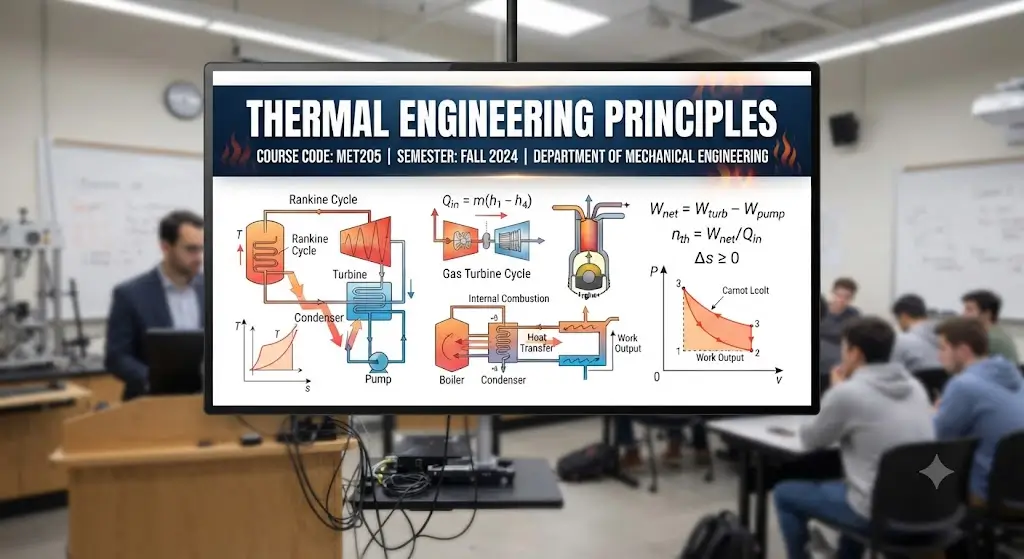
Thermal Engineering Principles Course: Build Strong Foundations in Thermal and Mechanical Engineering
The Thermal Engineering Principles Course is a comprehensive, beginner-friendly, and career-focused training program designed to help learners understand the science of heat, energy, and thermal systems. Thermal engineering is a vital branch of mechanical engineering that focuses on the generation, transfer, conversion, and efficient use of thermal energy across various industries.
First, this course introduces learners to the fundamental principles of thermodynamics and heat transfer. These concepts form the basis of designing engines, power plants, refrigeration systems, HVAC equipment, manufacturing processes, and energy-efficient technologies.
Additionally, the course presents engineering concepts in a clear and structured format, making it suitable for beginners and professionals alike. Whether you are an engineering student, diploma holder, technician, or industry professional, this course provides practical knowledge that supports technical growth and career advancement.
Why Learn Thermal Engineering Principles?
Thermal engineering is essential for designing efficient machines and industrial systems. Moreover, organizations seek professionals who understand energy conservation, thermal performance, and engineering design.
Learning thermal engineering principles helps you:
- Understand thermodynamics
- Learn heat transfer mechanisms
- Improve engineering analysis skills
- Develop thermal system knowledge
- Build energy efficiency awareness
- Increase professional confidence
As a result, learners become better prepared for technical and engineering careers.
What You Will Learn
Introduction to Thermal Engineering
First, learners will understand the scope and importance of thermal engineering.
Thermodynamics
Next, learners will explore the laws of thermodynamics and their engineering applications.
Topics include:
- Energy
- Work and heat
- Thermodynamic cycles
- System efficiency
Heat Transfer
Additionally, learners will understand conduction, convection, and radiation with practical engineering examples.
Thermal Systems
Moreover, learners will discover the operation of boilers, turbines, condensers, and heat exchangers.
HVAC Fundamentals
Efficient heating and cooling systems are essential in many industries. Therefore, learners will study the basics of HVAC technology and thermal comfort.
Energy Systems
Furthermore, learners will examine thermal power generation, refrigeration systems, and renewable energy applications.
Industrial Applications
Learners will understand how thermal engineering supports industries such as:
- Manufacturing
- Power generation
- Automotive
- Aerospace
- Oil and gas
- Chemical processing
Engineering Best Practices
Finally, learners will explore sustainable engineering practices that improve efficiency and reduce energy losses.
Skills You Will Gain
After completing this course, learners will develop:
- Thermal engineering knowledge
- Thermodynamics fundamentals
- Heat transfer understanding
- Engineering analysis skills
- Energy system awareness
- Technical problem-solving
- Industrial process knowledge
- Engineering calculation skills
- Analytical thinking
- Professional confidence
Who Should Enroll?
This course is suitable for:
- Engineering students
- Diploma students
- Mechanical engineers
- Production engineers
- Maintenance engineers
- HVAC professionals
- Manufacturing technicians
- Working professionals
- Career changers
- Anyone interested in thermal engineering
No prior experience is required.
Career Opportunities
Completing this course can support careers such as:
- Thermal Engineer
- Mechanical Engineer
- HVAC Engineer
- Process Engineer
- Energy Engineer
- Power Plant Engineer
- Design Engineer
- Production Engineer
- Maintenance Engineer
- Technical Support Engineer
Industries Hiring
Professionals with thermal engineering knowledge are valuable in:
- Manufacturing industries
- Power plants
- Automotive companies
- Aerospace organizations
- HVAC companies
- Oil and gas sector
- Chemical industries
- Renewable energy companies
- Construction industry
- Engineering consulting firms
Certification Benefits
Upon successful completion, learners receive a certificate validating their thermal engineering knowledge.
Benefits include:
- Improved employability
- Better technical expertise
- Professional credibility
- Career advancement opportunities
- Strong engineering foundation
9. FAQ SECTION
1. What is a Thermal Engineering Principles Course?
A Thermal Engineering Principles Course teaches the fundamentals of thermodynamics, heat transfer, thermal systems, and energy engineering with practical industrial applications.
2. Who should enroll in this course?
Engineering students, diploma holders, technicians, mechanical engineers, and anyone interested in thermal engineering can enroll.
3. Do I need prior experience?
No. This course is beginner-friendly and does not require previous engineering experience.
4. What skills will I learn?
You will learn thermodynamics, heat transfer, thermal systems, energy efficiency, engineering analysis, and industrial applications.
5. How long does the course take?
Most Thermal Engineering Principles Courses can be completed within 4 to 8 weeks.
6. Will I receive a certificate?
Yes. A certificate is awarded after successfully completing the course.
7. Is thermal engineering a good career option in India?
Yes. Thermal engineering professionals are in demand across manufacturing, power generation, automotive, HVAC, aerospace, and energy industries.
8. Which industries use thermal engineering principles?
Manufacturing, energy, power plants, oil and gas, automotive, aerospace, HVAC, chemical processing, and renewable energy industries rely on thermal engineering.
9. Can this course improve my engineering career?
Yes. Thermal engineering knowledge strengthens your technical skills and opens opportunities in multiple engineering fields.
10. Is this course suitable for beginners?
Yes. The course explains thermal engineering concepts in simple language with practical examples, making it suitable for beginners.





Reviews
There are no reviews yet.