
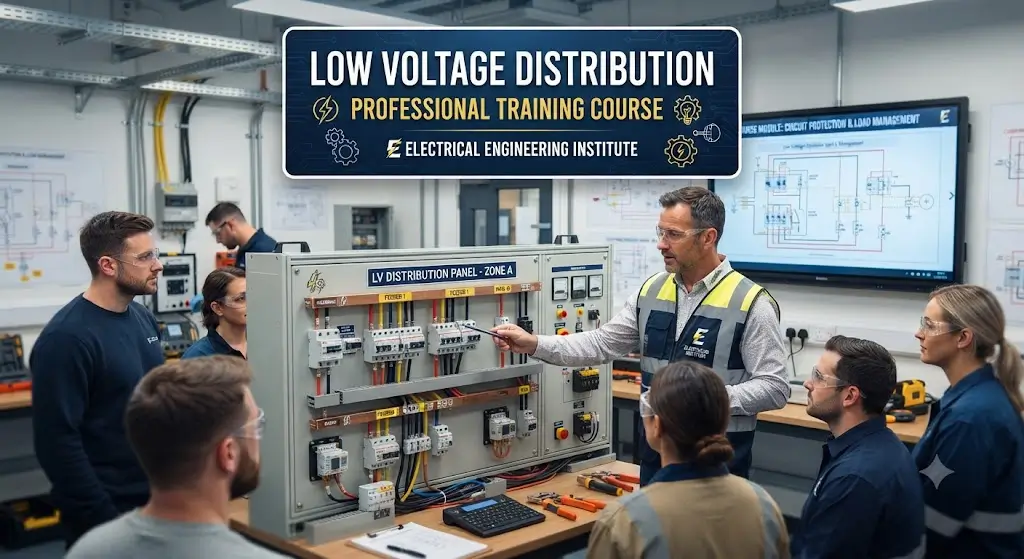
Introduction to Low Voltage Distribution
The Low Voltage Distribution Course is a professional training program designed to help learners understand how electrical power is distributed at low voltage levels (typically up to 1000V) for safe usage in buildings, industries, and infrastructure. Low voltage systems form the final stage of electrical power delivery to consumers.
LV distribution systems include distribution boards, feeders, protective devices, wiring networks, and load control systems that ensure safe and efficient electricity supply. Engineers and technicians must understand system design, protection coordination, and installation standards.
This course combines electrical engineering fundamentals, power distribution concepts, installation practices, and safety standards to provide practical knowledge applicable across residential buildings, commercial complexes, industrial plants, and infrastructure projects.
Why Low Voltage Distribution Matters
Low voltage distribution ensures safe delivery of electrical power to end users while minimizing losses and preventing electrical hazards. Poor LV system design can lead to overloads, equipment failure, and safety risks.
Understanding low voltage distribution enables professionals to design efficient electrical networks, manage loads effectively, and ensure system reliability.
The Low Voltage Distribution Course builds essential skills required for electrical distribution and installation roles.
Course Overview
The Low Voltage Distribution Course introduces learners to the structure and operation of LV electrical systems.
Participants begin by studying electrical distribution fundamentals and system layout. The course explores distribution boards, wiring systems, protection devices, cable sizing, and load management.
Learners also study grounding systems, fault detection, voltage regulation, and maintenance practices.
Practical case studies demonstrate real-world low voltage distribution systems in buildings and industries.
Benefits of the Course
The Low Voltage Distribution Course provides practical knowledge for safely distributing electrical power at low voltage levels.
Participants gain confidence in designing LV systems, managing electrical loads, improving reliability, and ensuring safety compliance. The course also strengthens technical and analytical skills in electrical engineering.
As demand for safe and efficient electrical infrastructure grows, professionals with LV distribution expertise are highly valued.
Career Opportunities
- Electrical Engineer
- LV Distribution Engineer
- Maintenance Engineer
- Electrician
- Site Engineer
- Electrical Technician
- Project Engineer
- Power Distribution Engineer
- Electrical Consultant
- Facility Engineer
- Installation Engineer
- Technical Supervisor
- Electrical Contractor
- Senior Distribution Engineer (future path)
Certification
Upon completion, learners receive a professional certificate recognizing expertise in low voltage distribution systems, electrical safety, load management, and system reliability. This supports career growth in electrical engineering, construction, maintenance, and infrastructure sectors.
Frequently Asked Questions (FAQs)
1. What is Low Voltage Distribution?
It is the system used to distribute electrical power safely at low voltage levels.
2. Who should take this course?
Electrical engineers, electricians, and maintenance professionals.
3. Do I need prior experience?
Basic electrical knowledge is recommended.
4. What topics are covered?
Distribution systems, wiring, protection devices, and load management.
5. Is this course practical?
Yes, it includes real-world electrical distribution applications.
6. Will I learn single line diagrams?
Yes, SLD interpretation is included.
7. How does this help my career?
It builds essential skills for electrical distribution roles.
8. Does it include fault protection?
Yes, protection systems are covered.
9. Can this improve job opportunities?
Yes, LV engineers are in high demand.
10. What industries use this?
Construction, infrastructure, manufacturing, utilities, and electrical contracting sectors





Reviews
There are no reviews yet.