
Introduction
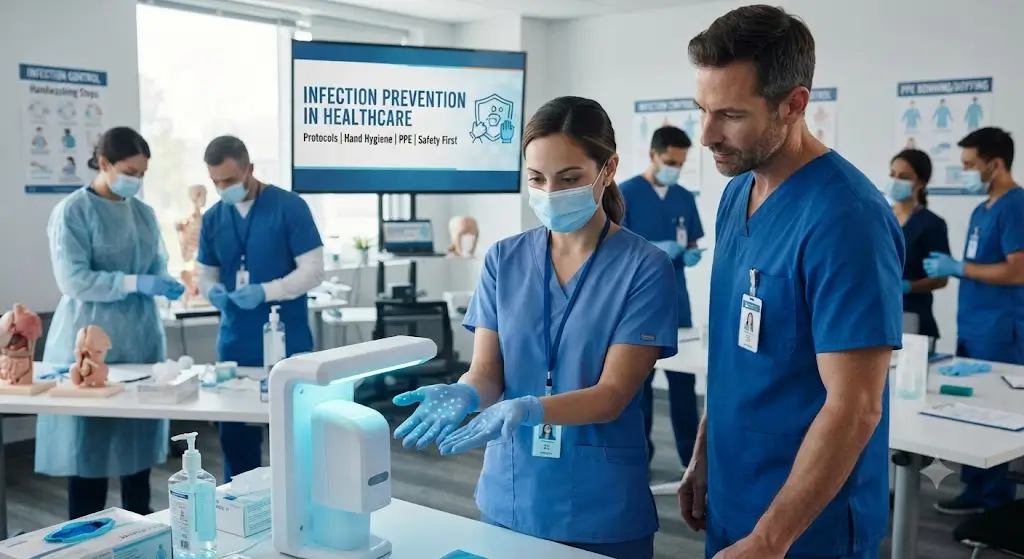
Infection Prevention in Healthcare provides learners with the essential knowledge and practical understanding needed to reduce the transmission of infectious diseases within healthcare settings. Preventing infections is a shared responsibility that requires consistent adherence to evidence-based practices, proper hygiene, environmental safety, and effective communication among healthcare teams.
This course introduces the core principles of infection prevention, including standard precautions, transmission-based precautions, hand hygiene, sterilization techniques, environmental cleaning, personal protective equipment, patient isolation, and infection surveillance. Learners also explore how healthcare organizations maintain safe environments through quality improvement and regulatory compliance.
Understanding Infection Prevention Principles
Healthcare-associated infections can affect patient recovery, increase healthcare costs, and place healthcare workers at risk. Effective prevention begins with understanding how infections spread and how appropriate preventive measures interrupt the chain of transmission.
Learners explore important concepts including:
- Infection prevention principles
- Infection control practices
- Standard precautions
- Modes of disease transmission
- Patient safety measures
- Healthcare hygiene standards
These concepts establish a strong foundation for maintaining safe healthcare environments.
Hand Hygiene and Personal Protective Equipment
Hand hygiene remains one of the most effective methods for reducing the spread of infection. Proper use of personal protective equipment helps protect both patients and healthcare workers from exposure to infectious agents.
The course explains practical procedures for:
- Hand hygiene techniques
- Selecting appropriate PPE
- Correct use and removal of protective equipment
- Respiratory hygiene
- Safe patient interaction
- Cross-contamination prevention
These practices reduce the risk of infection transmission in clinical settings.
Cleaning, Disinfection, and Sterilization
Maintaining a clean healthcare environment is essential for preventing infections. Learners gain an understanding of cleaning protocols, disinfection procedures, sterilization methods, safe handling of medical equipment, and environmental infection control measures.
The course also highlights the importance of proper healthcare waste segregation and disposal to minimize biological hazards.
Isolation Precautions and Infection Surveillance
Healthcare professionals must recognize situations that require additional infection control measures. Learners study isolation precautions, patient placement, outbreak management, and surveillance techniques used to monitor infection trends and improve healthcare quality.
These practices help healthcare facilities respond quickly to infection risks while protecting patients and staff.
Patient Safety and Professional Responsibility
Infection prevention is closely linked to patient safety. Healthcare professionals are responsible for following established guidelines, maintaining accurate documentation, communicating effectively with colleagues, and educating patients about infection prevention measures.
The course also emphasizes ethical practice, teamwork, and continuous quality improvement in healthcare.
Skills You Will Develop
After completing this course, learners will understand:
- Infection prevention principles
- Infection control procedures
- Hand hygiene techniques
- Personal protective equipment
- Sterilization and disinfection
- Isolation precautions
- Healthcare waste management
- Infection surveillance
- Patient safety practices
- Professional healthcare communication
Who Should Enroll?
This course is suitable for:
- Nursing students
- Registered nurses
- Healthcare assistants
- Doctors
- Laboratory professionals
- Hospital staff
- Public health workers
- Anyone interested in healthcare safety
No previous healthcare experience is required.
Career Opportunities
Completing this course can support careers such as:
- Infection Control Nurse
- Clinical Nurse
- Healthcare Assistant
- Patient Safety Officer
- Hospital Quality Coordinator
- Clinical Support Professional
- Public Health Worker
- Healthcare Compliance Officer
The knowledge gained through this course helps healthcare professionals strengthen infection prevention practices, improve patient safety, and contribute to high-quality healthcare services.
Frequently Asked Questions
1. What is the Infection Prevention in Healthcare course about?
This course teaches the principles and practical methods used to prevent the spread of infections in healthcare environments, helping improve patient safety and protect healthcare workers.
2. Who should enroll in this course?
The course is suitable for nursing students, registered nurses, healthcare assistants, doctors, laboratory personnel, hospital staff, public health professionals, caregivers, and anyone interested in infection control.
3. Is this course suitable for beginners?
Yes. The course starts with the basics of infection prevention before introducing practical procedures and healthcare standards used in clinical settings.
4. What topics are covered during the training?
Learners study hand hygiene, personal protective equipment, sterilization, disinfection, isolation precautions, healthcare-associated infections, environmental cleaning, waste management, infection surveillance, and patient safety.
5. Why is infection prevention important in healthcare?
Effective infection prevention reduces healthcare-associated infections, protects patients and healthcare workers, improves treatment outcomes, supports regulatory compliance, and promotes safer healthcare environments.
6. What professional skills will I develop?
You will strengthen infection control awareness, clinical communication, patient safety practices, hygiene management, documentation, teamwork, risk assessment, and quality improvement skills.
7. Which healthcare settings use these skills?
These skills are valuable in hospitals, clinics, laboratories, long-term care facilities, rehabilitation centers, community health centers, home healthcare services, and public health organizations.
8. What career opportunities can this course support?
The course supports careers such as Infection Control Nurse, Clinical Nurse, Healthcare Assistant, Patient Safety Officer, Healthcare Compliance Officer, Hospital Quality Coordinator, Laboratory Technician, and Public Health Worker.
9. Does this course explain healthcare infection control regulations?
Yes. Learners gain an understanding of infection control standards, healthcare safety guidelines, isolation procedures, regulatory compliance, and best practices used to prevent the spread of infections.
10. How will this course benefit my healthcare career?
Completing this course improves your knowledge of infection prevention, enhances patient safety skills, strengthens professional confidence, and supports career growth in hospitals, clinics, laboratories, and other healthcare organizations.




Reviews
There are no reviews yet.