
Introduction
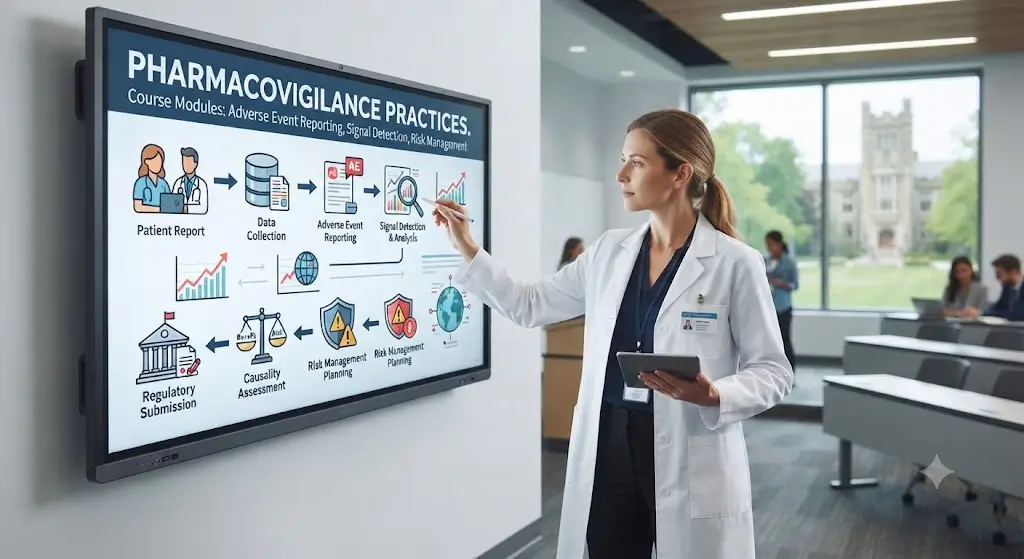
The Pharmacovigilance Practices Course is a comprehensive training program designed to help learners understand the principles and processes involved in monitoring the safety of medicines throughout their lifecycle. Pharmacovigilance plays a critical role in identifying, assessing, preventing, and managing adverse drug reactions (ADRs) and other medicine-related risks. It helps healthcare organizations, pharmaceutical companies, and regulatory authorities maintain patient safety while ensuring the effective use of medications.
This course introduces learners to pharmacovigilance systems, adverse drug reaction reporting, drug safety monitoring, risk management, case processing, regulatory requirements, safety documentation, signal detection, and quality management practices. Participants also gain practical knowledge of global pharmacovigilance guidelines, patient safety initiatives, and ethical responsibilities in drug safety monitoring.
Whether you are a pharmacy student, pharmacist, life sciences graduate, healthcare professional, clinical research associate, pharmaceutical employee, or someone interested in drug safety, this course provides industry-relevant knowledge and practical skills that support career growth and professional development.
Course Overview
Pharmacovigilance focuses on monitoring the safety of medicines after they become available for public use. Healthcare professionals and pharmaceutical organizations work together to identify potential medication risks, collect safety information, evaluate adverse events, and implement strategies that improve patient safety.
Throughout this course, learners explore pharmacovigilance principles, adverse event reporting, drug safety databases, regulatory compliance, case processing, medical documentation, quality assurance, benefit-risk assessment, signal detection, and post-marketing surveillance. The curriculum combines theoretical concepts with practical industry applications to prepare learners for careers in pharmaceutical safety and regulatory affairs.
What You Will Learn
During this course, learners will explore:
- Fundamentals of pharmacovigilance
- Drug safety monitoring
- Adverse Drug Reaction (ADR) reporting
- Individual Case Safety Report (ICSR) basics
- Case processing workflow
- Signal detection concepts
- Risk management planning
- Post-marketing surveillance
- Safety database fundamentals
- Medical documentation practices
- Global pharmacovigilance regulations
- Quality assurance in pharmacovigilance
- Regulatory compliance requirements
- Ethical responsibilities in drug safety
- Continuous improvement in pharmacovigilance systems
Skills You Will Gain
After completing the course, learners will develop valuable skills including:
- Adverse event reporting
- Drug safety monitoring
- Pharmacovigilance documentation
- Case processing
- Regulatory compliance awareness
- Risk assessment
- Data interpretation
- Analytical thinking
- Communication and teamwork
- Professional decision-making
These skills are highly valued across pharmaceutical companies, clinical research organizations (CROs), biotechnology firms, hospitals, healthcare organizations, and regulatory agencies.
Benefits of the Course
This course provides learners with a strong understanding of pharmacovigilance principles and global drug safety practices. Participants improve their knowledge of adverse event reporting, regulatory compliance, documentation, and patient safety while learning industry-standard pharmacovigilance processes.
The program also strengthens analytical abilities, communication skills, documentation accuracy, and professional confidence. As pharmaceutical regulations continue to evolve worldwide, qualified pharmacovigilance professionals remain in high demand across healthcare and life sciences industries.
Who Should Enroll?
This course is ideal for:
- Pharmacy students
- Pharmacists
- Life sciences graduates
- Clinical research professionals
- Healthcare professionals
- Pharmaceutical industry employees
- Drug safety associates
- Regulatory affairs professionals
- Medical writers
- Individuals interested in pharmacovigilance careers
No previous pharmacovigilance experience is required, making this course suitable for beginners as well as experienced professionals.
Career Opportunities
After completing this course, learners may pursue opportunities such as:
- Pharmacovigilance Associate
- Drug Safety Associate
- Pharmacovigilance Executive
- Clinical Research Associate
- Regulatory Affairs Executive
- Safety Data Coordinator
- Medical Information Associate
- Quality Assurance Associate
- Pharmaceutical Compliance Executive
- Drug Safety Specialist
The knowledge gained through this course is valuable across pharmaceutical companies, biotechnology firms, contract research organizations (CROs), hospitals, regulatory agencies, healthcare organizations, and clinical research institutions.
Certification
Upon successful completion of the course, participants receive a professional certification recognizing their understanding of pharmacovigilance practices, adverse drug reaction reporting, drug safety monitoring, regulatory compliance, risk management, case processing, and pharmaceutical quality standards. This certification enhances professional credibility and supports career advancement within the pharmaceutical and healthcare industries.
Why Choose This Course?
This course combines pharmacovigilance principles with practical industry applications to provide learners with a comprehensive educational experience. The curriculum focuses on drug safety monitoring, adverse event reporting, case processing, risk management, documentation, regulatory compliance, quality assurance, and ethical responsibilities.
Learners gain practical knowledge that prepares them to contribute to medicine safety programs while supporting regulatory compliance and patient protection. Whether your goal is to begin a career in pharmacovigilance or strengthen your expertise in pharmaceutical safety, this course provides the essential knowledge and confidence needed for long-term professional success.
Start Your Learning Journey
Pharmacovigilance is essential for ensuring the safe use of medicines and protecting public health worldwide. By completing this course, learners develop practical knowledge, analytical skills, and professional confidence that prepare them for rewarding careers in drug safety, regulatory affairs, pharmaceutical quality, and clinical research.
FAQ Section
1. What is pharmacovigilance?
Pharmacovigilance is the science and practice of monitoring, assessing, understanding, and preventing adverse effects and other medicine-related safety issues.
2. Is this course suitable for beginners?
Yes. The course is designed for beginners, pharmacy students, life sciences graduates, healthcare professionals, and anyone interested in drug safety.
3. What topics are covered?
Topics include adverse drug reaction reporting, drug safety monitoring, case processing, signal detection, risk management, regulatory compliance, post-marketing surveillance, quality assurance, and pharmacovigilance documentation.
4. Will I receive a certificate?
Yes. Participants receive a certificate after successfully completing the course.
5. Do I need prior pharmacovigilance experience?
No. The course explains pharmacovigilance concepts in a simple and beginner-friendly manner.
6. Who should enroll?
Pharmacy students, pharmacists, life sciences graduates, clinical research professionals, healthcare professionals, regulatory affairs staff, and individuals interested in pharmaceutical safety.
7. Is the course available online?
Yes. The course is delivered online, allowing learners to study flexibly according to their schedule.
8. What skills will I gain?
You will develop skills in adverse event reporting, case processing, drug safety monitoring, documentation, regulatory compliance, risk assessment, and pharmacovigilance practices.
9. Can this course improve my career opportunities?
Yes. Pharmacovigilance skills are highly valued across pharmaceutical companies, biotechnology firms, CROs, hospitals, and regulatory organizations.
10. Why is pharmacovigilance important?
Pharmacovigilance helps identify medicine-related risks, improves patient safety, supports regulatory compliance, enhances healthcare quality, and contributes to the safe use of medicines worldwide.




Reviews
There are no reviews yet.