
Introduction
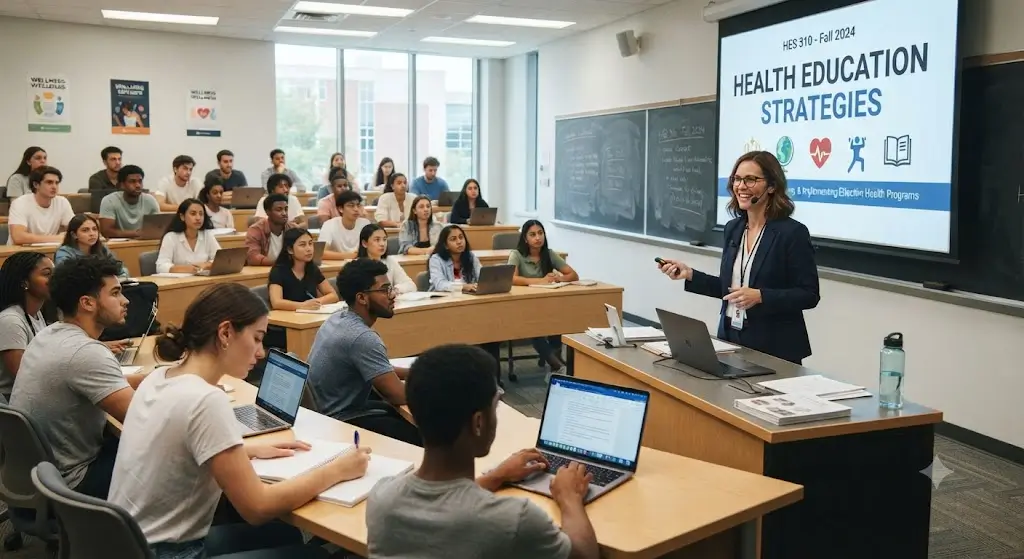
Health education plays a critical role in improving individual well-being and strengthening public health systems. The Health Education Strategies Course introduces learners to the principles, methods, and techniques used to educate individuals and communities about healthy lifestyles, disease prevention, and healthcare awareness. As healthcare increasingly focuses on prevention and wellness, effective health education has become more important than ever.
Health education empowers people with accurate information that enables them to make informed decisions about nutrition, physical activity, mental health, disease prevention, and healthcare services. Therefore, health educators contribute significantly to improving community health, reducing healthcare costs, and preventing chronic and infectious diseases.
Moreover, this course explains how health communication, behavior change theories, community engagement, educational planning, health promotion campaigns, and public health policies contribute to successful health education initiatives. Learners also become familiar with digital health education, cultural competence, healthcare ethics, and health literacy improvement.
In addition, participants develop practical skills in designing educational materials, conducting awareness sessions, planning health campaigns, evaluating educational outcomes, and communicating with diverse audiences. These competencies prepare learners for careers in healthcare organizations, schools, NGOs, public health agencies, hospitals, and community health programs.
By completing this course, learners establish a strong foundation in health education strategies while contributing to healthier individuals, stronger communities, and more effective public health initiatives.
Course Overview
The Health Education Strategies Course provides comprehensive training in health communication, educational planning, behavior change, community outreach, and health promotion. Furthermore, the course explains how effective education improves public awareness, encourages healthy behaviors, and supports disease prevention.
Fundamentals of Health Education
The course begins by introducing the principles of health education and its importance in healthcare. Learners understand health promotion concepts, educational objectives, healthcare communication, ethics, and the role of health educators. Consequently, they develop a strong foundation in health education.
Health Communication
Effective communication is essential for successful health education. Therefore, learners study verbal communication, non-verbal communication, digital communication, interpersonal skills, public speaking, and communication planning for health programs.
Behavior Change Theories
The course explains health behavior models, motivation techniques, decision-making processes, lifestyle modification, and strategies that encourage positive health behaviors. Moreover, learners understand how education influences long-term behavioral change.
Educational Program Planning
Learners explore educational needs assessment, learning objectives, curriculum planning, resource development, implementation strategies, and instructional methods. Consequently, they understand how to create effective health education programs.
Disease Prevention and Health Promotion
The course introduces preventive healthcare, vaccination awareness, nutrition education, hygiene promotion, chronic disease prevention, mental health awareness, and wellness initiatives. Furthermore, learners understand how preventive education improves public health.
Community Engagement
Participants study community participation, stakeholder collaboration, health advocacy, outreach planning, volunteer management, and partnership development that strengthen community health initiatives.
Health Literacy
The course explains health literacy concepts, patient education, accessible communication, cultural sensitivity, and methods for improving understanding of healthcare information among diverse populations.
Program Evaluation
Learners study monitoring techniques, performance indicators, impact assessment, feedback collection, and continuous improvement methods that strengthen health education programs.
Emerging Trends in Health Education
Finally, participants explore digital health education, telehealth communication, mobile health applications, social media campaigns, artificial intelligence, and innovative educational technologies transforming healthcare education.
Overall, this course combines public health knowledge with instructional techniques, enabling learners to understand every aspect of health education while preparing them for careers in healthcare, education, community development, and public health organizations.
What You Will Learn
The Health Education Strategies Course equips learners with practical knowledge and communication skills required to develop successful health education programs.
Understanding Health Education Principles
First, learners understand health promotion concepts, educational strategies, public health goals, healthcare communication, and preventive healthcare approaches.
Planning Health Education Programs
Participants learn how to assess educational needs, develop learning objectives, prepare educational materials, and organize awareness campaigns. Furthermore, they understand how planning improves educational effectiveness.
Health Communication Techniques
The course teaches learners how to communicate health information clearly through presentations, workshops, counseling, digital platforms, and community outreach. Consequently, learners gain practical communication skills.
Behavior Change Strategies
Learners explore motivational techniques, counseling approaches, health behavior theories, and methods for encouraging long-term healthy lifestyle changes.
Disease Prevention Education
Participants study preventive healthcare strategies, nutrition awareness, hygiene promotion, vaccination education, chronic disease prevention, and wellness promotion.
Community Outreach
The course introduces community engagement, partnership building, volunteer coordination, public awareness events, and stakeholder collaboration that support successful health education.
Program Monitoring and Evaluation
Learners understand how to measure educational outcomes, evaluate program success, collect feedback, and improve future health education initiatives.
Digital Health Education
Participants also explore online learning tools, telehealth education, social media campaigns, digital communication platforms, and modern healthcare technologies.
Skills You Will Gain
After completing the Health Education Strategies Course, learners will develop valuable communication, educational, and leadership skills required for modern healthcare education.
Health Communication Skills
Develop the ability to communicate health information clearly, accurately, and effectively to different audiences.
Health Education Skills
Learn techniques for planning, designing, delivering, and evaluating health education programs.
Community Engagement Skills
Gain expertise in organizing outreach activities, building partnerships, and encouraging community participation.
Behavior Change Skills
Understand motivational strategies and health behavior theories that support positive lifestyle changes.
Program Management Skills
Develop skills in educational planning, implementation, monitoring, evaluation, and continuous improvement.
Leadership Skills
Strengthen your ability to lead health campaigns, coordinate teams, and manage community health initiatives.
Research and Assessment Skills
Learn educational needs assessment, health data interpretation, audience analysis, and evidence-based planning techniques.
Problem-Solving Skills
Analyze public health challenges and develop practical educational solutions through strategic planning and effective communication.
Professional Competence
Build the confidence to work effectively in hospitals, schools, NGOs, healthcare organizations, government agencies, and public health institutions.
Benefits of the Course
The Health Education Strategies Course provides learners with essential knowledge and practical skills required to design, deliver, and manage effective health education programs. Moreover, the course combines healthcare communication, public health principles, and educational methods to help learners promote healthier behaviors and improve community well-being.
Develop Strong Health Education Knowledge
First, learners gain a comprehensive understanding of health education principles, health promotion methods, communication strategies, and preventive healthcare approaches. As a result, they develop the confidence to create meaningful health awareness initiatives.
Improve Health Communication Skills
Effective communication is essential for spreading health information. Therefore, this course teaches learners how to communicate healthcare messages clearly, develop educational content, conduct awareness sessions, and connect with different audiences.
Learn Behavior Change Techniques
Health education focuses on encouraging positive lifestyle changes. Consequently, learners study behavior change models, motivational strategies, counseling approaches, and methods for promoting healthy habits.
Strengthen Community Health Skills
Community participation improves the success of health programs. Furthermore, learners develop skills in community engagement, health advocacy, outreach planning, and collaboration with healthcare organizations.
Develop Program Planning Skills
Successful health education programs require proper planning and evaluation. Accordingly, learners explore educational needs assessment, goal setting, resource planning, implementation strategies, monitoring, and outcome evaluation.
Understand Digital Health Education
Modern healthcare education uses digital technologies. Therefore, learners gain knowledge of online health campaigns, social media communication, telehealth education, mobile health applications, and digital learning platforms.
Promote Disease Prevention
Health education helps reduce disease risks through awareness and preventive practices. Moreover, learners understand strategies related to nutrition, hygiene, vaccination awareness, chronic disease prevention, and healthy lifestyle promotion.
Expand Career Opportunities
The demand for skilled health educators is increasing across healthcare and public health sectors. As a result, completing this course improves career opportunities in hospitals, schools, NGOs, government health programs, and community organizations.
Prepare for Advanced Public Health Learning
The course provides a strong foundation for advanced studies in public health, healthcare management, health promotion, community medicine, health communication, and education.
Support Better Healthcare Outcomes
Effective health education improves awareness, encourages preventive care, supports early healthcare decisions, and strengthens community health. Ultimately, this course prepares learners to contribute to healthier individuals and communities.
Who Should Enroll
The Health Education Strategies Course is designed for individuals who want to develop expertise in healthcare communication, health promotion, and educational program development.
Healthcare Students
Students pursuing public health, nursing, medicine, healthcare administration, pharmacy, social work, or related fields can strengthen their knowledge and prepare for professional careers.
Healthcare Professionals
Doctors, nurses, healthcare workers, and allied health professionals who want to improve patient education and communication skills can benefit from this course.
Health Educators
Teachers, trainers, wellness coaches, and education professionals can enhance their ability to create effective health awareness programs.
Community Health Workers
Community health workers and outreach professionals can improve their skills in health promotion, public awareness, and community engagement.
NGO Professionals
Individuals working in non-governmental organizations and social development programs can strengthen their health education and community outreach capabilities.
Public Health Professionals
Public health officers and healthcare administrators can improve their understanding of educational strategies and health promotion planning.
Researchers
Researchers involved in healthcare studies, public health projects, and community interventions can gain valuable knowledge of health education methods.
Anyone Interested in Healthcare Education
Anyone interested in wellness promotion, healthcare communication, disease prevention, and community health improvement can enroll in this course.
Career Opportunities
The increasing importance of preventive healthcare and health awareness has created excellent career opportunities for professionals with expertise in health education strategies. Therefore, completing the Health Education Strategies Course can help learners build rewarding careers across healthcare, education, and public health sectors.
Potential career roles include:
- Health Education Specialist
- Public Health Educator
- Community Health Educator
- Health Promotion Coordinator
- Patient Education Coordinator
- Wellness Program Coordinator
- Healthcare Communication Specialist
- Community Outreach Officer
- Health Advocacy Officer
- Public Health Program Assistant
- Health Training Coordinator
- NGO Health Project Officer
- Healthcare Consultant
- School Health Educator
- Health Promotion Manager
Graduates may find employment opportunities in:
- Hospitals
- Public health departments
- Schools and educational institutions
- Non-governmental organizations (NGOs)
- Community health centers
- Healthcare organizations
- Wellness centers
- Research institutions
- Government health programs
- International health organizations
Furthermore, this course provides a strong foundation for advanced education and specialization in public health, health promotion, healthcare management, epidemiology, health communication, and community medicine.
Certification
Upon successfully completing the Health Education Strategies Course, learners will receive a Course Completion Certificate that recognizes their knowledge of health education methods, communication strategies, behavior change techniques, community engagement, and public health promotion.
Moreover, the certificate demonstrates your commitment to professional development and continuous learning in the healthcare and education sectors. It can strengthen your resume, improve your professional profile, and increase employment opportunities with hospitals, educational institutions, public health organizations, NGOs, healthcare programs, and community development agencies.
Additionally, the certification validates your understanding of health education planning, awareness campaigns, patient communication, digital health education, program evaluation, and preventive healthcare strategies. Consequently, it supports career advancement while preparing learners for educational, coordination, advisory, and healthcare support roles.
Conclusion
Health education is a powerful tool for preventing diseases, improving healthcare awareness, and encouraging healthier lifestyles. Therefore, professionals with expertise in health education strategies play an important role in empowering individuals and communities to make informed health decisions.
The Health Education Strategies Course provides comprehensive knowledge of health communication, educational planning, behavior change, community engagement, disease prevention, and public health promotion. Moreover, learners develop practical skills that enable them to create effective educational programs and support healthcare improvement initiatives.
Throughout the course, participants strengthen their communication abilities, leadership skills, planning capabilities, and problem-solving approaches while exploring modern health education methods and digital healthcare tools. In addition, they gain valuable insights into community needs, healthcare awareness, and evidence-based education practices.
Whether your goal is to become a health educator, support public health programs, improve patient communication, or build a career in healthcare education, this course provides the knowledge and confidence needed for long-term success. Ultimately, it prepares learners to contribute to healthier communities, improved healthcare awareness, effective disease prevention, and stronger public health systems.
FAQ SECTION
1. What is the Health Education Strategies Course?
The Health Education Strategies Course provides training in health communication, educational planning, behavior change techniques, disease prevention, and public health education methods.
2. Who should enroll in this course?
This course is ideal for healthcare professionals, public health students, educators, community health workers, NGO professionals, and anyone interested in health promotion.
3. Do I need prior healthcare experience?
No. The course is suitable for beginners as well as experienced professionals who want to improve their health education and communication skills.
4. What topics are covered in this course?
The course covers health communication, health promotion, behavior change strategies, educational planning, community outreach, disease prevention, digital health education, and program evaluation.
5. What skills will I gain after completing this course?
You will develop skills in health education planning, communication, community engagement, health promotion, program management, and public health awareness.
6. Why are health education strategies important?
Health education strategies improve healthcare awareness, encourage preventive practices, support healthy behaviors, reduce disease risks, and improve community health outcomes.
7. What career opportunities are available after completing this course?
Graduates can pursue careers as Health Education Specialists, Public Health Educators, Community Health Educators, Health Promotion Coordinators, Patient Education Coordinators, and Healthcare Communication Specialists.
8. Will I receive a certificate after completing this course?
Yes. Learners who successfully complete the course will receive a Course Completion Certificate that validates their knowledge and practical skills in health education strategies.
9. How does health education improve public health?
Health education improves public health by increasing awareness, promoting preventive healthcare, encouraging healthy behaviors, and helping communities make informed health decisions.
10. How can this course benefit my career?
This course strengthens your communication and education skills, improves your professional profile, expands career opportunities, and prepares you for roles in healthcare, public health, education, and community development sectors.





Reviews
There are no reviews yet.