
Introduction
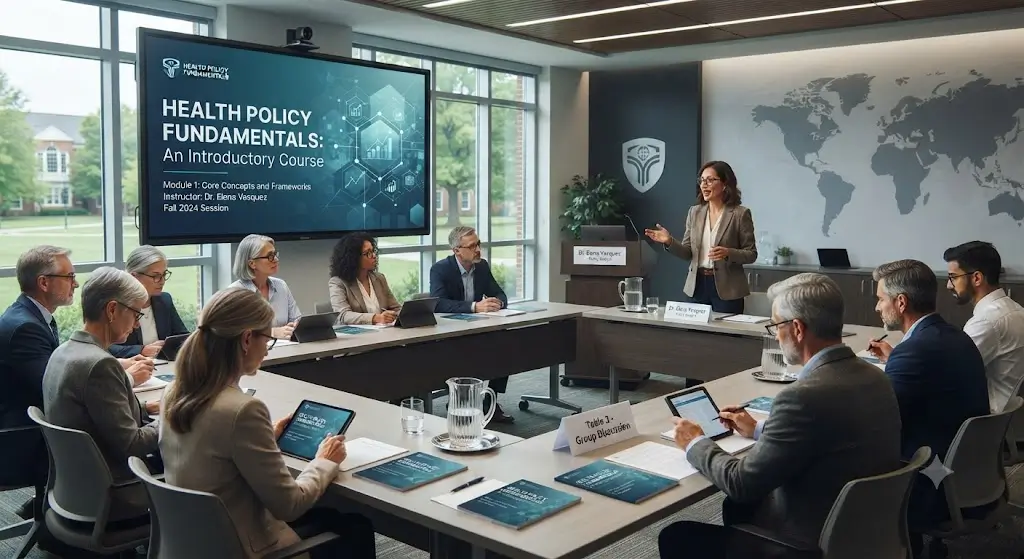
Healthcare policies play a vital role in designing effective healthcare systems, improving access to medical services, and addressing public health challenges. The Health Policy Fundamentals Course introduces learners to the basic principles, processes, and strategies involved in healthcare policy development and implementation.
Health policy focuses on decisions, regulations, and actions that influence healthcare delivery, resource allocation, disease prevention, and population health outcomes. Therefore, professionals with knowledge of health policy are essential for improving healthcare systems and supporting evidence-based decisions.
Moreover, this course explains how healthcare policies are created, implemented, evaluated, and improved. Learners explore healthcare systems, policy frameworks, health governance, regulations, healthcare financing, ethical considerations, and the role of different stakeholders in shaping healthcare decisions.
In addition, participants develop practical skills in policy analysis, healthcare planning, research interpretation, stakeholder communication, and evaluation of healthcare initiatives. These competencies prepare learners for careers in public health organizations, government departments, healthcare administration, research institutions, NGOs, and healthcare consulting sectors.
By completing this course, learners establish a strong foundation in health policy fundamentals while contributing to improved healthcare planning, effective decision-making, and stronger healthcare systems.
Course Overview
The Health Policy Fundamentals Course provides comprehensive training in healthcare policy concepts, public health systems, policy analysis, healthcare governance, and decision-making processes. Furthermore, the course explains how health policies influence healthcare quality, accessibility, and population health.
Introduction to Health Policy
The course begins by introducing the basic concepts of health policy and its importance in healthcare systems. Learners understand policy objectives, healthcare challenges, public health priorities, and the role of policies in improving health outcomes.
Healthcare Systems and Structures
Learners explore different healthcare systems, service delivery models, healthcare organizations, and factors influencing healthcare access and quality. Consequently, they understand how policies shape healthcare operations.
Health Policy Development Process
The course explains how healthcare policies are created, including problem identification, research, stakeholder involvement, policy formulation, implementation, and evaluation.
Health Policy Analysis
Participants study methods for analyzing healthcare policies, evaluating effectiveness, understanding impacts, and making evidence-based recommendations.
Healthcare Governance and Regulations
Learners understand healthcare governance structures, regulatory frameworks, ethical principles, healthcare laws, and responsibilities of healthcare organizations.
Public Health Policy
The course introduces policies related to disease prevention, health promotion, community health, healthcare equity, and population health improvement.
Healthcare Financing and Resource Management
Learners explore healthcare funding systems, resource allocation, budgeting principles, and strategies for improving healthcare efficiency.
Global Health Policies
Participants study international health challenges, global healthcare initiatives, health organizations, and approaches to improving worldwide health outcomes.
Policy Implementation and Evaluation
The course explains methods for implementing healthcare policies, monitoring outcomes, measuring effectiveness, and improving policy performance.
Emerging Trends in Health Policy
Finally, learners explore digital health policies, healthcare technology regulations, artificial intelligence in healthcare, and future directions in health policy development.
Overall, this course combines healthcare management knowledge with policy concepts, enabling learners to understand every aspect of health policy fundamentals while preparing them for careers in healthcare administration, public health, research, and policy development.
What You Will Learn
The Health Policy Fundamentals Course equips learners with practical knowledge and analytical skills required to understand healthcare policies and support effective health system improvement.
Understanding Health Policy Concepts
First, learners understand health policy principles, objectives, healthcare challenges, and the importance of policy decisions in healthcare.
Learning Policy Development Processes
Participants learn how healthcare policies are created, implemented, monitored, and evaluated to improve health outcomes.
Analyzing Healthcare Systems
The course teaches learners how healthcare systems operate and how policies influence healthcare delivery and accessibility.
Understanding Healthcare Regulations
Learners explore healthcare laws, governance structures, ethical considerations, and regulatory frameworks affecting healthcare organizations.
Developing Policy Analysis Skills
Participants gain knowledge of evaluating policies, interpreting healthcare data, and developing evidence-based recommendations.
Exploring Public Health Policies
Learners understand policies related to disease prevention, health promotion, healthcare equity, and community health improvement.
Understanding Healthcare Financing
The course introduces healthcare funding models, resource management, budgeting, and strategies for efficient healthcare delivery.
Improving Decision-Making Skills
Participants learn how policy research, stakeholder input, and healthcare evidence support better decision-making.
Skills You Will Gain
After completing the Health Policy Fundamentals Course, learners will develop valuable healthcare, analytical, and management skills required for health policy roles.
Health Policy Analysis Skills
Develop the ability to evaluate healthcare policies, identify challenges, and recommend improvements.
Healthcare Research Skills
Learn how to analyze healthcare information, interpret research findings, and support evidence-based policies.
Healthcare Management Skills
Gain knowledge of healthcare systems, governance, planning, and resource management.
Decision-Making Skills
Develop the ability to make informed healthcare decisions using policy frameworks and data analysis.
Communication Skills
Strengthen professional communication skills required for stakeholder engagement and policy discussions.
Public Health Knowledge
Understand healthcare challenges, population health needs, and strategies for improving health outcomes.
Problem-Solving Skills
Analyze healthcare policy issues and develop practical solutions through systematic approaches.
Leadership Skills
Build confidence to contribute to healthcare planning, policy development, and organizational improvement.
Benefits of the Course
The Health Policy Fundamentals Course provides learners with essential knowledge and practical skills required to understand healthcare systems, analyze policies, and contribute to effective health decision-making. Moreover, the course combines public health concepts, healthcare management, and policy analysis approaches to prepare learners for real-world healthcare challenges.
Develop Strong Health Policy Knowledge
First, learners gain a comprehensive understanding of healthcare policies, healthcare systems, governance structures, and policy-making processes. As a result, they develop the ability to understand how healthcare decisions influence communities and organizations.
Improve Policy Analysis Skills
Healthcare policies require careful evaluation and research. Therefore, this course teaches learners how to analyze policies, identify challenges, evaluate outcomes, and develop evidence-based recommendations.
Understand Healthcare Systems
Effective healthcare management requires knowledge of healthcare structures and operations. Consequently, learners understand healthcare delivery models, healthcare organizations, resource management, and system improvement strategies.
Learn Healthcare Decision-Making Approaches
Policy decisions impact healthcare quality and accessibility. Furthermore, learners develop skills in using research, healthcare data, and stakeholder perspectives to support better decisions.
Strengthen Public Health Understanding
Health policies directly influence disease prevention, health promotion, and community wellness. Accordingly, learners gain knowledge of public health priorities and strategies for improving population health.
Develop Healthcare Management Skills
The course helps learners understand healthcare planning, governance, regulations, financing, and organizational management practices.
Improve Research and Communication Skills
Effective policy development requires strong research and communication abilities. Therefore, learners develop skills in interpreting healthcare information, preparing policy recommendations, and communicating with stakeholders.
Expand Career Opportunities
The demand for professionals with healthcare policy knowledge is increasing due to changes in healthcare systems and growing public health challenges. As a result, completing this course improves career opportunities in healthcare organizations, government agencies, research institutions, and public health sectors.
Prepare for Advanced Learning
The course provides a strong foundation for advanced studies in public health, healthcare administration, health management, healthcare policy, and healthcare research.
Support Better Healthcare Systems
Health policies help improve healthcare access, quality, and efficiency. Ultimately, this course prepares learners to contribute to stronger healthcare systems and better health outcomes.
Who Should Enroll
The Health Policy Fundamentals Course is designed for individuals who want to develop knowledge of healthcare policies, public health systems, and healthcare decision-making processes.
Public Health Students
Students pursuing public health, healthcare management, epidemiology, medicine, nursing, or related fields can strengthen their understanding of healthcare policies.
Healthcare Professionals
Doctors, nurses, healthcare workers, and medical professionals can improve their knowledge of healthcare systems, regulations, and policy decisions.
Healthcare Administrators
Healthcare managers and administrators can gain valuable insights into healthcare planning, governance, and policy implementation.
Government and Public Health Professionals
Professionals working in healthcare departments, public health programs, and government organizations can enhance their policy analysis skills.
Researchers
Healthcare researchers and analysts can develop knowledge of healthcare policies, evaluation methods, and evidence-based decision-making.
NGO Professionals
Individuals working in healthcare NGOs and community development programs can understand policy frameworks and healthcare improvement strategies.
Healthcare Consultants
Consultants working with healthcare organizations can improve their understanding of healthcare systems, regulations, and policy planning.
Anyone Interested in Healthcare Policy
Anyone interested in healthcare management, public health improvement, healthcare systems, and policy development can enroll in this course.
Career Opportunities
The growing importance of healthcare planning, public health improvement, and effective healthcare management has created excellent career opportunities for professionals with knowledge of health policy fundamentals. Therefore, completing the Health Policy Fundamentals Course can help learners build rewarding careers across healthcare, government, research, and public health sectors.
Potential career roles include:
- Health Policy Analyst
- Public Health Policy Specialist
- Healthcare Administrator
- Healthcare Program Coordinator
- Health Services Manager
- Public Health Officer
- Healthcare Consultant
- Policy Research Associate
- Healthcare Project Manager
- Health Program Manager
- Healthcare Governance Specialist
- Health Research Analyst
- Policy Development Officer
- Healthcare Quality Improvement Specialist
- Public Health Consultant
Graduates may find employment opportunities in:
- Government health departments
- Hospitals and healthcare organizations
- Public health agencies
- Research institutions
- Universities and healthcare education centers
- Non-governmental organizations (NGOs)
- Healthcare consulting firms
- International health organizations
- Healthcare policy organizations
- Health research programs
Furthermore, this course provides a strong foundation for advanced education and specialization in public health, healthcare administration, healthcare policy, health economics, healthcare management, and global health.
Certification
Upon successfully completing the Health Policy Fundamentals Course, learners will receive a Course Completion Certificate that recognizes their knowledge of healthcare policies, healthcare systems, policy analysis, governance, and public health decision-making strategies.
Moreover, the certificate demonstrates your commitment to professional development and continuous learning in healthcare management and public health fields. It can strengthen your resume, improve your professional profile, and increase employment opportunities with healthcare organizations, government departments, research institutions, NGOs, and healthcare policy programs.
Additionally, the certification validates your understanding of health policy frameworks, healthcare regulations, policy development processes, healthcare planning, and evidence-based decision-making. Consequently, it supports career advancement while preparing learners for policy analysis, healthcare management, research, and administrative roles.
Conclusion
Health policy plays a crucial role in shaping healthcare systems, improving healthcare access, and addressing public health challenges. Therefore, professionals with knowledge of health policy fundamentals are essential for developing effective healthcare strategies and supporting better health outcomes.
The Health Policy Fundamentals Course provides comprehensive knowledge of healthcare policies, healthcare systems, governance, policy analysis, healthcare regulations, and decision-making processes. Moreover, learners develop practical skills that enable them to understand healthcare challenges and contribute to effective policy solutions.
Throughout the course, participants strengthen their analytical thinking, research abilities, communication skills, and healthcare management knowledge while exploring modern healthcare policy approaches. In addition, they gain valuable insights into healthcare planning, policy evaluation, and strategies for improving healthcare services.
Whether your goal is to work in healthcare administration, support public health initiatives, analyze healthcare policies, or build a career in healthcare management, this course provides the knowledge and confidence needed for long-term success. Ultimately, it prepares learners to contribute to improved healthcare systems, effective policy development, and better community health outcomes.
FAQ SECTION
1. What is the Health Policy Fundamentals Course?
The Health Policy Fundamentals Course provides training in healthcare policies, healthcare systems, policy development, governance, and healthcare decision-making processes.
2. Who should enroll in this course?
This course is ideal for public health students, healthcare professionals, administrators, researchers, government professionals, NGO workers, and individuals interested in healthcare policy.
3. Do I need prior healthcare policy experience?
No. The course is suitable for beginners as well as professionals who want to improve their understanding of healthcare policies and systems.
4. What topics are covered in this course?
The course covers health policy concepts, healthcare systems, policy development, healthcare regulations, governance, policy analysis, healthcare financing, and public health strategies.
5. What skills will I gain after completing this course?
You will develop skills in policy analysis, healthcare research, healthcare management, decision-making, public health planning, and stakeholder communication.
6. Why are health policies important?
Health policies help improve healthcare access, regulate healthcare services, support disease prevention, manage resources, and strengthen healthcare systems.
7. What career opportunities are available after completing this course?
Graduates can pursue careers as Health Policy Analysts, Public Health Specialists, Healthcare Administrators, Healthcare Consultants, Policy Researchers, and Health Program Managers.
8. Will I receive a certificate after completing this course?
Yes. Learners who successfully complete the course will receive a Course Completion Certificate that validates their knowledge and skills in health policy fundamentals.
9. How do health policies improve healthcare systems?
Health policies improve healthcare systems by guiding decision-making, improving resource allocation, supporting healthcare programs, and addressing population health needs.
10. How can this course benefit my career?
This course improves your healthcare policy knowledge, strengthens your professional profile, expands career opportunities, and prepares you for roles in healthcare management, public health, research, and policy development.




Reviews
There are no reviews yet.