
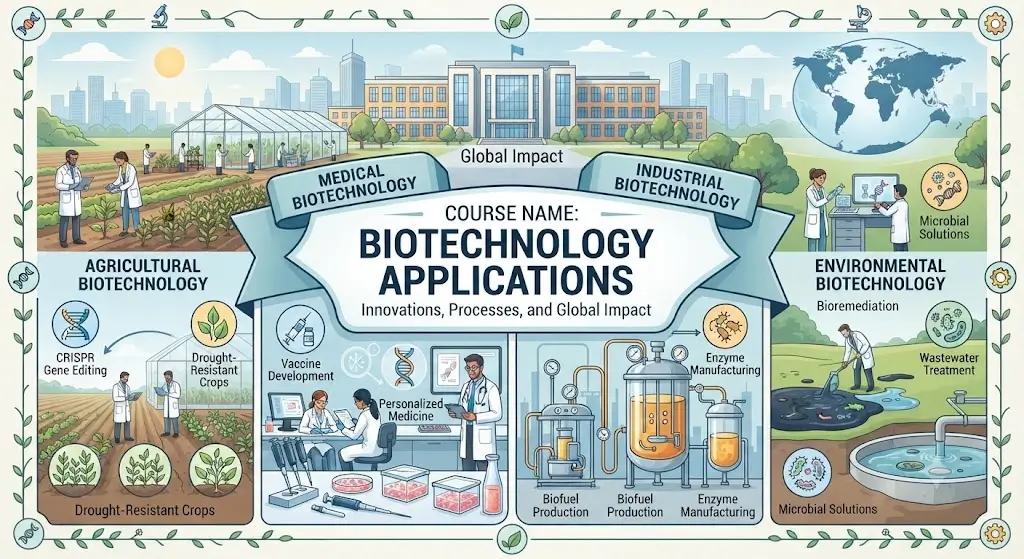
Biotechnology Applications Course
The Biotechnology Applications Course is designed to help students, researchers, laboratory professionals, healthcare practitioners, agricultural specialists, life science graduates, biotechnology enthusiasts, and individuals interested in modern biological sciences develop the knowledge and practical understanding of biotechnology and its real-world applications. Biotechnology combines biology, chemistry, genetics, and technology to develop innovative solutions for healthcare, agriculture, food production, environmental protection, and industrial manufacturing.
This course introduces the core principles of biotechnology, including molecular biology, cell biology, genetics, genetic engineering, recombinant DNA technology, industrial biotechnology, agricultural biotechnology, medical biotechnology, environmental biotechnology, bioprocess technology, fermentation, bioinformatics, biotechnology ethics, and emerging innovations. Learners will gain practical knowledge of how biotechnology contributes to scientific discoveries, sustainable development, and improved quality of life.
Whether you work in healthcare, pharmaceuticals, agriculture, food production, research laboratories, environmental science, or biotechnology industries, this course provides a comprehensive foundation in biotechnology applications.
Course Overview
The course explores the major fields of biotechnology and their applications across healthcare, agriculture, environmental management, pharmaceuticals, food science, and industrial production. Learners will understand how biotechnology improves disease diagnosis, crop productivity, environmental sustainability, industrial efficiency, and scientific research.
The curriculum combines biological sciences with practical examples, biotechnology case studies, industry applications, and emerging technologies to prepare learners for careers in biotechnology and life sciences.
What You Will Learn
By completing this course, you will be able to:
- Understand biotechnology principles.
- Explain molecular biology concepts.
- Apply genetics fundamentals.
- Understand genetic engineering techniques.
- Explore recombinant DNA technology.
- Analyze biotechnology applications in healthcare.
- Explain agricultural biotechnology innovations.
- Understand industrial biotechnology processes.
- Explore environmental biotechnology solutions.
- Understand fermentation and bioprocess technology.
- Apply bioinformatics basics.
- Recognize biotechnology ethics and regulations.
- Evaluate emerging biotechnology innovations.
- Support biotechnology research activities.
- Strengthen scientific problem-solving skills.
Course Curriculum
The curriculum begins with biotechnology fundamentals before progressing through molecular biology, genetics, recombinant DNA technology, industrial biotechnology, medical biotechnology, agricultural biotechnology, environmental biotechnology, bioinformatics, ethics, case studies, and future biotechnology innovations.
Practical assignments help learners understand biotechnology concepts through real-world applications and research examples.
Skills You Will Gain
After completing the course, you will develop skills in:
- Biotechnology Applications
- Molecular Biology
- Genetics
- Genetic Engineering
- Recombinant DNA Technology
- Cell Biology
- Bioprocess Technology
- Industrial Biotechnology
- Agricultural Biotechnology
- Medical Biotechnology
- Environmental Biotechnology
- Bioinformatics Fundamentals
- Laboratory Research Concepts
- Scientific Analysis
- Biotechnology Innovation
Benefits of the Course
This course helps learners build a strong foundation in biotechnology, understand modern scientific innovations, improve analytical thinking, and explore applications across healthcare, agriculture, environmental science, and industrial production. Strong biotechnology knowledge supports research, product development, innovation, and sustainable solutions for global challenges.
These skills are highly valuable across biotechnology companies, pharmaceutical industries, research laboratories, agricultural organizations, food processing industries, healthcare institutions, environmental agencies, universities, government research organizations, and life science companies.
Who Should Enroll
This course is ideal for:
- Biotechnology Students
- Life Science Students
- Researchers
- Laboratory Professionals
- Healthcare Professionals
- Pharmaceutical Professionals
- Agricultural Specialists
- Food Science Professionals
- Environmental Scientists
- Biology Teachers
- Research Scholars
- Quality Control Professionals
- Science Graduates
- Biotechnology Enthusiasts
- Anyone interested in biotechnology
Career Opportunities
After completing the Biotechnology Applications Course, learners may strengthen their qualifications for roles such as:
- Biotechnology Research Associate
- Laboratory Technician
- Bioprocess Associate
- Quality Control Analyst
- Biotechnology Analyst
- Research Assistant
- Clinical Laboratory Professional
- Agricultural Biotechnology Specialist
- Environmental Biotechnology Associate
- Pharmaceutical Research Executive
These skills are valuable across biotechnology companies, pharmaceutical organizations, research laboratories, hospitals, agricultural firms, environmental agencies, food processing industries, universities, government research institutions, and life science companies.
Certification Details
Upon successful completion, learners receive a Certificate of Completion recognizing their expertise in Biotechnology Applications and modern biotechnology concepts. This certification enhances your professional profile and supports career advancement in biotechnology, life sciences, healthcare, pharmaceuticals, agriculture, research, environmental science, and industrial biotechnology.
If you want to understand modern biotechnology, explore scientific innovations, and build expertise in biotechnology applications, the Biotechnology Applications Course provides practical, industry-relevant knowledge for today’s life science and biotechnology sectors.
FAQ SECTION
1. What is the Biotechnology Applications Course?
It teaches the principles and real-world applications of biotechnology in healthcare, agriculture, environmental science, pharmaceuticals, food production, and industrial biotechnology.
2. Is this course suitable for beginners?
Yes. The course begins with biotechnology fundamentals and is suitable for beginners, students, and professionals interested in biotechnology and life sciences.
3. What topics are covered?
Molecular biology, genetics, genetic engineering, recombinant DNA technology, medical biotechnology, agricultural biotechnology, industrial biotechnology, environmental biotechnology, bioinformatics, and biotechnology ethics.
4. Do I need previous biotechnology experience?
No. The course is designed for beginners, students, researchers, laboratory professionals, healthcare workers, and anyone interested in biotechnology.
5. Is the course online?
Yes. The course is fully online and self-paced.
6. Will I receive a certificate?
Yes. A certificate is awarded after successfully completing the course.
7. Who should enroll?
Biotechnology students, life science graduates, laboratory professionals, researchers, healthcare professionals, pharmaceutical specialists, agricultural experts, environmental scientists, and anyone interested in biotechnology.
8. What skills will I gain?
Molecular biology, genetics, genetic engineering, biotechnology applications, bioinformatics fundamentals, laboratory research concepts, scientific analysis, and biotechnology innovation.
9. Can this course help my career?
Yes. Biotechnology skills are highly valued across biotechnology companies, pharmaceutical industries, research laboratories, hospitals, agricultural organizations, environmental agencies, universities, and life science companies.
10. Why are Biotechnology Applications important?
Biotechnology Applications drive innovation in healthcare, improve agricultural productivity, support sustainable environmental solutions, enhance food production, advance pharmaceutical development, strengthen scientific research, and contribute to solving global health and environmental challenges.




Reviews
There are no reviews yet.