
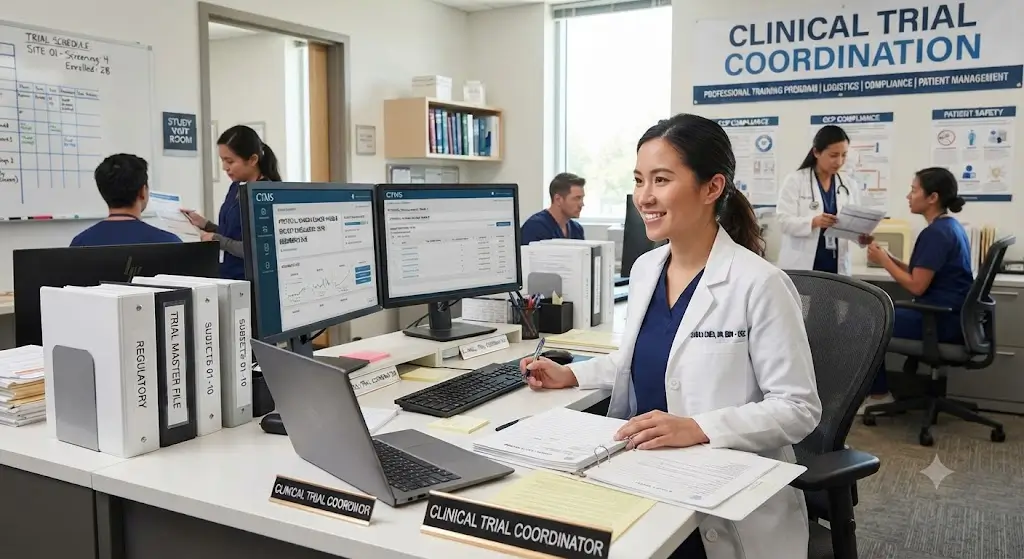
Clinical Trial Coordination Course
The Clinical Trial Coordination Course is designed to help healthcare professionals, clinical research coordinators, nurses, pharmacists, biomedical graduates, medical students, researchers, and life science professionals develop the knowledge and practical skills needed to coordinate clinical trials effectively. Clinical trial coordinators play a vital role in ensuring research studies are conducted ethically, efficiently, and in compliance with regulatory standards while protecting participant safety.
This course introduces the core concepts of clinical trial coordination, including clinical research fundamentals, drug development, Good Clinical Practice (GCP), study protocols, patient recruitment, informed consent, ethics, regulatory compliance, trial documentation, data collection, safety monitoring, quality assurance, and clinical trial operations. Learners will gain practical knowledge of coordinating research studies from planning to completion.
Whether you work in hospitals, pharmaceutical companies, biotechnology firms, contract research organizations (CROs), academic institutions, or healthcare research centers, this course provides a comprehensive foundation in clinical trial coordination.
Course Overview
The course explores the complete clinical trial coordination process, from understanding study protocols and recruiting participants to managing documentation, ensuring regulatory compliance, monitoring study progress, and supporting accurate data collection. Learners will understand how effective coordination contributes to successful clinical research and medical innovation.
The curriculum combines clinical research principles with practical examples, industry case studies, ethical guidelines, and regulatory best practices to prepare learners for careers in clinical research.
What You Will Learn
By completing this course, you will be able to:
- Understand clinical trial processes.
- Explain the phases of clinical research.
- Apply Good Clinical Practice (GCP) principles.
- Coordinate clinical research studies.
- Manage patient recruitment and informed consent.
- Maintain clinical trial documentation.
- Ensure regulatory compliance.
- Support clinical data collection.
- Monitor participant safety.
- Report adverse events appropriately.
- Collaborate with research teams.
- Support quality assurance activities.
- Improve clinical trial efficiency.
- Understand ethical research practices.
- Contribute to successful clinical research projects.
Course Curriculum
The curriculum begins with clinical research fundamentals before progressing through drug development, clinical trial phases, GCP, study protocols, patient recruitment, ethics, regulatory compliance, documentation, data management, safety monitoring, quality assurance, audits, case studies, and industry best practices.
Practical examples help learners understand how clinical trial coordination supports safe and effective medical research.
Skills You Will Gain
After completing the course, you will develop skills in:
- Clinical Trial Coordination
- Clinical Research
- Good Clinical Practice (GCP)
- Clinical Trial Documentation
- Study Coordination
- Patient Recruitment
- Informed Consent
- Regulatory Compliance
- Clinical Data Collection
- Safety Monitoring
- Quality Assurance
- Adverse Event Reporting
- Research Ethics
- Trial Operations
- Healthcare Research
Benefits of the Course
This course helps learners improve clinical research knowledge, strengthen study coordination skills, enhance regulatory compliance, support patient safety, improve research documentation, develop ethical research practices, and prepare for careers in clinical research.
Clinical trial coordination skills are increasingly valuable as pharmaceutical, biotechnology, and healthcare organizations expand research and develop innovative treatments.
These competencies are highly valued across hospitals, clinical research organizations (CROs), pharmaceutical companies, biotechnology firms, universities, public health organizations, and medical research institutions.
Who Should Enroll
This course is ideal for:
- Clinical Research Coordinators
- Nurses
- Pharmacists
- Biomedical Science Graduates
- Medical Students
- Healthcare Professionals
- Research Assistants
- Laboratory Professionals
- Biotechnology Professionals
- Clinical Data Associates
- Public Health Professionals
- Researchers
- Life Science Graduates
- Healthcare Administrators
- Anyone interested in clinical research
Career Opportunities
After completing the Clinical Trial Coordination Course, learners may strengthen their qualifications for roles such as:
- Clinical Research Coordinator
- Clinical Trial Coordinator
- Clinical Research Associate
- Clinical Data Coordinator
- Research Assistant
- Clinical Project Coordinator
- Regulatory Affairs Associate
- Pharmacovigilance Associate
- Clinical Operations Assistant
- Medical Research Coordinator
These skills are valuable across pharmaceutical companies, biotechnology firms, hospitals, contract research organizations (CROs), universities, research institutes, public health organizations, and healthcare providers.
Certification Details
Upon successful completion, learners receive a Certificate of Completion recognizing their expertise in Clinical Trial Coordination. This certification enhances your professional profile and supports career advancement in clinical research, healthcare, pharmaceuticals, biotechnology, regulatory affairs, medical research, and life sciences.
If you want to build expertise in coordinating clinical studies, ensuring regulatory compliance, supporting participant safety, and contributing to medical innovation, the Clinical Trial Coordination Course provides practical, industry-relevant knowledge for today’s clinical research environment.
9. FAQ SECTION
1. What is the Clinical Trial Coordination Course?
It teaches how to coordinate clinical research studies, manage trial documentation, ensure regulatory compliance, and support participant safety throughout clinical trials.
2. Is this course suitable for beginners?
Yes. The course starts with clinical research fundamentals and is suitable for beginners, graduates, and healthcare professionals.
3. What topics are covered?
Clinical trial phases, Good Clinical Practice (GCP), study protocols, patient recruitment, informed consent, ethics, documentation, data collection, safety monitoring, and regulatory compliance.
4. Do I need prior clinical research experience?
No. The course is designed for beginners and professionals interested in clinical research and healthcare studies.
5. Is the course online?
Yes. The course is fully online and self-paced.
6. Will I receive a certificate?
Yes. A certificate is awarded after successfully completing the course.
7. Who should enroll?
Healthcare professionals, nurses, pharmacists, biomedical graduates, medical students, research assistants, clinical coordinators, and anyone interested in clinical research.
8. What skills will I gain?
Clinical trial coordination, GCP compliance, study documentation, patient recruitment, informed consent, clinical data collection, regulatory compliance, and research ethics.
9. Can this course help my career?
Yes. Clinical trial coordination skills are highly valued across pharmaceutical companies, biotechnology firms, hospitals, contract research organizations (CROs), universities, and healthcare research institutions.
10. Why is Clinical Trial Coordination important?
Clinical Trial Coordination ensures that research studies are conducted safely, ethically, and in compliance with regulations. It supports accurate data collection, participant safety, efficient study management, and the development of new medicines and medical treatments.





Reviews
There are no reviews yet.