
Introduction
Crop pests are among the leading causes of agricultural losses worldwide because they damage crops, reduce yields, and affect food quality. The Agricultural Pest Monitoring Course introduces learners to the scientific principles and practical techniques used to identify, monitor, and manage agricultural pests effectively. As agriculture continues to evolve, early pest detection and timely intervention have become essential for maintaining healthy crops and achieving sustainable agricultural production.
Agricultural pests include insects, mites, rodents, nematodes, and other organisms that negatively affect crop growth and productivity. Therefore, understanding pest biology, behavior, life cycles, and environmental interactions is essential for developing effective pest management strategies. This course provides learners with the knowledge required to recognize pest problems before they become severe.
Moreover, the course emphasizes the importance of regular field scouting, pest surveillance, monitoring tools, and economic threshold levels. These practices help farmers make informed decisions while reducing unnecessary pesticide applications. Consequently, learners understand how effective monitoring supports sustainable agriculture and protects environmental health.
In addition, participants develop practical skills in pest identification, crop inspection, data recording, and integrated pest management planning. These competencies enable learners to recommend suitable pest control measures that balance agricultural productivity with environmental conservation.
By completing this course, learners establish a strong foundation in agricultural pest monitoring while preparing themselves for careers in agriculture, crop protection, research, agribusiness, and government agricultural services.
Course Overview
The Agricultural Pest Monitoring Course provides comprehensive training in pest identification, surveillance techniques, monitoring systems, and integrated pest management practices. Furthermore, the course explains how effective pest monitoring supports healthy crop production, reduces economic losses, and promotes sustainable agriculture.
Fundamentals of Agricultural Entomology
The course begins by introducing the basic principles of agricultural entomology and pest monitoring. Learners understand different categories of agricultural pests, their biological characteristics, and their impact on crop production. Consequently, they build a strong scientific foundation for effective pest management.
Pest Identification
Correct identification is essential for successful pest control. Therefore, learners study the distinguishing features, life cycles, feeding habits, and damage symptoms of common agricultural pests affecting various crops. Accurate identification helps ensure appropriate management decisions.
Pest Life Cycles and Behavior
Understanding pest development improves monitoring efficiency. Accordingly, participants explore pest growth stages, reproductive behavior, seasonal activity, migration patterns, and environmental influences that affect pest populations.
Field Scouting Techniques
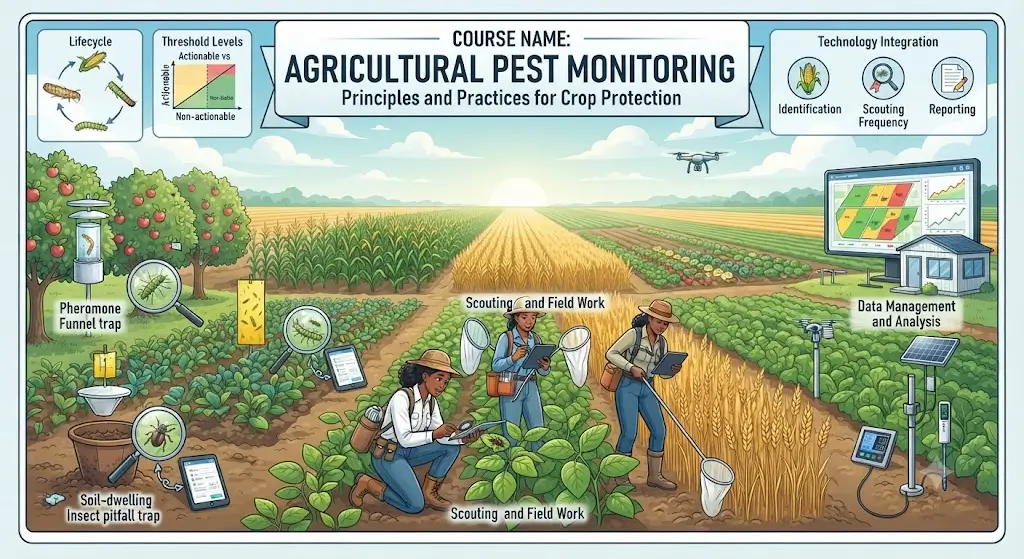
Regular crop inspections play a vital role in pest management. Moreover, the course explains systematic field scouting methods, sampling procedures, observation techniques, and record-keeping practices used to monitor pest populations accurately.
Pest Monitoring Tools
The course introduces modern pest monitoring equipment and surveillance methods, including sticky traps, pheromone traps, light traps, pitfall traps, sweep nets, and digital monitoring technologies. Consequently, learners understand how different tools improve pest detection and monitoring accuracy.
Economic Threshold Levels
Effective pest management requires informed decision-making. Therefore, learners study economic threshold levels, action thresholds, and economic injury levels that help determine when pest control measures should be implemented.
Integrated Pest Management (IPM)
Participants explore Integrated Pest Management principles that combine cultural, biological, mechanical, and chemical control methods. Furthermore, the course explains how IPM reduces pesticide dependence while maintaining effective crop protection.
Pest Data Collection and Analysis
Monitoring programs generate valuable field information. Accordingly, learners develop skills in recording pest observations, analyzing monitoring data, interpreting trends, and preparing pest monitoring reports that support agricultural decision-making.
Emerging Technologies in Pest Monitoring
Finally, learners examine recent innovations such as drone-based crop surveillance, remote sensing, artificial intelligence, smart sensors, precision agriculture, and digital pest forecasting systems. These technologies continue to improve pest monitoring efficiency in modern farming.
Overall, this course combines scientific knowledge with practical agricultural applications, enabling learners to understand every stage of agricultural pest monitoring while preparing them for careers in crop protection, agricultural consulting, research, and agribusiness.
What You Will Learn
The Agricultural Pest Monitoring Course equips learners with practical knowledge and technical skills required to identify agricultural pests, monitor pest populations, and implement effective crop protection strategies.
Fundamentals of Pest Monitoring
First, learners understand the importance of pest monitoring, pest surveillance, and early detection in protecting crops and improving agricultural productivity.
Pest Identification
Participants learn how to identify common agricultural pests, recognize pest damage symptoms, and distinguish beneficial organisms from harmful pests. Furthermore, they understand how accurate identification supports effective pest management.
Pest Biology and Life Cycles
The course explains pest development stages, reproduction, seasonal behavior, and environmental influences. Consequently, learners understand how pest biology affects monitoring and control strategies.
Field Scouting Methods
Learners study crop inspection techniques, sampling procedures, observation methods, and field record management. Moreover, they understand how regular scouting helps detect pest problems before significant crop damage occurs.
Monitoring Equipment and Technologies
The course introduces pheromone traps, sticky traps, light traps, sweep nets, digital monitoring tools, and precision agriculture technologies used in pest surveillance. Therefore, learners become familiar with modern pest monitoring methods.
Integrated Pest Management
Participants explore cultural, biological, mechanical, and chemical pest control methods while learning how Integrated Pest Management supports environmentally responsible agriculture.
Data Collection and Decision-Making
The course also explains pest data analysis, economic threshold levels, monitoring reports, and evidence-based decision-making that improve pest control planning and crop protection.
Skills You Will Gain
After completing the Agricultural Pest Monitoring Course, learners will develop valuable agricultural, technical, and analytical skills required for effective crop protection and sustainable farming.
Pest Identification Skills
Develop the ability to identify agricultural pests accurately by recognizing their characteristics, life stages, and crop damage symptoms.
Crop Monitoring Skills
Learn systematic field scouting techniques, pest surveillance methods, and monitoring procedures that support early pest detection.
Integrated Pest Management Skills
Understand how to design and implement Integrated Pest Management strategies that combine biological, cultural, mechanical, and chemical control methods.
Pest Monitoring Technology Skills
Gain practical knowledge of pheromone traps, sticky traps, light traps, digital monitoring tools, remote sensing technologies, and precision agriculture systems.
Analytical Skills
Interpret pest monitoring data, identify population trends, and evaluate field observations to support effective crop protection decisions.
Problem-Solving Skills
Analyze pest outbreaks, identify contributing factors, and recommend practical management strategies that minimize crop damage.
Communication Skills
Strengthen professional communication skills required to advise farmers, agricultural organizations, extension services, and agribusiness companies on pest management practices.
Sustainable Agriculture Knowledge
Develop an understanding of environmentally responsible pest management techniques that improve agricultural productivity while protecting natural ecosystems.
Record Management Skills
Learn to maintain accurate pest monitoring records, prepare field reports, and document crop observations according to industry standards.
Professional Competence
Build the confidence to contribute effectively to agricultural organizations, crop protection companies, research institutions, government agencies, and sustainable farming initiatives.
Benefits of the Course
The Agricultural Pest Monitoring Course provides learners with the knowledge and practical skills needed to identify, monitor, and manage crop pests effectively. Moreover, the course focuses on scientific pest monitoring techniques that improve crop health, reduce production losses, and support sustainable agricultural practices.
Develop Strong Pest Identification Skills
First, learners gain a thorough understanding of agricultural pests, their life cycles, feeding behavior, and damage symptoms. As a result, they can identify pest problems accurately and recommend timely control measures.
Improve Crop Monitoring Techniques
Regular field monitoring is essential for healthy crop production. Therefore, this course teaches systematic crop scouting, sampling methods, pest surveillance, and field observation techniques that support early pest detection.
Learn Integrated Pest Management
The course introduces Integrated Pest Management (IPM), which combines biological, cultural, mechanical, and chemical control methods. Consequently, learners understand how to reduce pest populations while minimizing environmental impact and pesticide dependence.
Gain Practical Field Experience
In addition to theoretical knowledge, participants learn practical approaches to monitoring pest populations, recording field observations, using monitoring equipment, and interpreting pest data. These skills improve confidence in real agricultural environments.
Understand Modern Pest Monitoring Technologies
Technology is transforming crop protection. Accordingly, learners explore pheromone traps, sticky traps, light traps, remote sensing, drone-based crop surveillance, artificial intelligence, and precision agriculture tools used for pest monitoring.
Promote Sustainable Agriculture
The course emphasizes environmentally responsible farming practices that protect beneficial insects, conserve biodiversity, and reduce unnecessary chemical applications. Moreover, learners understand how sustainable pest monitoring supports long-term agricultural productivity.
Strengthen Decision-Making Skills
Effective pest management depends on informed decisions. Therefore, learners study economic threshold levels, pest forecasting, and monitoring reports that help determine the appropriate time for pest control measures.
Expand Career Opportunities
Agricultural organizations, crop protection companies, seed industries, and government agencies actively seek professionals with expertise in pest monitoring and Integrated Pest Management. As a result, completing this course enhances employability across the agriculture sector.
Prepare for Advanced Agricultural Learning
The course provides a strong foundation for specialized studies in agricultural entomology, crop protection, integrated pest management, horticulture, and sustainable agriculture. In addition, it encourages continuous professional development.
Contribute to Food Security
Healthy crops are essential for reliable food production. Ultimately, this course enables learners to contribute to food security by reducing crop losses, improving agricultural productivity, and supporting sustainable farming systems.
Who Should Enroll
The Agricultural Pest Monitoring Course is designed for individuals who want to build expertise in crop protection, pest surveillance, and sustainable agricultural practices.
Agriculture Students
Students pursuing agriculture, horticulture, agronomy, crop science, entomology, or related disciplines can strengthen their academic knowledge while preparing for professional careers.
Farmers
Farmers who want to improve crop health, reduce pest damage, and adopt scientific pest monitoring methods can benefit significantly from this course.
Agricultural Extension Officers
Extension professionals responsible for advising farmers can enhance their ability to identify pest problems and recommend effective monitoring and management strategies.
Crop Protection Professionals
Individuals working in pesticide companies, crop advisory services, agricultural consulting firms, or plant protection organizations can expand their technical expertise in pest monitoring.
Agribusiness Entrepreneurs
Entrepreneurs involved in farming, agricultural services, or crop production can improve their knowledge of modern pest monitoring technologies and sustainable crop protection practices.
Researchers
Agricultural researchers and laboratory professionals can strengthen their understanding of pest biology, monitoring systems, and Integrated Pest Management techniques.
Government Agriculture Professionals
Professionals working in agriculture departments, research institutions, and rural development agencies can improve their technical knowledge of pest surveillance and crop protection programs.
Anyone Interested in Modern Agriculture
Anyone interested in crop health, sustainable farming, or agricultural innovation can enroll in this course to develop practical pest monitoring skills.
Career Opportunities
The increasing demand for sustainable crop protection has created numerous career opportunities for professionals with expertise in agricultural pest monitoring. Therefore, completing the Agricultural Pest Monitoring Course can help learners pursue rewarding careers across agriculture and agribusiness sectors.
Potential career roles include:
- Agricultural Pest Monitoring Officer
- Crop Protection Specialist
- Agricultural Field Officer
- Integrated Pest Management (IPM) Specialist
- Agricultural Extension Officer
- Plant Protection Technician
- Pest Surveillance Officer
- Agricultural Consultant
- Farm Manager
- Crop Health Inspector
- Seed Production Officer
- Agricultural Research Assistant
- Pest Control Advisor
- Horticulture Officer
- Agribusiness Executive
Graduates may find employment opportunities in:
- Agriculture departments
- Crop protection companies
- Seed production organizations
- Agricultural universities
- Research institutes
- Government agricultural agencies
- Agribusiness companies
- Horticulture farms
- Sustainable farming projects
- Agricultural consultancy firms
Furthermore, this course provides a strong foundation for advanced education and specialized training in agricultural entomology, integrated pest management, crop science, horticulture, precision agriculture, and sustainable farming.
Certification
Upon successfully completing the Agricultural Pest Monitoring Course, learners will receive a Course Completion Certificate that recognizes their knowledge of pest identification, crop monitoring, Integrated Pest Management (IPM), pest surveillance, and sustainable agricultural practices.
Moreover, the certificate demonstrates your commitment to professional development and continuous learning within the agriculture sector. It can strengthen your resume, improve your professional profile, and increase employment opportunities with agricultural organizations, crop protection companies, research institutions, and government agencies.
Additionally, the certification validates your understanding of pest monitoring techniques, field scouting, pest data analysis, monitoring technologies, and environmentally responsible crop protection practices. Consequently, it supports career advancement while preparing learners for technical, advisory, and supervisory roles in modern agriculture.
Conclusion
Agricultural pests continue to challenge farmers by reducing crop productivity, affecting food quality, and increasing production costs. Therefore, effective pest monitoring has become an essential component of modern agriculture because it enables early detection, timely intervention, and sustainable crop protection.
The Agricultural Pest Monitoring Course provides comprehensive knowledge of pest identification, field scouting, monitoring technologies, Integrated Pest Management, pest data analysis, and environmentally responsible crop protection practices. Moreover, learners develop practical skills that enable them to identify pest problems accurately, monitor crop health efficiently, and recommend appropriate management strategies.
Throughout the course, participants strengthen their technical knowledge, analytical thinking, and decision-making abilities while exploring emerging technologies that improve agricultural pest surveillance. In addition, they gain valuable insights into sustainable farming methods that reduce crop losses while protecting natural ecosystems.
Whether your goal is to improve farm productivity, begin a career in crop protection, support agricultural research, or expand your expertise in modern agriculture, this course provides the knowledge and confidence needed for long-term success. Ultimately, it prepares learners to contribute to healthier crops, improved agricultural productivity, and sustainable food production.
FAQ SECTION
1. What is the Agricultural Pest Monitoring Course?
The Agricultural Pest Monitoring Course provides comprehensive training in pest identification, field scouting, pest surveillance, Integrated Pest Management (IPM), and sustainable crop protection practices.
2. Who should enroll in this course?
This course is ideal for agriculture students, farmers, agricultural professionals, crop protection specialists, researchers, extension officers, agribusiness entrepreneurs, and anyone interested in crop health management.
3. Do I need prior agricultural experience?
No. The course is suitable for beginners as well as experienced professionals who want to strengthen their knowledge of agricultural pest monitoring.
4. What topics are covered in this course?
The course covers pest biology, pest identification, field scouting, monitoring tools, economic threshold levels, Integrated Pest Management (IPM), pest surveillance, and sustainable crop protection.
5. What skills will I gain after completing this course?
You will develop skills in pest identification, crop monitoring, field scouting, pest data analysis, Integrated Pest Management, decision-making, and sustainable agricultural practices.
6. What is Integrated Pest Management (IPM)?
Integrated Pest Management (IPM) is a sustainable approach that combines biological, cultural, mechanical, and chemical methods to manage pests while minimizing environmental impact and reducing pesticide use.
7. What career opportunities are available after completing this course?
Graduates can pursue careers as Agricultural Pest Monitoring Officers, Crop Protection Specialists, Agricultural Extension Officers, Pest Surveillance Officers, Farm Managers, Agricultural Consultants, and Research Assistants.
8. Will I receive a certificate after completing the course?
Yes. Learners who successfully complete the course will receive a Course Completion Certificate that validates their knowledge and practical skills in agricultural pest monitoring.
9. Why is agricultural pest monitoring important?
Agricultural pest monitoring helps detect pest infestations early, reduces crop damage, improves pest control decisions, minimizes unnecessary pesticide use, and supports sustainable farming practices.
10. How can this course benefit my career?
This course enhances your technical expertise, strengthens your professional profile, improves employability, and prepares you for career opportunities in agriculture, crop protection, agribusiness, research, and sustainable farming.





Reviews
There are no reviews yet.