
Introduction
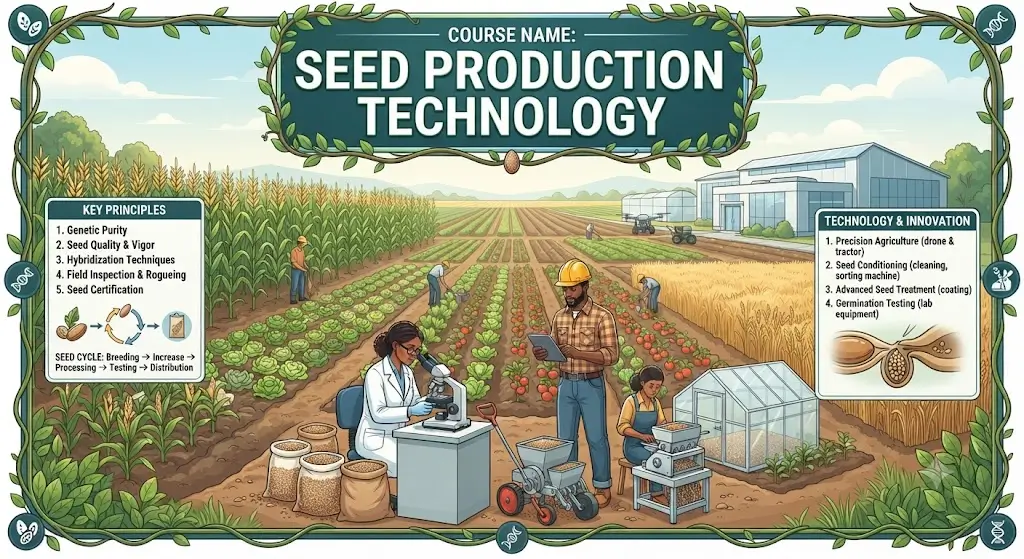
Seeds are one of the most valuable resources in agriculture because they determine crop quality, productivity, and food security. The Seed Production Technology Course introduces learners to the scientific principles and practical techniques involved in producing high-quality seeds for agricultural use. As global food demand continues to increase, the need for skilled professionals who understand modern seed production technologies has become more important than ever.
Seed production is a systematic process that involves selecting suitable crop varieties, maintaining genetic purity, managing crop growth, controlling pollination, harvesting at the appropriate stage, processing seeds, and ensuring quality through testing and certification. Therefore, professionals working in this field must understand every stage of seed production to ensure that farmers receive healthy, viable, and high-performing seeds.
Moreover, this course explains how improved seed technology contributes to sustainable agriculture by increasing crop yields, enhancing resistance to pests and diseases, and improving adaptability to changing environmental conditions. Learners also become familiar with national seed certification standards, quality control measures, and best agricultural practices that support efficient seed production.
In addition, participants develop practical knowledge of seed handling, storage, processing equipment, moisture management, and field inspection procedures. These competencies enable learners to contribute effectively to agricultural development, seed industries, research institutions, and agribusiness organizations.
By completing this course, learners establish a strong foundation in seed production technology while preparing themselves for careers that support agricultural innovation, food security, and sustainable farming.
Course Overview
The Seed Production Technology Course provides comprehensive training on the scientific methods, field practices, and quality standards involved in producing certified seeds for agricultural use. Furthermore, the course explains how modern seed technologies improve crop performance, increase agricultural productivity, and support sustainable farming systems.
Fundamentals of Seed Production
The course begins by introducing the basic principles of seed production and the importance of quality seeds in agriculture. Learners understand seed structure, germination, viability, vigor, and the factors that influence seed quality. Consequently, they develop a solid understanding of seed science and crop improvement.
Crop and Variety Selection
Selecting suitable crop varieties is essential for successful seed production. Therefore, learners study varietal characteristics, breeder seeds, foundation seeds, certified seeds, and the importance of maintaining genetic purity throughout the production process.
Field Preparation and Crop Management
Proper field management ensures healthy seed development. Accordingly, the course explains land preparation, sowing methods, crop nutrition, irrigation management, weed control, and integrated pest management practices. These techniques contribute to higher-quality seed production.
Pollination and Isolation Techniques
Maintaining seed purity requires careful pollination management. Moreover, participants learn about self-pollination, cross-pollination, isolation distances, rouging practices, and flowering synchronization. These methods help preserve the genetic identity of seed varieties.
Seed Harvesting and Processing
The course introduces appropriate harvesting techniques, threshing methods, drying procedures, cleaning, grading, and seed processing operations. Consequently, learners understand how proper post-harvest handling improves seed quality and storage life.
Seed Testing and Quality Control
Quality assurance is an important aspect of seed production. Therefore, learners study germination testing, seed purity analysis, moisture determination, vigor testing, seed health evaluation, and laboratory quality assessment procedures.
Seed Certification
Participants explore the seed certification process, field inspections, documentation requirements, certification standards, and regulatory guidelines followed by the seed industry. These procedures ensure that certified seeds meet established quality standards before reaching farmers.
Seed Storage and Packaging
Proper storage preserves seed quality over time. Accordingly, the course explains storage structures, environmental conditions, moisture control, packaging materials, transportation practices, and inventory management for maintaining seed viability.
Emerging Technologies in Seed Production
Finally, learners examine recent developments such as biotechnology, hybrid seed production, molecular breeding, precision agriculture, digital farm management, and climate-resilient crop varieties. These innovations continue to transform the future of seed technology and agricultural productivity.
Overall, this course combines scientific knowledge with practical agricultural applications, enabling learners to understand the complete seed production process while preparing them for careers in agriculture, seed industries, agribusiness, and research organizations.
What You Will Learn
The Seed Production Technology Course equips learners with practical knowledge and technical understanding of modern seed production systems. Throughout the course, participants explore scientific methods that improve seed quality, agricultural productivity, and sustainable crop management.
Fundamentals of Seed Science
First, learners understand the structure, composition, germination process, viability, and vigor of seeds. They also explore the role of quality seeds in improving crop performance and agricultural productivity.
Seed Production Planning
Participants learn how to plan seed production programs by selecting appropriate crop varieties, preparing production schedules, and maintaining genetic purity throughout cultivation. Furthermore, they understand the importance of proper field management.
Crop Management Practices
The course explains land preparation, sowing methods, irrigation scheduling, nutrient management, weed control, and integrated pest management. Consequently, learners understand how effective crop management contributes to high-quality seed production.
Pollination and Genetic Purity
Learners study pollination methods, isolation requirements, rouging practices, and flowering management. Moreover, they understand techniques that maintain varietal identity and genetic purity during seed production.
Seed Processing Techniques
The course introduces harvesting, drying, cleaning, grading, processing, packaging, and storage methods used to maintain seed quality after harvest. Therefore, learners become familiar with industry-standard post-harvest practices.
Seed Testing and Certification
Participants explore laboratory testing procedures, seed quality evaluation, certification standards, documentation, and regulatory compliance. In addition, they understand how certification ensures that seeds meet industry quality requirements.
Sustainable Seed Production
The course also explains environmentally responsible seed production practices that improve resource efficiency while supporting long-term agricultural sustainability.
Skills You Will Gain
After completing the Seed Production Technology Course, learners will develop valuable technical, agricultural, and professional skills required in modern seed production and agribusiness industries.
Seed Production Skills
Develop the ability to plan, manage, and supervise seed production activities while maintaining quality and genetic purity.
Crop Management Skills
Understand modern crop production practices, irrigation management, nutrient application, pest control, and field monitoring techniques.
Seed Quality Assessment
Learn to evaluate seed germination, purity, vigor, moisture content, and overall quality using standard testing procedures.
Seed Processing Skills
Gain practical knowledge of seed cleaning, grading, drying, packaging, storage, and handling methods that improve seed performance.
Certification Knowledge
Understand seed certification procedures, documentation requirements, regulatory standards, and field inspection processes followed by the seed industry.
Problem-Solving Skills
Analyze production challenges, identify quality issues, and implement effective solutions using scientific seed production techniques.
Analytical Skills
Interpret field observations, laboratory test results, and quality assessment reports to support informed agricultural decisions.
Communication Skills
Strengthen professional communication skills required for working with farmers, seed companies, agricultural consultants, and research institutions.
Organizational Skills
Develop the ability to manage production schedules, maintain records, coordinate field operations, and ensure compliance with quality standards.
Professional Competence
Build the confidence to contribute effectively to seed companies, agricultural organizations, research institutes, government agencies, and agribusiness enterprises.
Benefits of the Course
The Seed Production Technology Course offers comprehensive knowledge and practical skills that prepare learners for successful careers in agriculture, seed production, and agribusiness. Moreover, the course combines scientific concepts with real-world agricultural practices, enabling participants to understand every stage of the seed production process.
Gain Comprehensive Seed Production Knowledge
First, learners develop a strong understanding of seed biology, crop improvement, seed multiplication, and quality management. As a result, they acquire the technical knowledge required to produce healthy, high-quality seeds that support sustainable agriculture.
Improve Agricultural Productivity
High-quality seeds directly influence crop performance and yield. Therefore, this course explains how scientific seed production techniques improve germination rates, increase crop productivity, and enhance farm profitability.
Learn Modern Seed Processing Techniques
In addition to seed production methods, participants explore modern harvesting, drying, grading, cleaning, packaging, and storage practices. Consequently, they understand how proper post-harvest handling preserves seed quality and extends storage life.
Develop Quality Control Skills
Quality assurance is essential in the seed industry. Furthermore, learners become familiar with seed testing methods, germination analysis, moisture testing, purity evaluation, and certification procedures that ensure seeds meet industry standards.
Understand Seed Certification Standards
The course introduces national and international seed certification processes, regulatory requirements, and documentation practices. Accordingly, learners gain valuable knowledge of compliance procedures followed by seed companies and agricultural organizations.
Build Practical Agricultural Skills
Throughout the course, learners examine practical farming techniques related to crop management, pollination control, field inspections, and seed handling. Therefore, they become better prepared to apply scientific methods in real agricultural environments.
Support Sustainable Farming
Modern agriculture focuses on sustainability and efficient resource management. Moreover, this course explains environmentally responsible seed production practices that improve soil health, conserve natural resources, and promote long-term agricultural development.
Increase Career Opportunities
The agriculture and seed industries continue to expand globally. As a result, professionals with expertise in seed production technology are increasingly valued by seed companies, research institutions, government agencies, and agribusiness organizations.
Prepare for Advanced Agricultural Studies
Learners planning to pursue specialized education in agriculture, plant breeding, seed science, or agronomy can use this course as a strong academic foundation. In addition, it supports continuous professional development within the agricultural sector.
Contribute to Food Security
Quality seeds are essential for increasing agricultural productivity and ensuring reliable food production. Ultimately, this course enables learners to contribute to food security by supporting the development and distribution of high-performing crop varieties.
Who Should Enroll
The Seed Production Technology Course is suitable for individuals who wish to build expertise in modern seed production, agricultural science, and crop improvement.
Agriculture Students
Students pursuing agriculture, agronomy, horticulture, plant science, seed science, or related disciplines can strengthen their academic knowledge while preparing for professional careers.
Farmers
Farmers who want to improve crop quality, increase productivity, and adopt scientific seed production methods can benefit significantly from this course.
Seed Industry Professionals
Employees working in seed production, seed processing, quality control, or seed marketing can expand their technical knowledge and improve their professional skills.
Agricultural Extension Officers
Extension professionals supporting farmers and rural communities can gain practical knowledge of certified seed production and quality management practices.
Agribusiness Entrepreneurs
Entrepreneurs planning to establish seed production units or agricultural businesses can learn the technical and managerial aspects of seed production.
Researchers
Agricultural researchers and research assistants can improve their understanding of seed technology, crop improvement, and quality assurance techniques.
Government Agriculture Professionals
Professionals working in agriculture departments, seed certification agencies, and rural development programs can strengthen their expertise in seed production systems and regulatory compliance.
Anyone Interested in Modern Agriculture
Anyone interested in sustainable agriculture, crop production, or agricultural innovation can enroll in this course to develop practical knowledge of seed production technology.
Career Opportunities
The growing demand for quality seeds has created excellent employment opportunities across the agriculture and agribusiness sectors. Therefore, completing the Seed Production Technology Course can help learners pursue rewarding careers in public and private organizations.
Potential career roles include:
- Seed Production Officer
- Seed Technologist
- Seed Quality Control Officer
- Seed Certification Officer
- Agricultural Field Officer
- Agribusiness Executive
- Seed Processing Supervisor
- Agricultural Extension Officer
- Crop Production Specialist
- Farm Manager
- Seed Laboratory Technician
- Agricultural Research Assistant
- Plant Breeding Assistant
- Seed Sales and Marketing Executive
- Agricultural Consultant
Graduates may find employment opportunities in:
- Seed production companies
- Agricultural research institutes
- Government agriculture departments
- Seed certification agencies
- Agribusiness organizations
- Agricultural universities
- Crop production companies
- Plant breeding organizations
- Non-governmental agricultural projects
- Rural development organizations
Furthermore, this course provides a strong foundation for advanced education and specialized training in seed science, agronomy, plant breeding, biotechnology, crop production, and sustainable agriculture.
Certification
Upon successfully completing the Seed Production Technology Course, learners will receive a Course Completion Certificate that recognizes their knowledge of seed production, processing, quality management, certification standards, and sustainable agricultural practices.
Moreover, the certificate demonstrates your commitment to professional development and continuous learning within the agriculture sector. It can strengthen your resume, enhance your professional profile, and improve employment opportunities in seed companies, agribusiness organizations, research institutions, and government agriculture departments.
Additionally, the certification validates your understanding of scientific seed production methods, quality assurance procedures, crop management practices, and regulatory compliance. Consequently, it supports career advancement while preparing learners for technical and supervisory roles within the agricultural industry.
Conclusion
High-quality seeds are the foundation of successful agriculture because they directly influence crop productivity, food security, and sustainable farming practices. Therefore, professionals with expertise in seed production technology play a crucial role in supporting modern agricultural development and improving farming outcomes.
The Seed Production Technology Course provides comprehensive knowledge of seed biology, crop management, pollination techniques, seed processing, quality testing, certification procedures, and storage practices. Moreover, learners develop practical skills that enable them to apply scientific seed production methods while maintaining industry standards and regulatory compliance.
Throughout the course, participants strengthen their technical knowledge, analytical abilities, and problem-solving skills while exploring modern technologies and sustainable agricultural practices. In addition, they gain valuable insights into the seed industry’s contribution to global food production and agricultural innovation.
Whether your goal is to improve farming practices, begin a career in the seed industry, support agricultural research, or expand your agribusiness expertise, this course provides the knowledge and confidence needed for long-term success. Ultimately, it prepares learners to contribute effectively to high-quality seed production while promoting sustainable agriculture and food security.
FAQ SECTION
1. What is the Seed Production Technology Course?
The Seed Production Technology Course provides comprehensive training in seed production, processing, quality testing, certification, storage, and modern agricultural practices used in the seed industry.
2. Who should enroll in this course?
This course is ideal for agriculture students, farmers, seed industry professionals, agricultural extension officers, researchers, agribusiness entrepreneurs, and anyone interested in modern agriculture.
3. Do I need prior agricultural experience?
No. The course is suitable for beginners as well as experienced professionals who want to strengthen their knowledge of seed production technology.
4. What topics are covered in this course?
The course covers seed biology, crop management, pollination, seed harvesting, processing, grading, storage, seed testing, quality control, certification, and sustainable agricultural practices.
5. What skills will I gain after completing this course?
You will develop skills in seed production, crop management, quality assessment, seed processing, certification procedures, laboratory testing, record management, and agricultural decision-making.
6. Why is seed certification important?
Seed certification ensures that seeds meet established standards for genetic purity, germination, physical quality, and overall performance, helping farmers achieve better crop productivity.
7. What career opportunities are available after completing this course?
Graduates can pursue careers as Seed Production Officers, Seed Technologists, Quality Control Officers, Agricultural Field Officers, Seed Certification Officers, Farm Managers, Agricultural Consultants, and Research Assistants.
8. Will I receive a certificate after completing the course?
Yes. Learners who successfully complete the course will receive a Course Completion Certificate that validates their knowledge and practical skills in seed production technology.
9. How does this course support sustainable agriculture?
The course teaches scientific seed production methods, efficient resource management, quality assurance, and environmentally responsible farming practices that promote long-term agricultural sustainability.
10. How can this course benefit my career?
This course enhances your technical expertise, strengthens your professional profile, improves employability, and prepares you for diverse career opportunities in agriculture, agribusiness, seed production, and agricultural research.





Reviews
There are no reviews yet.