
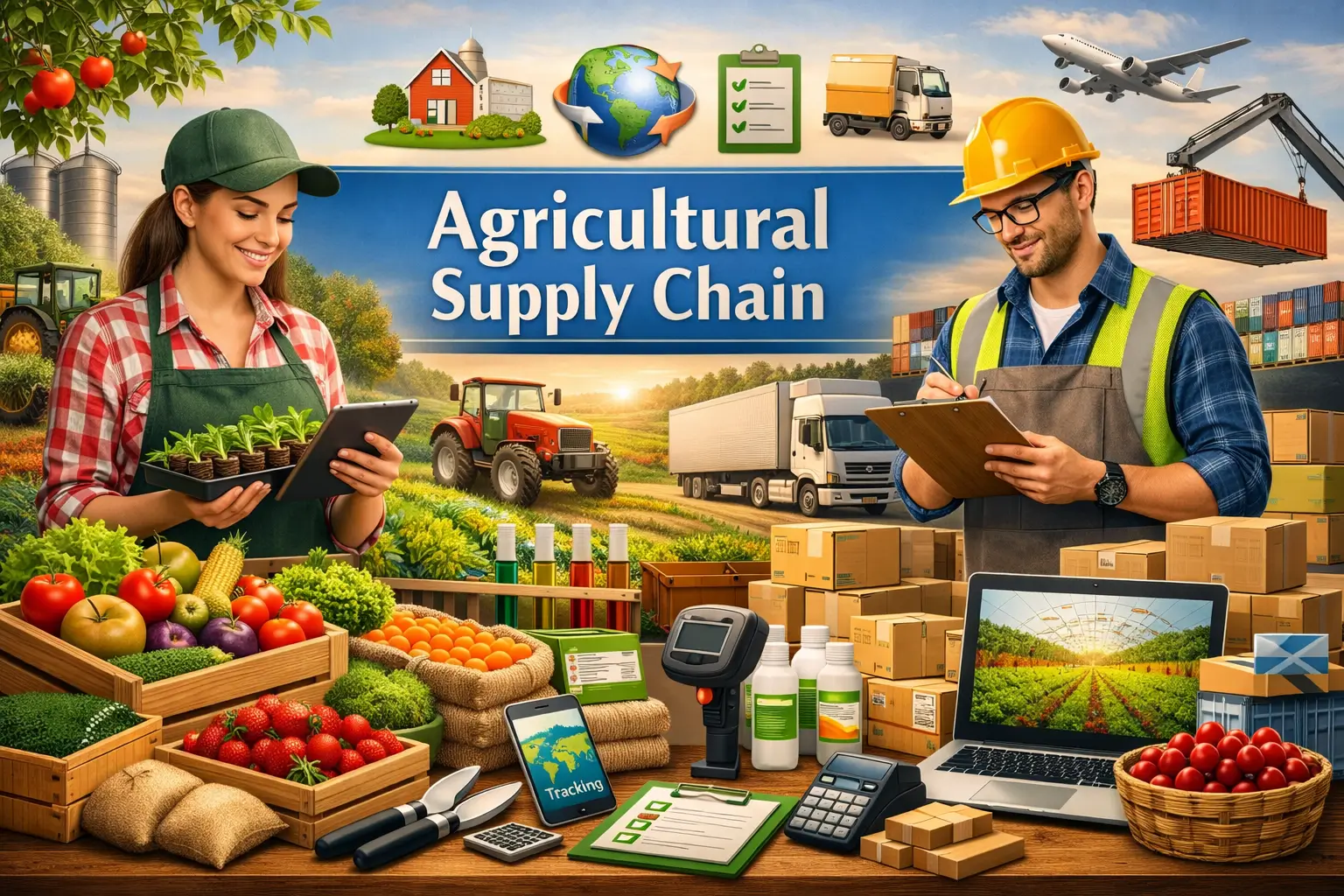
Agricultural Supply Chain Course
The Agricultural Supply Chain Course is designed to help farmers, agribusiness professionals, supply chain managers, logistics specialists, procurement officers, warehouse managers, agricultural consultants, entrepreneurs, researchers, students, and individuals interested in agricultural logistics develop the knowledge and practical skills needed to manage efficient agricultural supply chains. As global demand for safe, high-quality agricultural products continues to grow, effective supply chain management has become essential for reducing losses, improving product quality, and ensuring timely delivery from farms to consumers.
This course introduces the core principles of agricultural supply chain management, including agricultural value chains, procurement, post-harvest handling, warehousing, inventory management, transportation, cold chain management, demand forecasting, quality control, traceability, digital supply chain technologies, sustainability, regulatory compliance, and risk management. Learners will gain practical knowledge of improving operational efficiency while maintaining product quality throughout the agricultural supply chain.
Whether you work in farming, agribusiness, food production, logistics, warehousing, export management, agricultural consulting, or retail, this course provides a comprehensive foundation in agricultural supply chain management.
Course Overview
The course explores the complete agricultural supply chain, from sourcing farm inputs and managing harvest operations to storage, transportation, distribution, quality assurance, and final delivery to domestic and international markets. Learners will understand how modern supply chain strategies reduce waste, improve profitability, strengthen food security, and enhance customer satisfaction.
The curriculum combines supply chain principles with practical exercises, logistics planning activities, industry case studies, and global best practices to prepare learners for careers in agricultural logistics and agribusiness management.
What You Will Learn
By completing this course, you will be able to:
- Understand agricultural supply chain principles.
- Manage agricultural value chains.
- Improve procurement processes.
- Apply post-harvest handling techniques.
- Optimize warehousing operations.
- Manage agricultural inventory effectively.
- Plan transportation and logistics.
- Implement cold chain management.
- Improve demand forecasting.
- Maintain product quality and traceability.
- Apply digital supply chain technologies.
- Manage supply chain risks.
- Ensure regulatory compliance.
- Support sustainable agricultural logistics.
- Improve farm-to-market efficiency.
Course Curriculum
The curriculum begins with agricultural supply chain fundamentals before progressing through procurement, post-harvest handling, warehousing, logistics, cold chain systems, forecasting, traceability, digital technologies, sustainability, regulatory compliance, industry case studies, and future innovations.
Practical assignments help learners solve real-world agricultural logistics and distribution challenges.
Skills You Will Gain
After completing the course, you will develop skills in:
- Agricultural Supply Chain Management
- Agricultural Logistics
- Agricultural Value Chain Management
- Procurement Management
- Post-Harvest Handling
- Warehousing Operations
- Inventory Management
- Cold Chain Management
- Transportation Planning
- Demand Forecasting
- Product Traceability
- Supply Chain Risk Management
- Sustainable Supply Chains
- Agribusiness Operations
- Digital Supply Chain Technologies
Benefits of the Course
This course helps learners improve supply chain efficiency, reduce post-harvest losses, optimize logistics, strengthen product quality, improve inventory control, and support sustainable agricultural operations. Strong agricultural supply chain skills enable organizations to increase profitability, improve customer satisfaction, reduce operational costs, and enhance market competitiveness.
These skills are highly valuable across agribusiness companies, food processing organizations, agricultural cooperatives, logistics providers, export companies, warehousing firms, retail businesses, government agriculture departments, consulting firms, and multinational agricultural corporations.
Who Should Enroll
This course is ideal for:
- Farmers
- Agribusiness Professionals
- Supply Chain Managers
- Logistics Coordinators
- Warehouse Managers
- Procurement Officers
- Agricultural Consultants
- Export Managers
- Food Processing Professionals
- Entrepreneurs
- Researchers
- Students
- Operations Managers
- Distribution Specialists
- Anyone interested in agricultural supply chains
Career Opportunities
After completing the Agricultural Supply Chain Course, learners may strengthen their qualifications for roles such as:
- Agricultural Supply Chain Manager
- Agribusiness Operations Manager
- Logistics Manager
- Procurement Specialist
- Warehouse Manager
- Distribution Manager
- Export Coordinator
- Supply Chain Analyst
- Cold Chain Specialist
- Agricultural Logistics Consultant
These skills are valuable across agribusiness companies, food processing industries, logistics organizations, agricultural cooperatives, retail supply chains, export businesses, government agencies, research institutions, consulting firms, and multinational food companies.
Certification Details
Upon successful completion, learners receive a Certificate of Completion recognizing their expertise in Agricultural Supply Chain Management and agribusiness logistics. This certification enhances your professional profile and supports career advancement in agriculture, agribusiness, logistics, procurement, warehousing, food distribution, supply chain management, and agricultural consulting.
If you want to optimize agricultural logistics, improve farm-to-market operations, and build expertise in modern agricultural supply chain management, the Agricultural Supply Chain Course provides practical, industry-relevant knowledge for today’s agriculture and food industries.
FAQ SECTION
1. What is the Agricultural Supply Chain Course?
It teaches how agricultural products move efficiently from farms to consumers through procurement, storage, transportation, logistics, and distribution while maintaining quality and reducing losses.
2. Is this course suitable for beginners?
Yes. The course starts with agricultural supply chain fundamentals and is suitable for beginners as well as agribusiness and logistics professionals.
3. What topics are covered?
Agricultural value chains, procurement, post-harvest handling, warehousing, inventory management, transportation, cold chain management, demand forecasting, quality control, traceability, sustainability, and regulatory compliance.
4. Do I need previous supply chain experience?
No. The course is designed for beginners, students, farmers, agribusiness professionals, entrepreneurs, logistics specialists, and anyone interested in agricultural supply chains.
5. Is the course online?
Yes. The course is fully online and self-paced.
6. Will I receive a certificate?
Yes. A certificate is awarded after successfully completing the course.
7. Who should enroll?
Farmers, agribusiness professionals, logistics managers, warehouse managers, procurement officers, agricultural consultants, export professionals, researchers, students, entrepreneurs, and anyone interested in agricultural logistics.
8. What skills will I gain?
Agricultural logistics, procurement, warehousing, inventory management, cold chain management, transportation planning, demand forecasting, product traceability, supply chain risk management, and sustainable agricultural operations.
9. Can this course help my career?
Yes. Agricultural supply chain management skills are highly valued across agribusiness companies, food processing industries, logistics providers, export companies, retail organizations, government departments, consulting firms, agricultural cooperatives, and multinational food businesses.
10. Why is Agricultural Supply Chain Management important?
Agricultural Supply Chain Management improves the movement of agricultural products from farms to markets, reduces post-harvest losses, maintains product quality, enhances food safety, optimizes logistics, lowers operational costs, strengthens market access, supports sustainable agriculture, and increases profitability across the agricultural value chain.




Reviews
There are no reviews yet.