
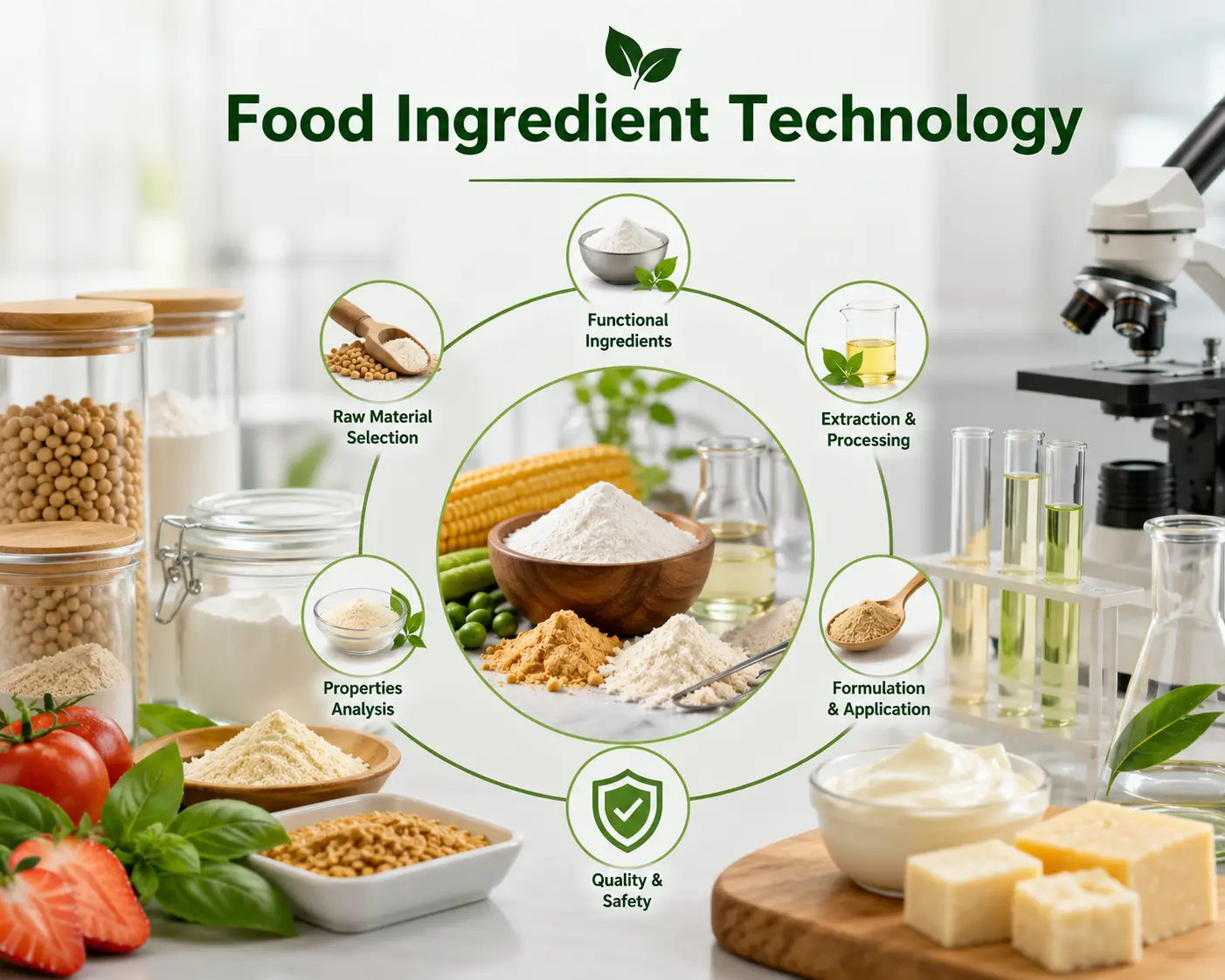
Introduction to Food Ingredient Technology
The Food Ingredient Technology Course is a detailed professional training program designed to help learners understand the science, functionality, and industrial application of food ingredients used in modern food production systems. Food ingredients are the building blocks of all processed foods, and their selection and combination directly influence product quality, safety, shelf life, nutritional value, and consumer acceptance.
This course bridges food science, chemistry, microbiology, and food engineering to provide a strong foundation in how ingredients behave during processing, storage, and consumption. Learners will gain both theoretical understanding and practical insight into how food products are developed and optimized in industrial environments.
Importance of Food Ingredient Technology
In today’s food industry, consumer demand is increasing for safe, nutritious, and high-quality products with improved taste, texture, and shelf life. Food manufacturers rely heavily on ingredient technology to meet these expectations.
Proper understanding of ingredients helps in:
- Improving product stability and consistency
- Enhancing sensory qualities (taste, aroma, texture)
- Extending shelf life and preventing spoilage
- Ensuring food safety and regulatory compliance
- Supporting innovation in new food products
- Reducing production costs and waste
This course enables professionals to make informed decisions about ingredient selection and formulation strategies.
Course Overview
The course begins with fundamentals of food chemistry and ingredient classification. Learners explore major ingredient categories including macronutrients, micronutrients, functional additives, and bioactive compounds.
It further explains how ingredients interact under different processing conditions such as heating, freezing, fermentation, emulsification, and drying. Special attention is given to formulation science used in commercial food production.
Types of Food Ingredients Covered
1. Macronutrients
- Carbohydrates (starch, sugars, fibers)
- Proteins (animal and plant-based)
- Lipids (oils and fats)
2. Functional Ingredients
- Emulsifiers
- Stabilizers
- Thickeners
- Gelling agents
3. Additives
- Preservatives
- Antioxidants
- Flavor enhancers
- Colorants
4. Bioactive Ingredients
- Vitamins and minerals
- Probiotics and prebiotics
- Functional nutraceuticals
Food Ingredient Functionality
Learners will study how ingredients contribute to:
- Texture formation (softness, crunchiness, viscosity)
- Flavor development and enhancement
- Color stability and visual appeal
- Shelf-life extension and preservation
- Nutritional enrichment
- Food safety improvement
Food Processing and Ingredient Behavior
The course explains how ingredients behave under various processing conditions:
- Heat treatment (baking, pasteurization, sterilization)
- Cooling and freezing processes
- Fermentation reactions
- Drying and dehydration methods
- Mixing, emulsification, and homogenization
Food Formulation Science
Learners will understand how food products are developed through ingredient balancing and optimization. This includes:
- Recipe formulation principles
- Ingredient substitution techniques
- Product consistency control
- Cost optimization strategies
- Sensory evaluation methods
Food Safety and Regulations
The course covers essential food safety and regulatory frameworks, including:
- Food additive regulations
- Ingredient labeling requirements
- International food safety standards
- Quality control systems
- HACCP principles related to ingredients
Industrial Applications
Food ingredient technology is applied in:
- Bakery and confectionery industry
- Dairy and frozen foods
- Beverage manufacturing
- Processed and packaged foods
- Nutraceutical and functional foods
- Meat and poultry processing
Skills You Will Gain
After completing this course, learners will be able to:
- Understand food ingredient chemistry
- Evaluate functional properties of ingredients
- Design food formulations
- Improve product quality and shelf life
- Apply food safety standards
- Analyze ingredient interactions
- Support food product innovation
- Work in food R&D and quality control
Conclusion
The Food Ingredient Technology Course provides a strong foundation in food science and industrial food production. It equips learners with essential skills to understand, evaluate, and apply food ingredients effectively in real-world food manufacturing systems while ensuring safety, quality, and innovation.




Reviews
There are no reviews yet.