
Introduction
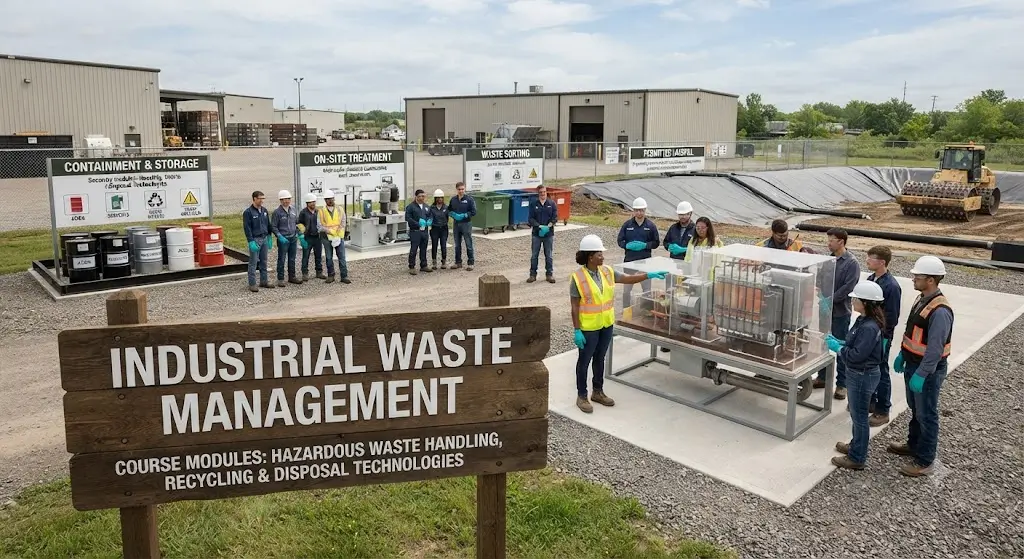
The Industrial Waste Management Course is a specialized environmental program designed to provide comprehensive knowledge about managing waste generated from industrial activities. Rapid industrialization has led to increased production of solid, liquid, and gaseous waste, which can severely impact air, water, and soil quality if not properly managed.
This course focuses on scientific and practical approaches to handling industrial waste in a safe, efficient, and environmentally responsible manner. It integrates environmental science, engineering principles, and regulatory frameworks to ensure sustainable industrial operations.
Course Overview
This course covers the complete lifecycle of industrial waste management, including waste identification, classification, collection, treatment, recycling, and disposal. It also emphasizes pollution prevention techniques and sustainable resource utilization in industrial systems.
Learners will study how industries can reduce waste generation at the source, implement cleaner production methods, and comply with environmental regulations.
What You Will Learn
- Types of industrial waste (solid, liquid, gaseous, hazardous)
- Waste generation in different industries
- Waste segregation and storage techniques
- Waste minimization and cleaner production methods
- Treatment technologies for industrial waste
- Recycling and resource recovery systems
- Pollution control techniques
- Environmental impact of industrial waste
- Waste disposal methods and safety practices
- Environmental laws and compliance standards
Skills You Will Gain
- Industrial waste assessment and classification
- Waste treatment system understanding
- Environmental compliance knowledge
- Pollution control strategy development
- Waste minimization planning
- Risk assessment and safety management
- Sustainability implementation skills
- Environmental monitoring and reporting
- Problem-solving in industrial environments
- Regulatory documentation skills
Benefits of the Course
- Builds expertise in industrial environmental management
- Helps reduce industrial pollution and waste
- Improves regulatory compliance awareness
- Enhances sustainability in industrial operations
- Supports green manufacturing practices
- Strengthens environmental safety systems
Who Should Enroll
- Environmental engineers
- EHS professionals
- Industrial managers
- Safety officers
- Chemical and process engineers
- Sustainability consultants
- Students of environmental science
- Factory and plant supervisors
Career Opportunities
- Industrial Waste Management Specialist
- Environmental Engineer
- EHS Manager
- Pollution Control Officer
- Sustainability Consultant
- Environmental Compliance Officer
- Waste Treatment Plant Engineer
- Industrial Safety Officer
- Environmental Auditor
- Resource Recovery Specialist
Certification
Upon completion, learners receive a professional certificate in Industrial Waste Management, validating expertise in industrial pollution control, waste treatment systems, and environmental compliance practices.
Conclusion
The Industrial Waste Management Course equips learners with essential knowledge and skills to manage industrial waste responsibly. It supports sustainable industrial development while ensuring environmental protection and regulatory compliance.
FAQ SECTION
1. What is industrial waste management?
It is the process of handling and treating waste generated by industries.
2. Who should take this course?
Engineers, EHS professionals, and environmental students.
3. Does it include hazardous waste?
Yes, hazardous industrial waste is included.
4. What types of waste are covered?
Solid, liquid, gaseous, and chemical waste.
5. Is pollution control included?
Yes, industrial pollution control methods are covered.
6. Can beginners join?
Yes, basic environmental knowledge is enough.
7. Does it cover regulations?
Yes, environmental laws and compliance are included.
8. Is this course practical?
Yes, it focuses on real industrial systems.
9. What industries use this knowledge?
Manufacturing, chemical, and process industries.
10. Does it help in jobs?
Yes, it is valuable for EHS and environmental careers.



Reviews
There are no reviews yet.