
Introduction
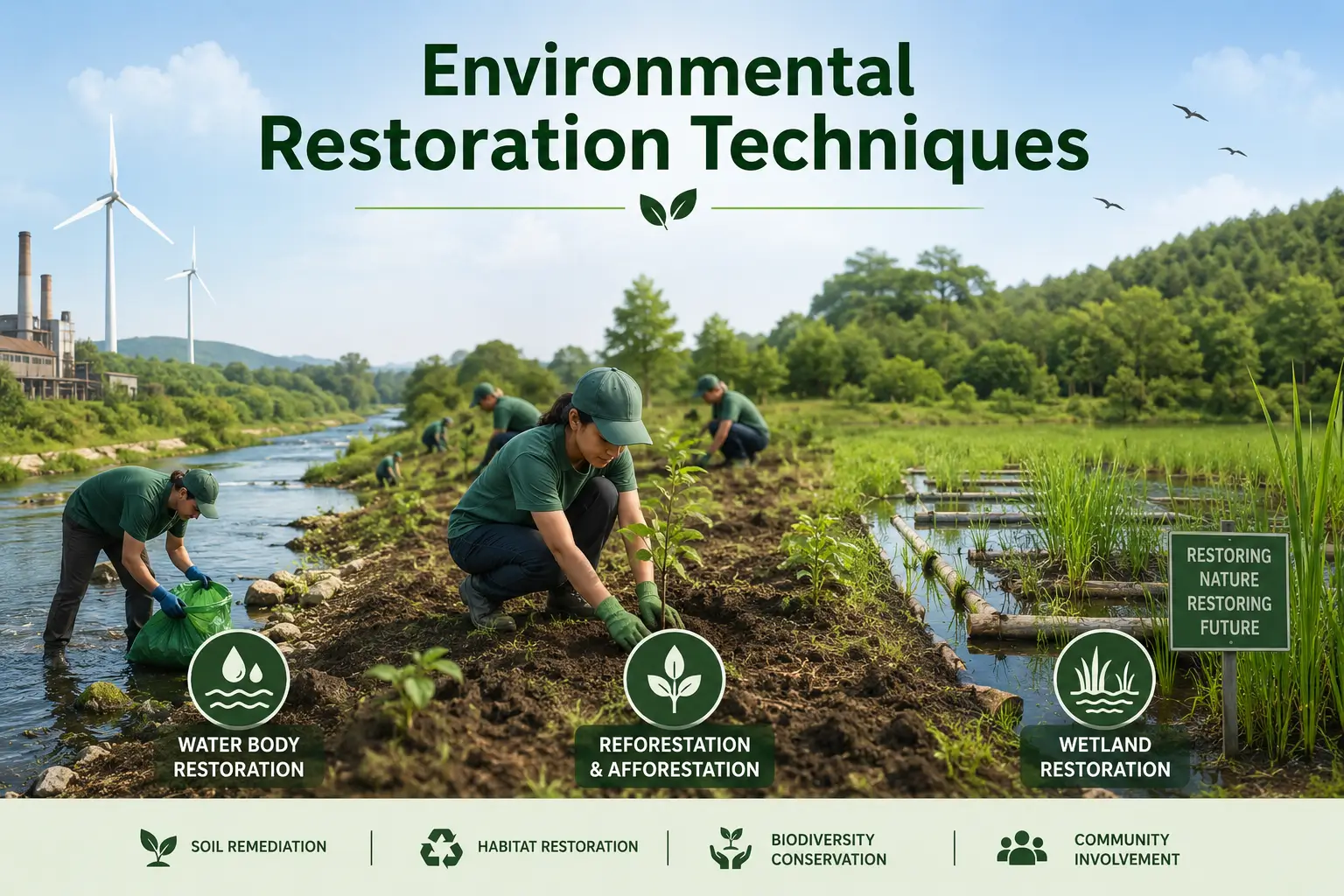
The Environmental Restoration Techniques Course is a specialized environmental training program designed to help learners understand how damaged ecosystems can be restored to their natural or functional state. Environmental degradation has become a major global challenge due to industrialization, land-use change, pollution, and climate change.
This course focuses on scientific methods and practical strategies used to restore forests, wetlands, rivers, soil systems, and degraded landscapes. It combines ecological science, environmental engineering, and sustainability principles to provide a comprehensive understanding of restoration practices.
Course Overview
This course provides detailed knowledge of ecosystem degradation and restoration processes. It explains how natural systems recover over time and how human intervention can accelerate ecological restoration.
Learners will study restoration ecology, environmental planning, soil and water rehabilitation, biodiversity recovery, and land management strategies used in environmental projects worldwide.
What You Will Learn
- Principles of environmental restoration
- Causes of ecosystem degradation
- Ecological succession and recovery processes
- Soil restoration and remediation techniques
- Reforestation and afforestation methods
- Wetland and aquatic ecosystem restoration
- Biodiversity recovery strategies
- Environmental impact assessment basics
- Sustainable land management practices
- Restoration project planning and monitoring
Skills You Will Gain
- Environmental restoration planning
- Ecosystem rehabilitation techniques
- Soil and water recovery methods
- Biodiversity restoration skills
- Environmental monitoring and assessment
- Data analysis for ecological recovery
- Project management in restoration work
- Sustainability planning
- Fieldwork and ecological surveying
- Problem-solving in environmental systems
Benefits of the Course
- Builds expertise in ecosystem restoration
- Supports environmental conservation careers
- Enhances ecological problem-solving skills
- Promotes sustainable land management
- Improves biodiversity recovery understanding
- Prepares for field-based environmental roles
Who Should Enroll
- Environmental science students
- Ecologists and conservationists
- Forestry professionals
- NGO workers
- Sustainability consultants
- Government environmental officers
- Urban and regional planners
- Researchers
Career Opportunities
- Environmental Restoration Specialist
- Ecologist
- Conservation Scientist
- Environmental Consultant
- Forestry Officer
- Sustainability Specialist
- Land Rehabilitation Expert
- Environmental Project Manager
- Biodiversity Restoration Officer
- Climate Adaptation Specialist
Certification
Upon completion, learners receive a professional certificate in Environmental Restoration Techniques, validating expertise in ecosystem rehabilitation, restoration ecology, and sustainable environmental management.
Conclusion
The Environmental Restoration Techniques Course equips learners with the knowledge and practical skills needed to restore damaged ecosystems and promote ecological balance. It plays a vital role in building a sustainable future by supporting environmental recovery and biodiversity conservation.
FAQ SECTION
1. What is environmental restoration?
It is the process of repairing damaged ecosystems and restoring ecological balance.
2. Who should take this course?
Students and professionals in environmental and ecological fields.
3. Does it cover soil restoration?
Yes, soil remediation techniques are included.
4. Is reforestation included?
Yes, forest restoration is a key topic.
5. Does it include aquatic restoration?
Yes, wetlands and water bodies are covered.
6. Can beginners join?
Yes, basic environmental knowledge is sufficient.
7. Is this course practical?
Yes, it includes real-world restoration methods.
8. What skills will I gain?
Restoration planning, ecological assessment, and monitoring skills.
9. Does it help in jobs?
Yes, it is useful in environmental and conservation sectors.
10. What industries use this knowledge?
Government, NGOs, forestry, and environmental consulting sectors.





Reviews
There are no reviews yet.