
Introduction
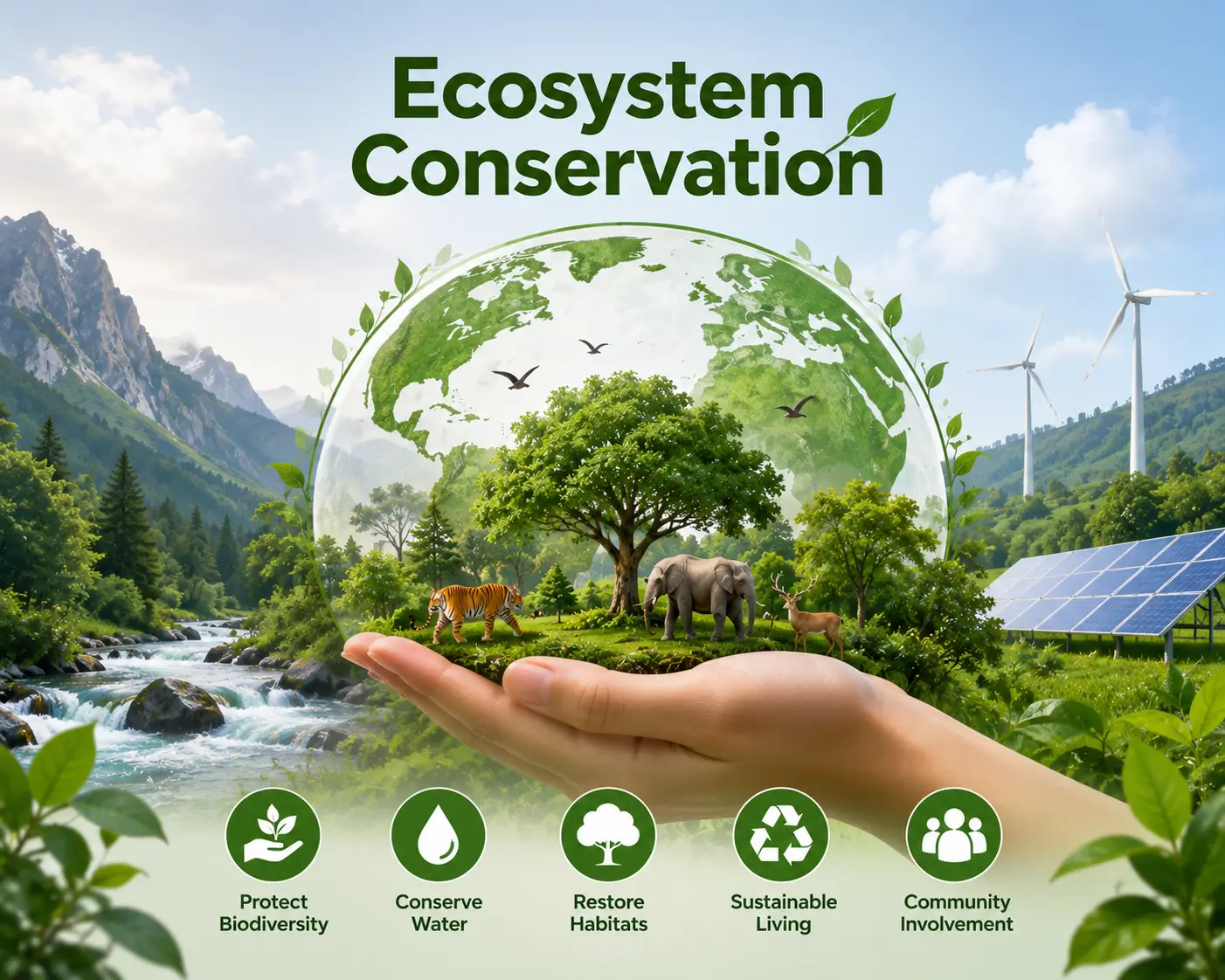
The Ecosystem Conservation Course is a specialized environmental program designed to help learners understand the structure, function, and importance of natural ecosystems and how they can be protected from degradation. Ecosystems are complex networks of living organisms and their physical environment, and they play a vital role in sustaining life on Earth.
Human activities such as deforestation, urbanization, pollution, industrialization, and climate change have significantly disrupted ecosystems worldwide. This course focuses on understanding these impacts and developing effective conservation strategies to restore ecological balance and ensure long-term sustainability.
Course Overview
This course provides a detailed study of ecological principles, biodiversity, habitat management, and conservation strategies. It covers how ecosystems operate, how species interact, and how environmental changes affect ecological stability.
Learners will explore terrestrial and aquatic ecosystems, conservation biology, environmental policies, and restoration techniques used by environmental professionals globally.
What You Will Learn
- Fundamentals of ecosystem structure and function
- Biodiversity and species interactions
- Types of ecosystems (forest, marine, freshwater, grassland)
- Human impacts on ecosystems
- Conservation biology principles
- Habitat restoration techniques
- Protected area management
- Environmental monitoring systems
- Climate change effects on ecosystems
- Sustainable resource use strategies
Skills You Will Gain
- Ecosystem analysis and evaluation
- Biodiversity assessment
- Environmental impact understanding
- Conservation planning
- Habitat restoration techniques
- Ecological data interpretation
- Sustainability planning
- Environmental problem-solving
- Research and field study skills
- Policy awareness in conservation
Benefits of the Course
- Builds strong foundation in environmental science
- Helps understand real-world ecological challenges
- Supports careers in conservation and sustainability
- Enhances environmental decision-making skills
- Encourages sustainable development thinking
- Prepares for field and research-based roles
Who Should Enroll
- Environmental science students
- Ecologists and researchers
- Sustainability professionals
- Forest and wildlife officers
- NGO workers
- Urban planners
- Policy makers
- Nature conservation enthusiasts
Career Opportunities
- Ecologist
- Environmental Scientist
- Conservation Officer
- Wildlife Biologist
- Sustainability Consultant
- Environmental Consultant
- Forest Officer
- Marine Conservation Specialist
- Environmental Policy Analyst
- Research Scientist
Certification
Upon completion, learners receive a professional certificate in Ecosystem Conservation, validating their knowledge in biodiversity protection, ecosystem management, and environmental sustainability practices.
Conclusion
The Ecosystem Conservation Course equips learners with the knowledge and skills required to protect natural ecosystems and promote sustainable environmental practices. It plays a crucial role in preparing professionals who can contribute to global conservation efforts and environmental restoration initiatives.
FAQ SECTION
1. What is ecosystem conservation?
It is the protection and restoration of natural ecosystems and biodiversity.
2. Who should take this course?
Students, environmental professionals, and conservation enthusiasts.
3. Does it cover biodiversity?
Yes, biodiversity is a core topic.
4. Is this course practical?
Yes, it includes real conservation strategies and case studies.
5. Does it include climate change topics?
Yes, ecosystem impacts of climate change are covered.
6. Can beginners join?
Yes, basic environmental knowledge is enough.
7. What ecosystems are studied?
Forests, oceans, wetlands, grasslands, and freshwater systems.
8. Is it useful for jobs?
Yes, in environmental and conservation sectors.
9. Does it include field work concepts?
Yes, ecological monitoring and field methods are included.
10. What is the main goal of this course?
To promote ecosystem protection and sustainable management.





Reviews
There are no reviews yet.