
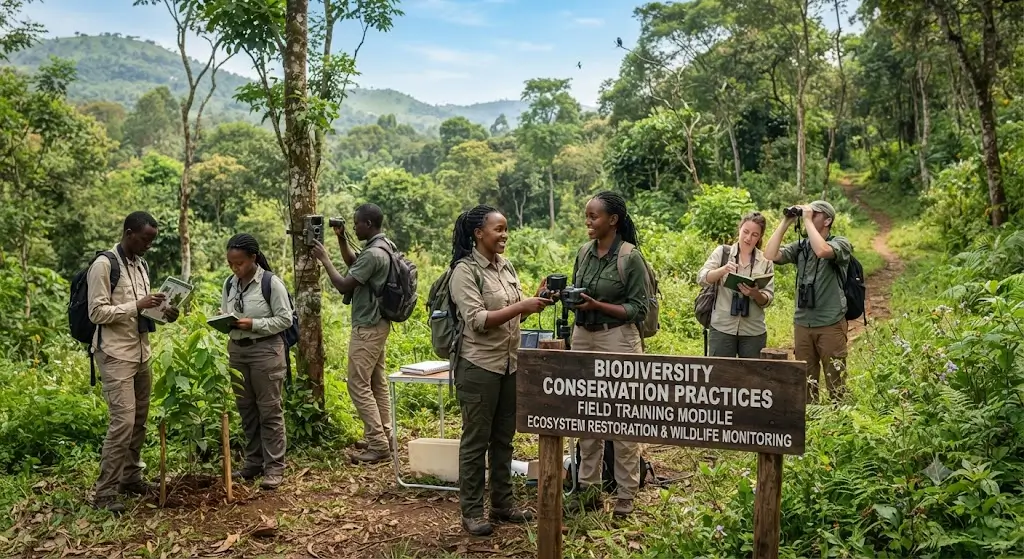
Introduction
The Biodiversity Conservation Practices Course is a comprehensive environmental training program designed to help learners understand the importance of biological diversity and the methods used to conserve it. Biodiversity includes all living organisms on Earth and their interactions within ecosystems, forming the foundation of life and ecological stability.
In recent decades, biodiversity has been declining rapidly due to human activities such as deforestation, industrialization, urban expansion, pollution, and climate change. This course focuses on understanding these challenges and implementing effective conservation practices to protect species and ecosystems.
Course Overview
This course provides a detailed study of biodiversity, ecological relationships, conservation methods, and environmental management strategies. It explains how ecosystems function and how human interventions impact biodiversity.
Learners will explore conservation biology principles, habitat protection, wildlife management, and sustainable development practices used globally to protect natural resources.
What You Will Learn
- Fundamentals of biodiversity and ecosystem diversity
- Importance of genetic, species, and ecosystem diversity
- Threats to biodiversity
- Conservation biology principles
- Habitat protection and restoration
- Wildlife conservation methods
- Protected area and reserve management
- Environmental monitoring techniques
- Sustainable resource utilization
- Climate change impact on biodiversity
Skills You Will Gain
- Biodiversity assessment and analysis
- Conservation planning
- Ecosystem management skills
- Wildlife protection strategies
- Environmental monitoring techniques
- Data interpretation in ecology
- Sustainability planning
- Field research skills
- Environmental decision-making
- Habitat restoration techniques
Benefits of the Course
- Builds strong foundation in biodiversity science
- Supports conservation and environmental careers
- Enhances ecological understanding
- Improves sustainability planning skills
- Helps in wildlife and ecosystem protection efforts
- Prepares for field-based environmental work
Who Should Enroll
- Environmental science students
- Ecologists and researchers
- Wildlife conservationists
- Forestry professionals
- NGO workers
- Sustainability consultants
- Government environmental officers
- Nature enthusiasts
Career Opportunities
- Biodiversity Conservation Officer
- Ecologist
- Wildlife Biologist
- Environmental Scientist
- Conservation Scientist
- Forest Officer
- Environmental Consultant
- Sustainability Specialist
- Marine Conservation Expert
- Research Analyst
Certification
Upon completion, learners receive a professional certification in Biodiversity Conservation Practices, validating their expertise in ecological protection, habitat management, and conservation strategies.
Conclusion
The Biodiversity Conservation Practices Course equips learners with essential knowledge and practical skills to protect and restore biodiversity. It prepares professionals to address global environmental challenges and contribute to sustainable ecosystem management.
FAQ SECTION
1. What is biodiversity conservation?
It is the protection and management of biological diversity in ecosystems.
2. Who should take this course?
Students and professionals in environmental and conservation fields.
3. Does it cover wildlife protection?
Yes, wildlife conservation is included.
4. Is habitat restoration included?
Yes, restoration techniques are a key topic.
5. Does it include climate impact?
Yes, climate effects on biodiversity are covered.
6. Can beginners join?
Yes, basic environmental knowledge is enough.
7. What ecosystems are studied?
Forests, marine, freshwater, and grassland ecosystems.
8. Is this course practical?
Yes, includes real conservation practices.
9. What skills will I gain?
Biodiversity assessment, conservation planning, and ecosystem management.
10. Is this useful for jobs?
Yes, in conservation, forestry, and environmental sectors.





Reviews
There are no reviews yet.