
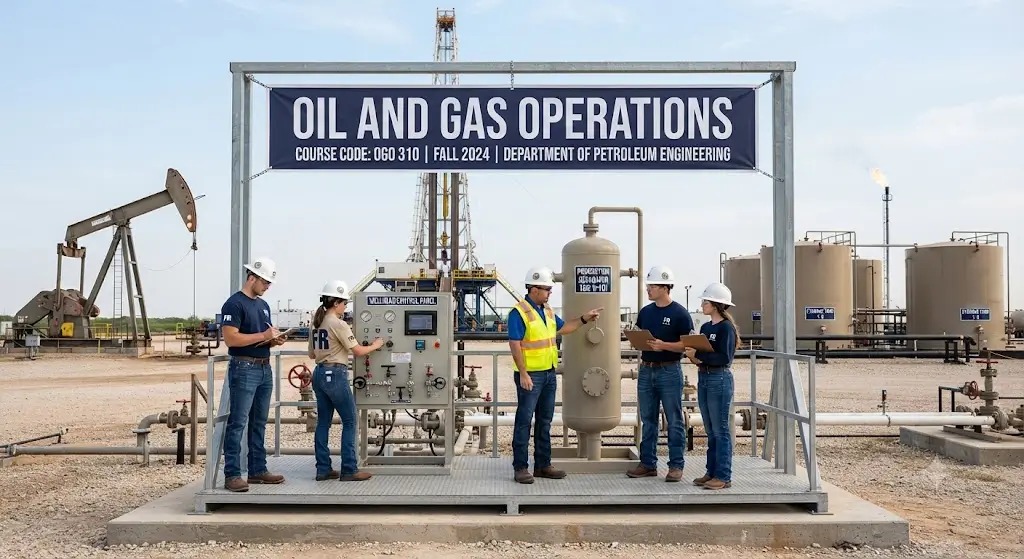
Oil and Gas Operations Course
The Oil and Gas Operations Course is designed to help engineers, technicians, energy professionals, supervisors, plant operators, project managers, students, and individuals interested in the petroleum industry develop the knowledge and practical skills required to understand oil and gas operations. The course provides a comprehensive overview of upstream, midstream, and downstream activities, helping learners understand how petroleum resources are explored, produced, processed, transported, and delivered to end users.
This course introduces the core principles of oil and gas operations, including petroleum exploration, drilling, production, refining, transportation, storage, distribution, health, safety, and environmental (HSE) practices, equipment management, operational efficiency, maintenance planning, regulatory compliance, and emerging energy technologies. Learners will gain practical knowledge of industry workflows and operational best practices used across the global oil and gas sector.
Whether you are beginning a career in the energy industry or looking to strengthen your operational knowledge, this course provides a comprehensive foundation in oil and gas operations.
Course Overview
The course explores the complete oil and gas value chain, from exploration and drilling to production, refining, transportation, storage, and distribution. Learners will understand how each operational stage contributes to energy production while maintaining safety, efficiency, environmental responsibility, and regulatory compliance.
The curriculum combines petroleum industry fundamentals with practical learning activities, operational case studies, equipment overviews, and industry best practices to prepare learners for real-world energy sector environments.
What You Will Learn
By completing this course, you will be able to:
- Understand the structure of the oil and gas industry.
- Differentiate upstream, midstream, and downstream operations.
- Explain petroleum exploration and drilling processes.
- Understand oil and gas production systems.
- Learn transportation and pipeline operations.
- Understand refining and petroleum processing fundamentals.
- Apply health, safety, and environmental (HSE) practices.
- Identify major oil and gas equipment and technologies.
- Improve operational efficiency.
- Understand maintenance planning.
- Monitor production performance.
- Comply with industry regulations.
- Recognize environmental sustainability practices.
- Support operational decision-making.
- Build foundational knowledge for energy sector careers.
Course Curriculum
The curriculum begins with petroleum industry fundamentals before progressing through exploration, drilling, production, transportation, refining, storage, maintenance, HSE management, compliance, operational performance, case studies, and future energy trends.
Practical assignments help learners understand real-world oil and gas operational processes.
Skills You Will Gain
After completing the course, you will develop skills in:
- Oil and Gas Operations
- Petroleum Industry Fundamentals
- Upstream Operations
- Midstream Operations
- Downstream Operations
- Drilling Operations
- Production Management
- Refinery Fundamentals
- Pipeline Operations
- HSE Management
- Operational Maintenance
- Energy Process Management
- Regulatory Compliance
- Operational Efficiency
- Industrial Safety
Benefits of the Course
This course helps learners understand the complete oil and gas operational lifecycle while improving technical knowledge, operational awareness, and industry readiness. Strong operational knowledge supports safer workplaces, improved productivity, better regulatory compliance, and more efficient energy production.
These skills are highly valuable across oil exploration companies, petroleum producers, refineries, pipeline operators, energy service providers, engineering firms, offshore operations, power generation companies, industrial manufacturing organizations, and government energy agencies.
Who Should Enroll
This course is ideal for:
- Oil and Gas Professionals
- Petroleum Engineers
- Mechanical Engineers
- Chemical Engineers
- Plant Operators
- Field Technicians
- Operations Supervisors
- Maintenance Professionals
- Energy Consultants
- Project Managers
- Engineering Students
- Energy Sector Professionals
- Safety Officers
- Industrial Operations Professionals
- Anyone interested in the petroleum industry
Career Opportunities
After completing the Oil and Gas Operations Course, learners may strengthen their qualifications for roles such as:
- Oil and Gas Operations Engineer
- Production Engineer
- Petroleum Technician
- Refinery Operations Supervisor
- Pipeline Operations Specialist
- Plant Operator
- Maintenance Engineer
- HSE Officer
- Energy Operations Coordinator
- Oil and Gas Project Engineer
These skills are valuable across petroleum exploration companies, refineries, energy service providers, engineering firms, pipeline operators, offshore drilling companies, manufacturing industries, utility companies, consulting organizations, and government energy departments.
Certification Details
Upon successful completion, learners receive a Certificate of Completion recognizing their expertise in Oil and Gas Operations and petroleum industry fundamentals. This certification enhances your professional profile and supports career advancement in petroleum engineering, refinery operations, production management, energy services, industrial operations, HSE management, and project management.
If you want to understand the complete oil and gas value chain and build practical operational knowledge for the energy sector, the Oil and Gas Operations Course provides industry-relevant skills for today’s evolving petroleum industry.
FAQ SECTION
1. What is the Oil and Gas Operations Course?
It teaches the fundamentals of oil and gas exploration, drilling, production, refining, transportation, storage, and operational management across the petroleum industry.
2. Is this course suitable for beginners?
Yes. The course begins with industry fundamentals and is suitable for beginners as well as engineers, technicians, and energy professionals.
3. What topics are covered?
Upstream, midstream, downstream operations, petroleum exploration, drilling, production, refining, pipeline operations, HSE practices, maintenance, compliance, and operational efficiency.
4. Do I need previous oil and gas industry experience?
No. The course is designed for beginners, engineering students, technicians, professionals, and anyone interested in the petroleum and energy industries.
5. Is the course online?
Yes. The course is fully online and self-paced.
6. Will I receive a certificate?
Yes. A certificate is awarded after successfully completing the course.
7. Who should enroll?
Petroleum engineers, mechanical engineers, chemical engineers, technicians, plant operators, project managers, maintenance professionals, engineering students, energy consultants, and anyone interested in oil and gas operations.
8. What skills will I gain?
Oil and gas operations, drilling fundamentals, production management, refinery operations, pipeline management, HSE practices, maintenance planning, operational efficiency, regulatory compliance, and industrial safety.
9. Can this course help my career?
Yes. Oil and gas operational skills are highly valued across exploration companies, refineries, engineering firms, pipeline operators, energy service providers, offshore operations, manufacturing industries, utility companies, consulting organizations, and government energy agencies.
10. Why are Oil and Gas Operations important?
Oil and Gas Operations ensure the efficient exploration, production, transportation, refining, and distribution of petroleum resources while maintaining safety, environmental responsibility, regulatory compliance, operational efficiency, and reliable energy supply.




Reviews
There are no reviews yet.