
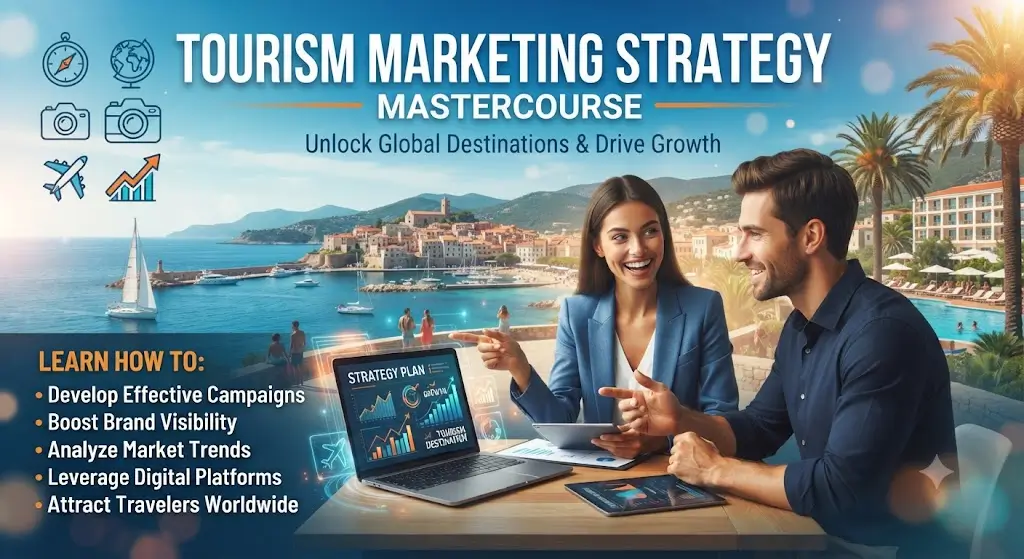
Introduction to Tourism Marketing Strategy
The Tourism Marketing Strategy Course is a comprehensive professional training program designed to prepare learners for planning and managing marketing activities within the tourism and hospitality industry. As travelers increasingly rely on digital platforms, online reviews, social media, and personalized experiences when choosing destinations and travel services, strategic marketing has become essential for tourism businesses of all sizes.
Tourism marketing involves understanding traveler behavior, identifying target markets, creating compelling destination brands, promoting tourism products, and delivering consistent customer experiences. Effective marketing strategies help hotels, resorts, tour operators, travel agencies, airlines, destination management organizations, and tourism boards attract visitors while strengthening long-term customer relationships.
This course combines marketing principles with tourism management practices to help learners develop practical skills in strategic planning, digital promotion, branding, market analysis, and campaign management. Whether working in destination marketing, hospitality, travel services, or tourism entrepreneurship, participants gain valuable knowledge applicable across the global tourism industry.
Why Tourism Marketing Strategy Matters
The tourism industry is highly competitive, with destinations and businesses competing for the attention of travelers worldwide. Successful tourism organizations must differentiate themselves through strong branding, personalized experiences, innovative marketing campaigns, and meaningful customer engagement.
Strategic tourism marketing supports business growth by increasing brand awareness, improving online visibility, attracting qualified visitors, encouraging repeat travel, and building customer loyalty. It also helps organizations adapt to changing traveler preferences, emerging technologies, and global tourism trends.
The Tourism Marketing Strategy Course helps learners understand how marketing strategy contributes to tourism business success while supporting sustainable destination development and exceptional visitor experiences.
Course Overview
The Tourism Marketing Strategy Course introduces learners to the planning, development, implementation, and evaluation of tourism marketing strategies.
Participants begin by studying tourism marketing fundamentals, traveler behavior, market segmentation, branding, and competitive positioning. The course explores destination marketing, digital marketing, search engine optimization (SEO), content creation, social media campaigns, influencer marketing, email marketing, customer relationship management, and online reputation management.
Learners also study marketing analytics, budgeting, campaign performance measurement, tourism technology, sustainability, strategic planning, innovation, and customer experience management.
Practical case studies demonstrate how successful tourism organizations develop integrated marketing strategies that increase visitor engagement, improve brand recognition, and support long-term business growth.
Topics Covered
Throughout the Tourism Marketing Strategy Course, learners will study:
Tourism Marketing Fundamentals
Understand tourism marketing principles, customer journeys, tourism products, and marketing planning.
Market Research and Consumer Behavior
Learn market analysis, customer segmentation, traveler behavior, demand forecasting, and competitor analysis.
Destination Branding
Study destination identity, brand positioning, storytelling, visual branding, and brand communication strategies.
Digital Marketing
Explore search engine optimization (SEO), search engine marketing (SEM), email marketing, online advertising, and digital campaign management.
Social Media Marketing
Understand social media strategy, influencer collaborations, content creation, audience engagement, and community building.
Content Marketing
Learn content planning, blogging, video marketing, visual storytelling, and promotional content development for tourism businesses.
Customer Relationship Management (CRM)
Study customer engagement, loyalty programs, personalized communication, guest retention, and relationship marketing.
Marketing Analytics and Performance Measurement
Explore campaign evaluation, website analytics, key performance indicators (KPIs), conversion tracking, and return on investment (ROI).
Tourism Technology
Understand online booking systems, CRM software, marketing automation platforms, artificial intelligence applications, and tourism data analytics.
Sustainable Tourism Marketing
Learn responsible destination promotion, ethical marketing practices, community engagement, environmental awareness, and sustainable tourism branding.
Skills You Will Gain
After completing the Tourism Marketing Strategy Course, learners will develop valuable professional skills including:
- Tourism marketing strategy
- Destination branding
- Market research
- Consumer behavior analysis
- Digital marketing
- Search engine optimization (SEO)
- Social media marketing
- Content marketing
- Customer relationship management
- Marketing analytics
- Campaign planning
- Strategic planning
- Communication
- Problem-solving
- Decision-making
These competencies are valuable across tourism boards, travel agencies, tour operators, hotels, resorts, airlines, destination management companies, hospitality organizations, and tourism marketing agencies.
Benefits of the Course
The Tourism Marketing Strategy Course provides practical knowledge for creating successful tourism marketing campaigns and building competitive tourism brands.
Participants gain confidence in conducting market research, developing branding strategies, managing digital marketing campaigns, analyzing customer behavior, and improving marketing performance. The course also strengthens creativity, communication, analytical thinking, and leadership skills that support long-term career growth.
As digital transformation continues to reshape global tourism, professionals with expertise in tourism marketing strategy remain highly sought after across public and private tourism organizations.
Who Should Enroll?
This course is suitable for:
- Tourism management students
- Hospitality professionals
- Travel consultants
- Destination marketing executives
- Tourism entrepreneurs
- Marketing professionals
- Hotel and resort managers
- Tour operators
- Tourism board employees
- Individuals pursuing careers in tourism marketing
No previous marketing experience is required.
Career Opportunities
After completing the Tourism Marketing Strategy Course, learners may pursue careers such as:
- Tourism Marketing Manager
- Destination Marketing Executive
- Digital Marketing Specialist
- Travel Marketing Consultant
- Tourism Brand Manager
- Social Media Manager
- Content Marketing Specialist
- Tourism Business Development Manager
- Customer Relationship Manager
- Marketing Analyst
- Tourism Communications Officer
- Hotel Marketing Manager
- Resort Marketing Executive
- Tourism Promotion Officer
- Tourism Strategy Consultant
Certification
Upon successful completion of the Tourism Marketing Strategy Course, learners receive a professional certificate recognizing their expertise in tourism marketing strategy, destination branding, digital marketing, customer relationship management, marketing analytics, tourism technology, and sustainable tourism promotion. This certification supports career advancement across travel agencies, tourism boards, hotels, resorts, airlines, destination management organizations, and hospitality businesses.
Frequently Asked Questions (FAQs)
1. What is the Tourism Marketing Strategy Course?
The course teaches how to develop and implement effective marketing strategies for tourism businesses, destinations, and hospitality organizations.
2. Who should enroll in this course?
Tourism students, hospitality professionals, marketers, entrepreneurs, destination managers, travel consultants, and tourism executives can benefit from this course.
3. Do I need previous marketing experience?
No. The course is suitable for beginners as well as experienced professionals looking to strengthen their tourism marketing skills.
4. What topics are covered?
Topics include tourism marketing, destination branding, SEO, social media marketing, content marketing, CRM, digital marketing, tourism analytics, and sustainable marketing.
5. Will I receive a certificate?
Yes. Participants receive a certificate after successfully completing the course.
6. What skills will I develop?
You will develop skills in tourism marketing, branding, digital promotion, market research, customer engagement, campaign planning, analytics, and strategic marketing.
7. Is this course suitable for tourism business owners?
Yes. The course is ideal for entrepreneurs, tourism managers, travel agencies, tour operators, and hospitality businesses seeking to improve their marketing performance.
8. Can this course improve my tourism career?
Yes. It prepares learners for marketing, branding, communications, digital marketing, consulting, and management roles within the tourism industry.
9. Does the course include digital marketing and SEO?
Yes. The course covers SEO, social media marketing, content marketing, online advertising, CRM systems, marketing automation, and digital analytics.
10. Why is tourism marketing strategy important?
Effective tourism marketing strategy helps attract visitors, strengthen destination brands, improve customer engagement, increase bookings, enhance business competitiveness, and support sustainable tourism growth.





Reviews
There are no reviews yet.