
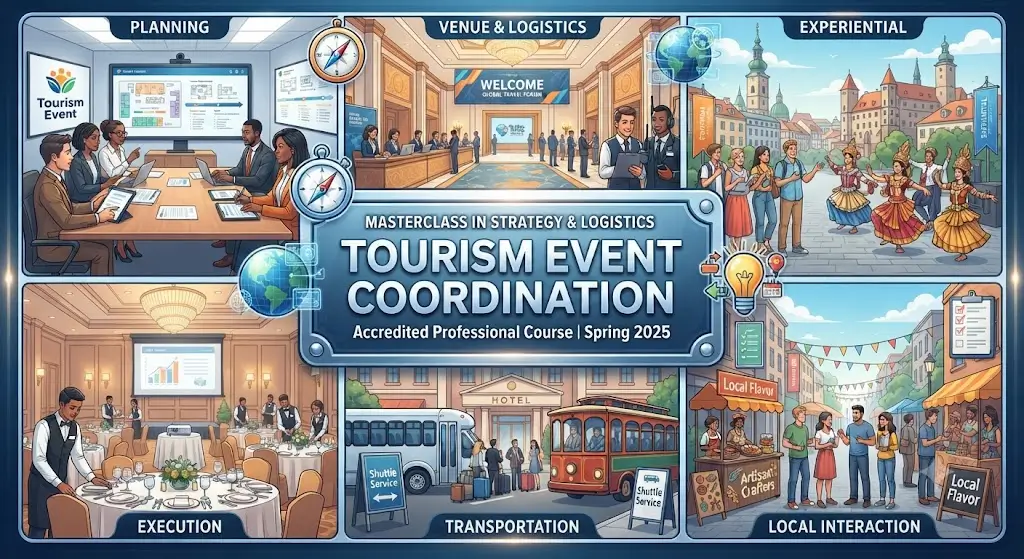
Introduction to Tourism Event Coordination
The Tourism Event Coordination Course is a comprehensive professional training program designed to prepare learners for planning and managing events that support tourism development and destination promotion. Tourism events include festivals, cultural celebrations, exhibitions, conferences, trade shows, sporting events, food festivals, community events, entertainment programs, and promotional activities that attract visitors and stimulate local economies.
Tourism event coordination involves organizing people, resources, venues, budgets, suppliers, marketing activities, and operational logistics to ensure successful event execution. Well-managed tourism events enhance destination branding, encourage visitor spending, strengthen community participation, and create positive travel experiences.
This course combines tourism management principles with professional event coordination practices to help learners develop practical skills applicable across tourism organizations, destination management companies, hotels, resorts, convention centers, travel agencies, and event management firms.
Why Tourism Event Coordination Matters
Tourism events play an important role in attracting domestic and international visitors, promoting local culture, supporting businesses, and increasing destination visibility. Successful events require careful planning, effective communication, resource management, and strong stakeholder collaboration.
Professional event coordination helps reduce operational risks, improve attendee satisfaction, manage budgets efficiently, optimize logistics, and deliver high-quality experiences. It also supports destination marketing, community development, and sustainable tourism initiatives.
The Tourism Event Coordination Course helps learners understand how strategic event planning contributes to tourism growth while creating memorable experiences for visitors and local communities.
Course Overview
The Tourism Event Coordination Course introduces learners to the complete event management process from planning to evaluation.
Participants begin by studying tourism event planning, destination events, project management, budgeting, and event logistics. The course explores venue selection, supplier coordination, marketing campaigns, sponsorship management, customer service, volunteer coordination, hospitality operations, and visitor engagement.
Learners also study event technology, digital ticketing, risk management, legal compliance, sustainability, event performance measurement, leadership, communication, and post-event reporting.
Practical case studies demonstrate how successful tourism organizations coordinate events that strengthen destination branding, increase visitor participation, and improve business performance.
Topics Covered
Throughout the Tourism Event Coordination Course, learners will study:
Tourism Event Fundamentals
Understand tourism events, event classifications, planning frameworks, and destination event management.
Event Planning
Learn event objectives, scheduling, budgeting, timelines, resource allocation, and project planning.
Venue and Logistics Management
Study venue selection, transportation planning, accommodation coordination, supplier management, equipment planning, and operational logistics.
Marketing and Promotion
Explore destination marketing, digital marketing, social media campaigns, branding, media relations, sponsorship, and promotional strategies.
Customer Experience Management
Understand attendee engagement, hospitality services, registration management, customer support, accessibility, and service quality.
Financial Management
Learn budgeting, pricing strategies, sponsorship management, financial forecasting, procurement, and cost control.
Risk Management and Compliance
Study health and safety, emergency planning, legal requirements, insurance, crowd management, and crisis response.
Tourism Technology
Explore event management software, online registration systems, ticketing platforms, mobile event applications, CRM systems, and event analytics.
Sustainable Event Management
Understand waste reduction, energy conservation, sustainable procurement, community participation, and environmentally responsible event planning.
Event Evaluation
Learn performance measurement, attendee feedback analysis, reporting, return on investment (ROI), quality improvement, and continuous event development.
Skills You Will Gain
After completing the Tourism Event Coordination Course, learners will develop valuable professional skills including:
- Tourism event planning
- Event coordination
- Budget management
- Logistics planning
- Venue management
- Tourism marketing
- Customer service
- Stakeholder management
- Risk management
- Event technology
- Leadership
- Communication
- Project management
- Problem-solving
- Decision-making
These competencies are valuable across tourism boards, event management companies, hotels, resorts, convention centers, travel agencies, destination management organizations, and hospitality businesses.
Benefits of the Course
The Tourism Event Coordination Course provides practical knowledge for planning and managing successful tourism events that enhance visitor experiences and strengthen destination competitiveness.
Participants gain confidence in coordinating event operations, managing budgets, supervising teams, implementing marketing strategies, and evaluating event performance. The course also strengthens leadership, organizational, communication, and analytical skills that support career advancement.
As destinations increasingly use festivals, exhibitions, conferences, and cultural events to attract visitors, professionals with expertise in tourism event coordination continue to be in high demand.
Who Should Enroll?
This course is suitable for:
- Tourism management students
- Hospitality professionals
- Event planners
- Destination managers
- Travel consultants
- Tourism entrepreneurs
- Hotel managers
- Resort managers
- Tourism coordinators
- Individuals interested in event management
No previous event management experience is required.
Career Opportunities
After completing the Tourism Event Coordination Course, learners may pursue careers such as:
- Tourism Event Coordinator
- Event Manager
- Destination Events Manager
- Conference Coordinator
- Festival Manager
- Convention Services Manager
- Tourism Project Manager
- Hospitality Events Manager
- Event Marketing Executive
- Travel Event Planner
- Destination Promotion Officer
- Visitor Experience Coordinator
- Tourism Consultant
- Sponsorship Coordinator
- Event Operations Manager
Certification
Upon successful completion of the Tourism Event Coordination Course, learners receive a professional certificate recognizing their expertise in tourism event planning, logistics management, hospitality operations, tourism marketing, event technology, sustainability, stakeholder coordination, and operational leadership. This certification supports career advancement across tourism organizations, hotels, resorts, convention centers, event management companies, destination management organizations, and hospitality businesses.
Frequently Asked Questions (FAQs)
1. What is the Tourism Event Coordination Course?
The course teaches how to plan, organize, coordinate, and evaluate tourism events that support destination promotion and visitor engagement.
2. Who should enroll in this course?
Tourism students, hospitality professionals, event planners, destination managers, travel consultants, entrepreneurs, hotel managers, and tourism executives can benefit from this course.
3. Do I need previous event management experience?
No. The course is suitable for beginners as well as professionals seeking to strengthen their tourism event coordination skills.
4. What topics are covered?
Topics include event planning, logistics, budgeting, tourism marketing, venue management, customer service, event technology, sustainability, and risk management.
5. Will I receive a certificate?
Yes. Participants receive a certificate after successfully completing the course.
6. What skills will I develop?
You will develop skills in event planning, logistics management, budgeting, customer service, tourism marketing, leadership, communication, event technology, and project management.
7. Is this course suitable for destination event organizers?
Yes. The course is valuable for professionals involved in festivals, conferences, exhibitions, destination events, tourism promotions, and hospitality events.
8. Can this course improve my tourism career?
Yes. It prepares learners for coordination, planning, management, consulting, and leadership roles in tourism, hospitality, and event management.
9. Does the course include event technology?
Yes. The course covers event management software, online registration systems, ticketing platforms, CRM tools, mobile event applications, and event analytics.
10. Why is tourism event coordination important?
Effective tourism event coordination improves visitor experiences, strengthens destination branding, supports local businesses, increases tourism revenue, enhances operational efficiency, and contributes to sustainable tourism development.




Reviews
There are no reviews yet.