
Introduction
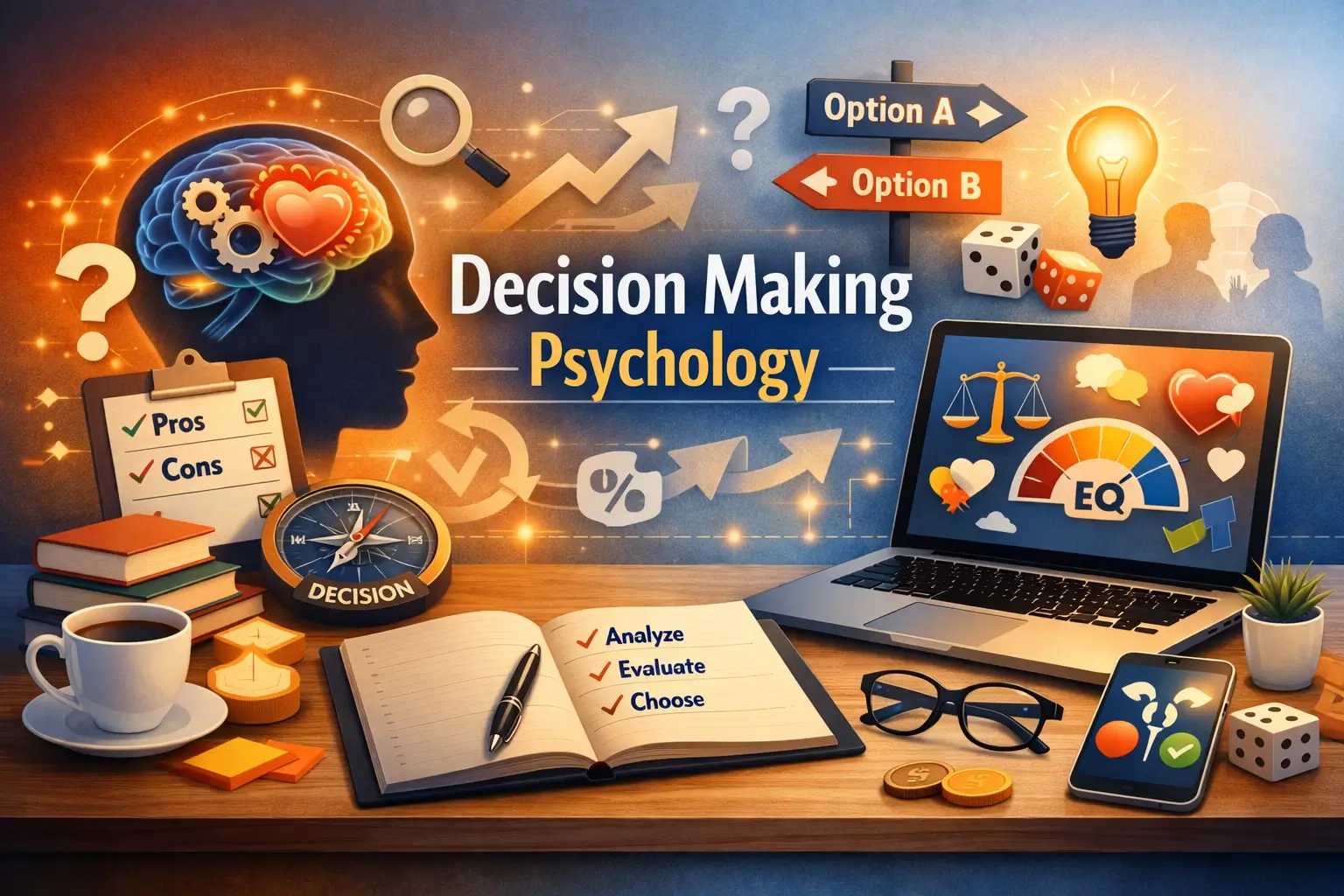
The Decision Making Psychology Course is a comprehensive training program designed to equip learners with the knowledge and practical skills required to understand how psychological processes influence decision-making. Every decision, whether personal or professional, is shaped by cognitive processes, emotions, experiences, beliefs, social influences, and environmental factors. Understanding these influences enables individuals to make more informed, objective, and effective decisions.
Decision-making psychology combines principles from cognitive psychology, behavioral science, neuroscience, and organizational psychology to explain how people evaluate information, solve problems, assess risks, and choose between alternatives. These principles are widely applied across business, leadership, healthcare, education, finance, marketing, public policy, and technology.
This course provides practical knowledge for improving judgment, reducing cognitive biases, strengthening critical thinking, and applying evidence-based decision-making in everyday situations and professional environments.
Whether you are a student, manager, entrepreneur, HR professional, educator, consultant, researcher, project manager, business leader, or working professional, this course offers valuable skills for improving both personal and organizational decision-making.
Why Decision Making Psychology is Important
Understanding the psychology behind decision-making helps individuals and organizations improve judgment and achieve better outcomes.
Key benefits include:
- Improves critical thinking
- Enhances analytical reasoning
- Reduces cognitive biases
- Strengthens problem-solving
- Supports ethical decision-making
- Improves leadership effectiveness
- Enhances workplace productivity
- Improves risk assessment
- Supports strategic planning
- Promotes lifelong learning
For example, organizations use decision-making psychology to improve leadership, hiring decisions, customer experience, financial planning, innovation, project management, and organizational strategy.
Course Overview
This course provides a structured understanding of psychological principles behind decision-making.
Learners will explore:
- Introduction to decision-making psychology
- Cognitive processes
- Attention and perception
- Critical thinking
- Problem-solving
- Reasoning and logic
- Cognitive biases
- Heuristics
- Emotional influences on decisions
- Risk perception
- Ethical decision-making
- Behavioral economics concepts
- Leadership decision-making
- Organizational applications
- Best practices for effective decision-making
What You Will Learn
By the end of this course, learners will be able to:
- Understand psychological decision-making principles
- Identify cognitive biases
- Improve critical thinking skills
- Strengthen analytical reasoning
- Make evidence-based decisions
- Solve complex problems systematically
- Evaluate risks more effectively
- Improve leadership decisions
- Support organizational success
- Develop better personal judgment
Key Components of Decision Making Psychology
1. Cognitive Processes
Learn how attention, perception, memory, and information processing influence human judgment and everyday decision-making.
2. Critical Thinking and Problem-Solving
Understand logical reasoning, structured problem-solving methods, evidence evaluation, and analytical thinking techniques for making informed decisions.
3. Cognitive Biases and Heuristics
Explore common thinking errors such as confirmation bias, anchoring bias, availability bias, overconfidence, and framing effects, and learn strategies to minimize their impact.
4. Emotional and Social Influences
Learn how emotions, stress, social pressure, group dynamics, and organizational culture affect decision-making quality.
5. Practical Applications
Understand how decision-making psychology improves leadership, business strategy, healthcare, education, marketing, financial planning, project management, customer experience, and organizational performance.
Skills You Will Gain
After completing this course, learners will develop valuable professional skills, including:
- Decision-making
- Critical thinking
- Analytical reasoning
- Problem-solving
- Risk assessment
- Cognitive bias recognition
- Logical reasoning
- Evidence-based analysis
- Emotional intelligence
- Leadership
- Communication
- Strategic thinking
- Ethical decision-making
- Self-awareness
- Professional judgment
Benefits of This Course
Completing this course offers several professional advantages, including:
- Strong understanding of decision-making psychology
- Better analytical and critical thinking skills
- Improved leadership and problem-solving abilities
- Practical understanding of cognitive biases
- Better workplace and business decision-making
- Enhanced communication and reasoning capabilities
- Increased employability across business, HR, healthcare, education, consulting, finance, technology, research, and leadership careers
- Competitive advantage in strategic and analytical roles
- Strong foundation for advanced psychology, behavioral science, leadership, and organizational behavior studies
Who Should Enroll?
This course is suitable for:
- Students
- Managers
- Entrepreneurs
- Human Resource Professionals
- Business Professionals
- Team Leaders
- Project Managers
- Educators
- Researchers
- Anyone interested in improving decision-making skills
No previous psychology experience is required, making this course suitable for beginners as well as experienced professionals.
Career Opportunities
After completing this course, learners can strengthen their professional effectiveness in roles such as:
- Business Analyst
- Human Resources Executive
- Project Manager
- Strategy Consultant
- Management Consultant
- Research Analyst
- Organizational Development Executive
- Corporate Trainer
- Team Leader
- Operations Manager
- Leadership Development Specialist
Certification
Upon successful completion of the Decision Making Psychology Course, learners receive a professional certificate recognizing their knowledge of decision-making psychology, cognitive processes, critical thinking, behavioral decision-making, cognitive biases, problem-solving, reasoning, risk assessment, emotional intelligence, and ethical decision-making. This certification enhances career opportunities across multinational corporations, consulting firms, financial institutions, healthcare organizations, educational institutions, government agencies, technology companies, research organizations, nonprofit organizations, and business enterprises.
Conclusion
The Decision Making Psychology Course provides learners with practical knowledge and professional skills to understand how psychological processes influence decisions and behavior. By mastering critical thinking, cognitive bias recognition, analytical reasoning, problem-solving, emotional intelligence, leadership, ethical decision-making, and evidence-based analysis, learners will be well prepared to make confident and informed decisions in both personal and professional environments.
Whether your goal is to strengthen leadership, improve workplace performance, solve complex problems, make smarter business decisions, or better understand human behavior, this course provides a strong foundation for long-term personal and professional success.
FAQ
1. What is the Decision Making Psychology Course?
It is a course that explains how psychological factors such as cognition, emotions, biases, and reasoning influence decision-making and teaches practical techniques for making better personal and professional decisions.
2. Who should enroll in this course?
Students, managers, entrepreneurs, HR professionals, business professionals, project managers, consultants, educators, researchers, and anyone interested in improving decision-making skills.
3. Do I need prior knowledge of psychology?
No. The course is beginner-friendly and suitable for learners with no previous background in psychology or behavioral science.
4. What topics are covered in this course?
The course covers cognitive processes, critical thinking, reasoning, problem-solving, cognitive biases, heuristics, emotional influences, risk assessment, ethical decision-making, and behavioral decision-making.
5. Will I learn how to recognize and reduce cognitive biases?
Yes. The course teaches how to identify common biases such as confirmation bias, anchoring, availability bias, and overconfidence, along with strategies to reduce their influence on decision-making.
6. Does this course include critical thinking and problem-solving techniques?
Yes. You will learn structured methods for analyzing information, evaluating alternatives, solving complex problems, assessing risks, and making evidence-based decisions.
7. Will I receive a certificate after completing the course?
Yes. A professional course completion certificate is awarded upon successful completion.
8. Why is decision-making psychology important?
Decision-making psychology helps individuals understand how thoughts, emotions, and biases affect choices, leading to better judgment, stronger leadership, improved problem-solving, and more effective decision-making.
9. How does decision-making psychology benefit organizations?
It improves strategic planning, leadership effectiveness, hiring decisions, teamwork, risk management, innovation, productivity, customer experience, and overall organizational performance.
10. What career opportunities are available after this course?
This course strengthens your professional skills for roles such as Business Analyst, Human Resources Executive, Project Manager, Strategy Consultant, Management Consultant, Research Analyst, Organizational Development Executive, Corporate Trainer, Team Leader, Operations Manager, and Leadership Development Specialist.





Reviews
There are no reviews yet.