
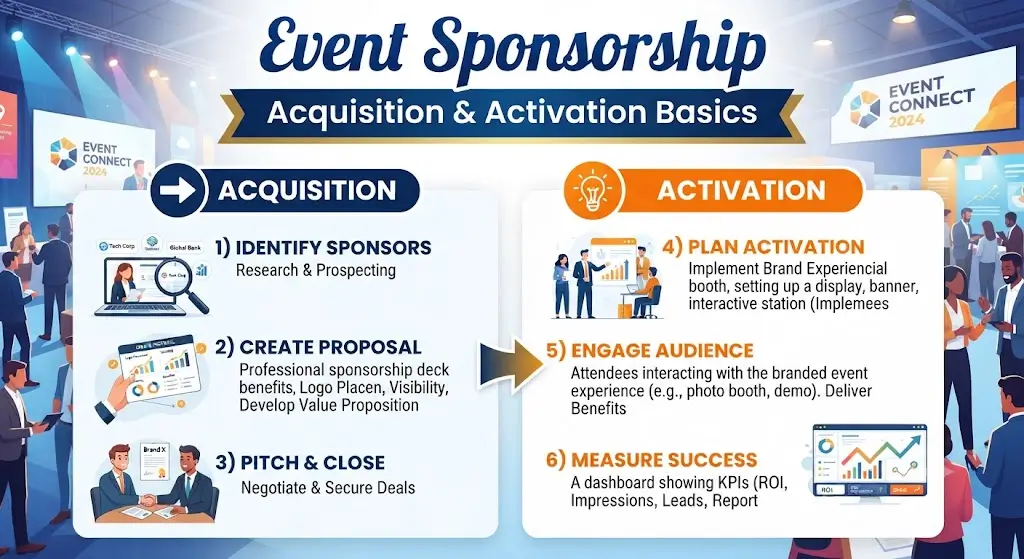
Event Sponsorship Acquisition & Activation Basics
Introduction
The Event Sponsorship Acquisition & Activation Basics course is a practical training program designed to help professionals understand event sponsorship from acquisition to activation. Modern events often depend on strong partnerships to increase financial support, audience reach, and brand value. Therefore, learning how to attract suitable sponsors can play an important role in successful event planning.
Sponsorship is more than placing a company logo at an event. A successful partnership creates value for both the organizer and the sponsoring brand. Organizers may gain financial support, promotional resources, and industry connections. Meanwhile, sponsors can gain brand visibility, audience engagement, customer access, and valuable marketing opportunities.
This course introduces the core principles of sponsorship acquisition and activation. Learners will explore sponsor research, prospect identification, sponsorship proposals, value propositions, outreach, relationship management, negotiation, activation planning, audience engagement, and performance measurement.
Furthermore, the course explains how to connect sponsorship opportunities with business objectives. Instead of offering generic packages, professionals can learn how to create relevant opportunities that match sponsor goals and audience expectations.
Whether you manage conferences, exhibitions, festivals, sports events, corporate gatherings, or community programs, these skills can support stronger sponsorship strategies and more valuable event partnerships.
Understanding Event Sponsorship
Event sponsorship is a partnership between an event organizer and a company, organization, or brand. The sponsor provides financial, product, service, or promotional support. In return, the event provides agreed benefits that may support the sponsor’s marketing and business objectives.
These benefits can include:
- Brand visibility
- Audience access
- Product exposure
- Speaking opportunities
- Exhibition space
- Digital promotion
- Networking opportunities
- Hospitality
- Lead generation
- Content opportunities
However, every sponsorship arrangement is different. A technology company may want access to business decision-makers, while a consumer brand may prefer direct interaction with a large public audience.
As a result, organizers should understand sponsor requirements before creating sponsorship opportunities. This approach makes partnerships more relevant and easier to communicate.
Importance of Sponsorship Acquisition
Sponsorship acquisition can provide important resources for event organizers. Financial contributions may help cover venue costs, production, technology, promotion, staffing, entertainment, and other event expenses.
Beyond funding, sponsors can also add credibility to an event. A recognized brand may increase audience confidence and attract additional partners.
Moreover, sponsors can contribute products, services, expertise, promotional support, or media exposure. These contributions can improve the overall event experience.
Effective sponsorship acquisition can therefore help organizations:
- Increase event revenue
- Reduce event costs
- Improve event quality
- Expand promotional reach
- Build industry relationships
- Increase audience value
- Strengthen brand credibility
- Develop long-term partnerships
For these reasons, sponsorship should be considered a strategic part of event planning rather than an afterthought.
Understanding Sponsor Objectives
Every sponsor enters a partnership with specific goals. Understanding those goals is essential before presenting a sponsorship opportunity.
Common objectives include:
- Increasing brand awareness
- Generating leads
- Promoting products
- Reaching new markets
- Engaging existing customers
- Building industry relationships
- Supporting community initiatives
- Demonstrating thought leadership
- Increasing media exposure
- Creating memorable brand experiences
For example, a software company may sponsor a business conference to connect with potential corporate customers. A sports brand, on the other hand, may focus on audience engagement and product experiences.
Therefore, sponsorship packages should be developed around actual sponsor objectives. A strong match can make the partnership more attractive to both sides.
Identifying Suitable Sponsors
Not every company is a suitable sponsor for every event. Sponsor selection should begin with audience and business alignment.
Professionals can evaluate potential sponsors based on:
- Target audience
- Industry relevance
- Brand positioning
- Product relevance
- Geographic presence
- Marketing goals
- Customer profile
- Previous sponsorship activity
- Budget potential
- Business priorities
For instance, an event for finance professionals may attract banks, accounting firms, financial technology companies, consulting firms, and professional service providers.
Similarly, a health and wellness event may appeal to fitness brands, healthcare organizations, wellness companies, nutrition businesses, and lifestyle brands.
As a result, focused sponsor research can improve outreach efficiency and reduce wasted effort.
Sponsor Research
Research helps organizers understand whether a company is likely to benefit from an event partnership.
Before making contact, professionals can review a company’s:
- Products and services
- Target customers
- Marketing campaigns
- Brand values
- Recent business activities
- Sponsorship history
- Market position
- Growth priorities
This information can then be used to create more personalized outreach.
For example, if a company recently expanded into a new market, an event that reaches customers in that market may provide a strong sponsorship opportunity.
Furthermore, research can reveal the types of benefits a sponsor may value most.
Developing a Sponsorship Value Proposition
A sponsorship value proposition explains why a company should support an event. It should communicate clear benefits rather than simply listing branding opportunities.
An effective value proposition can answer several questions:
- Who attends the event?
- Why does the audience matter?
- What exposure will the sponsor receive?
- How can the sponsor engage attendees?
- What business objectives can the partnership support?
- What makes this opportunity different?
For example, saying that a sponsor receives logo placement provides limited information. A stronger message can explain that the sponsor will gain visibility among a highly relevant professional audience across event signage, digital channels, and attendee communications.
Therefore, sponsorship proposals should focus on outcomes and audience value.
Creating Sponsorship Packages
Sponsorship packages help organizers present opportunities in a clear and structured way.
Packages may differ according to:
- Investment level
- Brand exposure
- Event visibility
- Speaking opportunities
- Exhibition space
- Digital promotion
- Hospitality
- Audience interaction
- Content opportunities
- Product integration
Different levels can help attract businesses with different budgets.
However, packages should remain easy to understand. Too many complicated options may confuse potential sponsors.
Instead, each package should clearly explain what the sponsor receives and how those benefits support its objectives.
Sponsorship Proposal Development
A sponsorship proposal is an important sales document. It should present the event, audience, commercial opportunity, and expected benefits in a professional format.
A useful proposal may include:
- Event overview
- Event objectives
- Audience profile
- Previous results
- Sponsorship opportunities
- Available benefits
- Activation ideas
- Marketing support
- Investment details
- Measurement approach
- Next steps
Moreover, the proposal should be adapted to the target sponsor.
A generic document may not demonstrate enough relevance. In contrast, a customized proposal can show that the organizer understands the company’s market and goals.
Sponsorship Outreach
Once suitable prospects have been identified, organizers need a structured outreach approach.
Potential channels include:
- Phone calls
- Professional networking
- Industry events
- Referrals
- Existing business relationships
- Direct introductions
- Partnership networks
Personalization is particularly important. A sponsor is more likely to respond when the opportunity clearly connects with its audience or business objectives.
For example, outreach can mention a company’s target market and explain how the event provides access to that audience.
In addition, follow-up should be professional and consistent without becoming excessive.
Building Sponsor Relationships
Successful sponsorship is based on relationships, not just transactions.
A sponsor may support an event for several years when the partnership consistently delivers value. Therefore, organizers should maintain communication before, during, and after the event.
Strong sponsor relationships depend on:
- Clear communication
- Reliable delivery
- Transparency
- Professional follow-up
- Flexibility
- Regular updates
- Performance reporting
Furthermore, organizers should understand how sponsor objectives change over time.
A company that initially seeks brand awareness may later focus on lead generation or customer engagement. Recognizing these changes can create opportunities for future partnerships.
Sponsorship Negotiation Basics
Negotiation is often required before finalizing a sponsorship agreement.
Sponsors may request changes involving:
- Pricing
- Benefits
- Branding
- Exclusivity
- Speaking opportunities
- Exhibition space
- Activation rights
- Deliverables
- Timelines
Effective negotiation requires a clear understanding of the value being offered.
At the same time, organizers should know which elements are flexible and which are essential.
The goal is not simply to secure the highest sponsorship fee. Instead, both parties should reach an agreement that creates sustainable value.
Managing Sponsorship Deliverables
Once an agreement is signed, organizers must deliver the promised benefits.
Deliverables may include:
- Logo placement
- Social media promotion
- Website visibility
- Stage mentions
- Speaking opportunities
- Exhibition areas
- Guest passes
- Product demonstrations
- Email promotion
- Media exposure
Therefore, every commitment should be documented and tracked.
A clear delivery process reduces errors and helps protect sponsor relationships.
What Is Sponsorship Activation?
Sponsorship activation refers to activities that turn a sponsorship agreement into an audience experience.
Simply displaying a logo may create awareness. However, interactive activation can create stronger engagement.
Activation ideas may include:
- Product demonstrations
- Interactive displays
- Contests
- Workshops
- Sampling
- Branded experiences
- Networking sessions
- Photo opportunities
- Digital campaigns
- Educational activities
The best activation ideas fit naturally into the event.
For example, a technology company could provide a hands-on product demonstration at a business conference. Similarly, a sports brand could create an interactive experience at a sporting event.
Developing Activation Strategies
An activation strategy should connect three important elements: the sponsor, the event, and the audience.
First, organizers should understand the sponsor’s marketing objectives. Next, they should consider what the event audience values. Finally, the activation should create a natural connection between the two.
This process can help generate ideas that feel useful rather than intrusive.
For example, a professional audience may respond well to educational sessions, networking opportunities, or practical demonstrations.
Meanwhile, a family-oriented event may benefit from games, interactive zones, competitions, or product experiences.
As a result, audience relevance should guide activation planning.
Audience Engagement
Audience engagement is one of the strongest ways to increase sponsorship value.
People are more likely to remember a brand when they interact with it directly. Therefore, sponsors should have opportunities to create meaningful experiences.
Engagement activities can include:
- Interactive displays
- Games
- Competitions
- Demonstrations
- Workshops
- Surveys
- Social media activities
- Networking opportunities
- Educational sessions
Furthermore, digital engagement can extend the experience beyond the event itself.
Social media campaigns, online competitions, branded videos, and digital content can help sponsors reach audiences before and after the event.
Brand Visibility
Brand visibility remains an important part of many sponsorship agreements.
Organizers can provide visibility through:
- Event signage
- Stage branding
- Digital screens
- Event websites
- Mobile applications
- Social media
- Email campaigns
- Printed materials
- Speaker mentions
- Media coverage
However, excessive branding can reduce the quality of the attendee experience.
Therefore, sponsor visibility should be balanced with event design. Branding should feel relevant and integrated rather than overwhelming.
Digital Sponsorship Activation
Digital channels can extend the reach of event sponsorship.
Potential activities include:
- Sponsored social media content
- Email campaigns
- Branded videos
- Online competitions
- Livestream integrations
- Website placements
- Mobile app features
- Digital networking
- Post-event content
These channels can also provide useful performance data.
For example, organizers can track impressions, clicks, engagement, registrations, content views, and other digital actions.
Consequently, digital activation can make sponsorship measurement more detailed.
Pre-Event Activation
Sponsorship activation can begin well before the event starts.
Pre-event opportunities may include:
- Sponsor announcements
- Social media campaigns
- Email promotions
- Speaker announcements
- Product previews
- Registration incentives
- Sponsored content
- Promotional partnerships
Starting early gives sponsors additional opportunities to connect with the target audience.
Moreover, pre-event promotion can build anticipation and increase awareness of both the event and the sponsor.
On-Site Activation
On-site activation creates direct interaction between sponsors and attendees.
Common formats include:
- Exhibition booths
- Product demonstration areas
- Sponsored lounges
- Workshops
- Networking zones
- Interactive installations
- Sampling areas
- Photo experiences
Operational planning is essential for successful execution.
Staffing, branding, technology, venue access, attendee flow, and safety requirements should all be considered in advance.
A well-planned activation can create a positive experience for attendees while delivering meaningful sponsor exposure.
Post-Event Activation
The sponsorship opportunity does not necessarily end when the event closes.
Post-event activities can extend the partnership through:
- Event recap content
- Sponsor interviews
- Social media posts
- Recorded sessions
- Thank-you campaigns
- Lead follow-up
- Performance reports
- Customer surveys
- Case studies
Furthermore, post-event communication allows organizers to demonstrate the value delivered.
A detailed performance report can help sponsors understand audience reach, engagement, leads, exposure, and other outcomes.
Measuring Sponsorship Performance
Measurement helps organizers and sponsors understand whether sponsorship objectives were achieved.
Possible metrics include:
- Audience reach
- Brand impressions
- Engagement
- Leads generated
- Product interactions
- Website traffic
- Social media activity
- Event registrations
- Customer conversations
- Sales opportunities
- Media exposure
The most useful metrics depend on the sponsor’s objectives.
For example, an awareness campaign may prioritize reach and impressions. In contrast, a lead-generation partnership may focus on qualified contacts and sales opportunities.
Therefore, measurement should begin with clear objectives.
Evaluating Sponsorship ROI
Return on investment is an important consideration for sponsors.
ROI analysis can compare the investment with measurable outcomes. However, sponsorship value may extend beyond immediate revenue.
Additional benefits can include:
- Brand awareness
- Customer relationships
- Industry credibility
- Market exposure
- Media coverage
- Lead generation
- Content opportunities
- Long-term partnerships
As a result, sponsors should consider both financial and strategic outcomes when evaluating event partnerships.
Managing Sponsor Expectations
Clear expectations can prevent misunderstandings.
Before the event, organizers should confirm:
- Deliverables
- Deadlines
- Branding requirements
- Activation plans
- Promotional commitments
- Guest access
- Reporting requirements
Regular communication is equally important.
If a problem occurs, transparent communication can help protect the relationship. Likewise, early updates allow sponsors to make informed decisions when changes are required.
Common Sponsorship Challenges
Event sponsorship can involve several challenges.
Common issues include:
- Difficulty finding suitable sponsors
- Low response rates
- Weak value propositions
- Unclear sponsorship packages
- Poor communication
- Unrealistic expectations
- Limited activation ideas
- Missed deliverables
- Inadequate measurement
Understanding these challenges can help professionals prepare better strategies.
For example, low sponsor response may indicate that the event’s audience value is unclear. Similarly, weak activation results may suggest that the experience does not match audience interests.
Therefore, regular evaluation is essential.
Best Practices for Sponsorship Success
Several practices can improve sponsorship outcomes.
Understand the Audience
Sponsors want access to audiences that matter to their business. Therefore, organizers should clearly understand attendee demographics, interests, roles, and purchasing influence.
Research Sponsors
A targeted prospect list is more useful than contacting companies without a clear connection to the event.
Personalize Proposals
Each proposal should explain why the event is relevant to the specific sponsor.
Communicate Clear Benefits
Sponsors should quickly understand what they receive and how the partnership can support their objectives.
Create Meaningful Activation
Interactive experiences can create stronger engagement than passive branding.
Track Deliverables
A structured tracking process helps ensure that all sponsor commitments are completed.
Measure Results
Performance data gives sponsors evidence of partnership value.
Build Long-Term Relationships
Strong delivery and communication can turn one-time sponsors into repeat partners.
What You Will Learn
By completing the Event Sponsorship Acquisition & Activation Basics course, learners will be able to:
- Understand event sponsorship fundamentals
- Identify suitable sponsorship prospects
- Research potential sponsors
- Analyze sponsor objectives
- Develop sponsorship value propositions
- Create sponsorship packages
- Prepare sponsorship proposals
- Plan sponsor outreach
- Build sponsor relationships
- Understand negotiation basics
- Manage sponsorship deliverables
- Develop sponsorship activation strategies
- Improve audience engagement
- Plan digital activation
- Support pre-event promotion
- Manage on-site activation
- Extend sponsorship after events
- Measure sponsorship performance
- Evaluate sponsorship ROI
- Manage sponsor expectations
- Improve long-term partnership opportunities
Skills You Will Gain
Learners will develop practical skills in:
- Sponsorship acquisition
- Event marketing
- Sponsorship sales
- Partnership development
- Sponsor research
- Proposal development
- Business communication
- Negotiation
- Relationship management
- Brand activation
- Audience engagement
- Event planning
- Digital marketing
- Performance measurement
- ROI analysis
- Strategic planning
- Commercial communication
- Sponsor relationship management
Benefits of This Course
Stronger Sponsorship Acquisition Skills
Learners gain practical knowledge for identifying, approaching, and engaging potential event sponsors.
Better Sponsorship Proposals
The course helps professionals communicate event value, audience relevance, and sponsor benefits more effectively.
Improved Sponsor Relationships
Understanding sponsor objectives can support stronger communication and more sustainable partnerships.
More Effective Brand Activation
Learners discover how to transform sponsorship agreements into engaging audience experiences.
Better Event Revenue Opportunities
A structured sponsorship strategy can help organizers identify and develop more valuable commercial opportunities.
Improved Audience Engagement
Relevant activation ideas can make sponsor involvement more useful and memorable for attendees.
Better Performance Measurement
Learners understand how to select appropriate metrics and demonstrate sponsorship value.
Stronger Professional Communication
The course also develops practical skills in outreach, negotiation, presentations, relationship management, and business communication.
Who Should Enroll?
The Event Sponsorship Acquisition & Activation Basics course is suitable for:
- Event Managers
- Event Coordinators
- Event Marketing Professionals
- Sponsorship Managers
- Sponsorship Executives
- Partnership Managers
- Business Development Professionals
- Marketing Professionals
- Conference Organizers
- Festival Organizers
- Sports Event Professionals
- Corporate Event Teams
- Nonprofit Professionals
- Brand Managers
- Entrepreneurs
- Business Owners
Professionals who want to move into sponsorship, event marketing, partnership management, or experiential marketing can also benefit from this course.
Career Opportunities
Knowledge of event sponsorship acquisition and activation can support career development in several roles.
Potential career paths include:
- Sponsorship Manager
- Event Marketing Manager
- Event Manager
- Partnership Manager
- Sponsorship Executive
- Business Development Manager
- Brand Activation Manager
- Experiential Marketing Specialist
- Event Sales Executive
- Conference Manager
- Event Partnership Coordinator
- Marketing Manager
- Corporate Events Specialist
These skills can be applied across conferences, exhibitions, sports events, entertainment programs, festivals, corporate events, trade shows, nonprofit programs, and community events.
Practical Applications
The knowledge gained from this course can be applied to many types of events.
For a business conference, professionals can identify technology providers, consulting firms, financial companies, and other B2B brands that want access to decision-makers.
At a sports event, sponsorship activation could involve product demonstrations, competitions, interactive fan experiences, or branded engagement zones.
Similarly, festivals can offer opportunities for sampling, social media campaigns, entertainment partnerships, and audience experiences.
Nonprofit organizations can also use sponsorship strategies to build relationships with companies that support relevant community initiatives.
Furthermore, corporate events can use sponsorship partnerships to improve networking, content, hospitality, and brand experiences.
As a result, sponsorship acquisition and activation can become an important part of both event strategy and commercial planning.
Certification
Upon successful completion of the Event Sponsorship Acquisition & Activation Basics course, learners receive a professional course completion certificate recognizing their knowledge of event sponsorship acquisition, sponsor research, sponsorship proposals, value propositions, outreach, relationship management, negotiation, activation planning, audience engagement, brand visibility, digital activation, performance measurement, and sponsorship ROI.
The certification can strengthen a professional profile and demonstrate practical knowledge relevant to event management, sponsorship, marketing, business development, partnership management, brand activation, and experiential marketing.
Conclusion
The Event Sponsorship Acquisition & Activation Basics course provides a strong practical foundation for professionals who want to understand how successful event sponsorships are developed and activated.
Learners will discover how to identify suitable sponsors, research their objectives, create valuable sponsorship packages, develop proposals, conduct outreach, and manage sponsor relationships. In addition, the course explains how to transform sponsorship agreements into meaningful audience experiences.
Effective sponsorship depends on mutual value. Event organizers need financial or strategic support, while sponsors need opportunities to connect with relevant audiences.
Therefore, successful partnerships should consider the objectives of both sides.
By combining thoughtful sponsor acquisition with creative activation and clear performance measurement, professionals can develop stronger partnerships and more valuable events.
Whether your goal is to advance in event management, sponsorship sales, event marketing, partnership development, brand activation, or business development, this course can help you build practical skills for creating successful sponsorship opportunities and long-term event partnerships.
FAQ SECTION
1. What is the Event Sponsorship Acquisition & Activation Basics course?
It is a practical course that teaches the fundamentals of finding sponsors, developing sponsorship opportunities, managing partnerships, and creating effective brand activation strategies.
2. Who should take this course?
Event managers, event marketers, sponsorship professionals, partnership executives, business development professionals, brand managers, entrepreneurs, and event organizers can benefit from this course.
3. Do I need previous sponsorship experience?
No. The course covers foundational concepts and practical approaches, making it suitable for beginners as well as professionals who want to strengthen their existing skills.
4. What is event sponsorship?
Event sponsorship is a partnership where a company provides financial, product, service, or other support to an event in exchange for agreed marketing, engagement, branding, or business benefits.
5. What is sponsorship activation?
Sponsorship activation involves activities that bring a sponsorship partnership to life through audience experiences, product demonstrations, interactive campaigns, content, branding, and engagement opportunities.
6. How do I find potential event sponsors?
Potential sponsors can be identified by researching companies whose target audiences, products, marketing objectives, industries, and brand values align with the event.
7. What should a sponsorship proposal include?
A sponsorship proposal can include the event overview, audience profile, sponsorship opportunities, benefits, activation ideas, marketing support, investment details, measurement approach, and next steps.
8. Why is sponsor research important?
Sponsor research helps event organizers understand a company’s goals and create more relevant sponsorship opportunities. As a result, outreach can become more personalized and effective.
9. How can sponsorship success be measured?
Sponsorship performance can be measured using metrics such as audience reach, impressions, engagement, leads, product interactions, website traffic, social media activity, media exposure, and sales opportunities.
10. Will I receive a certificate after completing the course?
Yes. Learners receive a professional course completion certificate after successfully completing the Event Sponsorship Acquisition & Activation Basics course.



Reviews
There are no reviews yet.