
Introduction
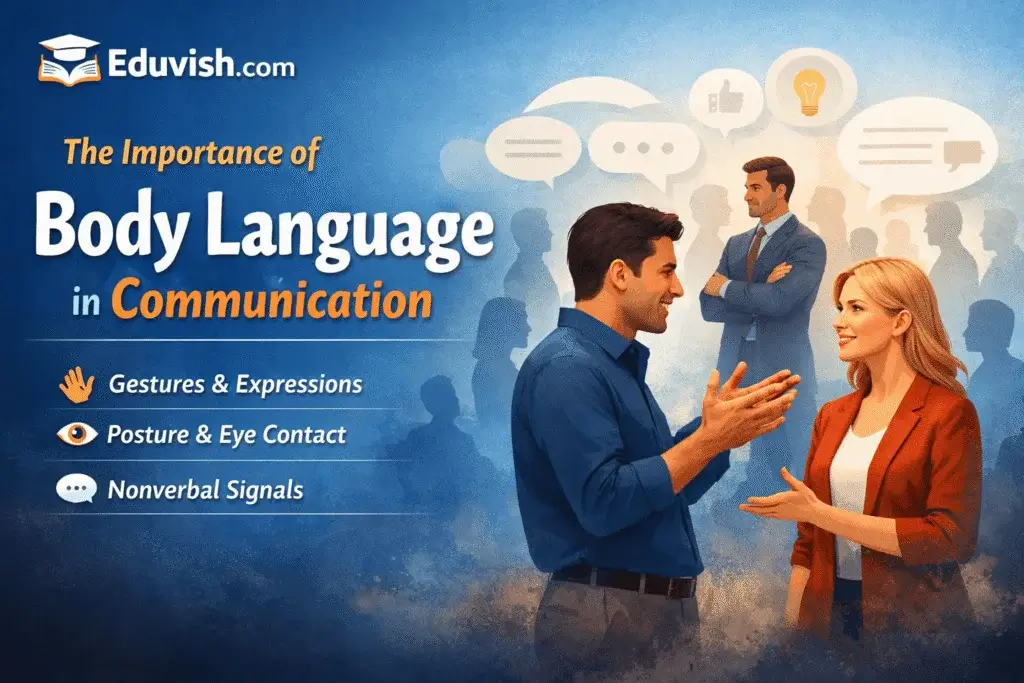
Communication is more than just words. Body language — including gestures, facial expressions, posture, and eye contact — plays a crucial role in how messages are received and understood. Studies show that over 55% of communication is nonverbal, making body language a powerful tool in personal and professional interactions.
Why Body Language Matters
- First impressions: People form opinions within seconds based on posture, facial expressions, and gestures.
- Trust building: Positive nonverbal cues like open posture and eye contact foster credibility.
- Emotional expression: A smile, frown, or crossed arms can reveal more than words.
- Cross-cultural communication: Nonverbal signals often transcend language barriers.
Key Components of Body Language
- Facial expressions: Smiles, frowns, eyebrow movements.
- Gestures: Hand movements, nods, shrugs.
- Posture: Standing tall shows confidence; slouching shows disinterest.
- Eye contact: Indicates attentiveness and honesty.
- Proxemics: Use of space and distance in interactions.
Importance in Professional Settings
- Job interviews: Confident posture and firm handshakes leave lasting impressions.
- Public speaking: Gestures and eye contact engage audiences.
- Teamwork: Positive nonverbal cues encourage collaboration.
- Leadership: Strong body language enhances authority and influence.
How to Improve Your Body Language
- Practice posture: Stand tall, avoid slouching.
- Use gestures: Emphasize points naturally.
- Maintain eye contact: Show confidence and attentiveness.
- Smile genuinely: Build rapport instantly.
- Mirror body language: Subtly reflect others to create connection.

