
Introduction
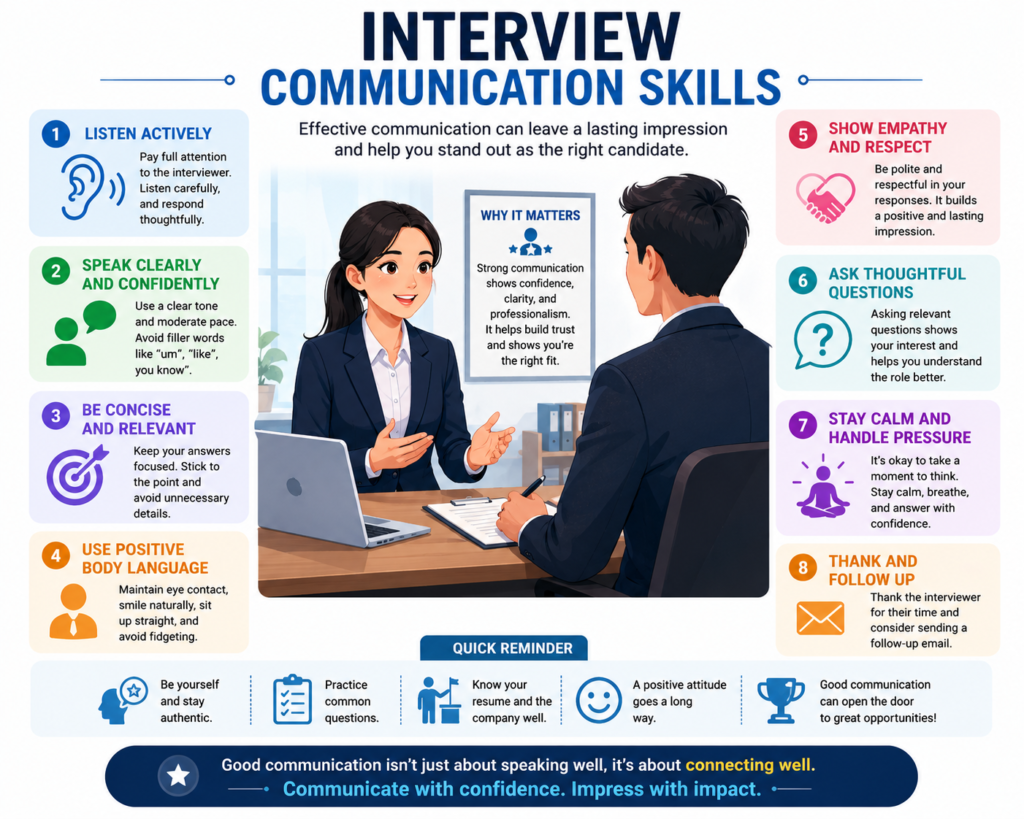
Interviews are not just about qualifications — they’re about how well you communicate. Employers look for candidates who can express ideas clearly, listen attentively, and build rapport. Developing strong interview communication skills can dramatically improve your chances of success.
Why Communication Skills Matter in Interviews
- First impressions: Your tone, body language, and clarity set the stage.
- Confidence: Clear communication shows self-assurance.
- Connection: Good communication builds rapport with interviewers.
- Persuasion: Helps you present your skills as solutions to employer needs.
Essential Interview Communication Skills
1. Active Listening
Pay attention to the interviewer’s words, nod, and respond thoughtfully. Avoid interrupting.
2. Clear and Concise Speaking
Avoid jargon. Use simple language to explain complex ideas.
3. Positive Body Language
Maintain eye contact, smile, and sit upright. Non-verbal cues matter as much as words.
4. Confidence Without Arrogance
Speak with assurance but remain humble. Balance confidence with respect.
5. Storytelling Technique
Use the STAR method (Situation, Task, Action, Result) to structure answers.
6. Handling Difficult Questions
Stay calm, take a moment to think, and answer honestly. If unsure, admit it gracefully.
7. Empathy and Emotional Intelligence
Show understanding of team dynamics and workplace culture.
Common Mistakes to Avoid
- Speaking too fast or too slow
- Overusing filler words (“um,” “like”)
- Giving long, unfocused answers
- Not asking questions at the end
- Poor posture or lack of eye contact
How to Improve Interview Communication Skills
- Practice mock interviews with friends or mentors.
- Record yourself to analyze tone and clarity.
- Read aloud to improve fluency.
- Join public speaking groups like Toastmasters.
- Prepare questions to ask the interviewer.

