
Introduction
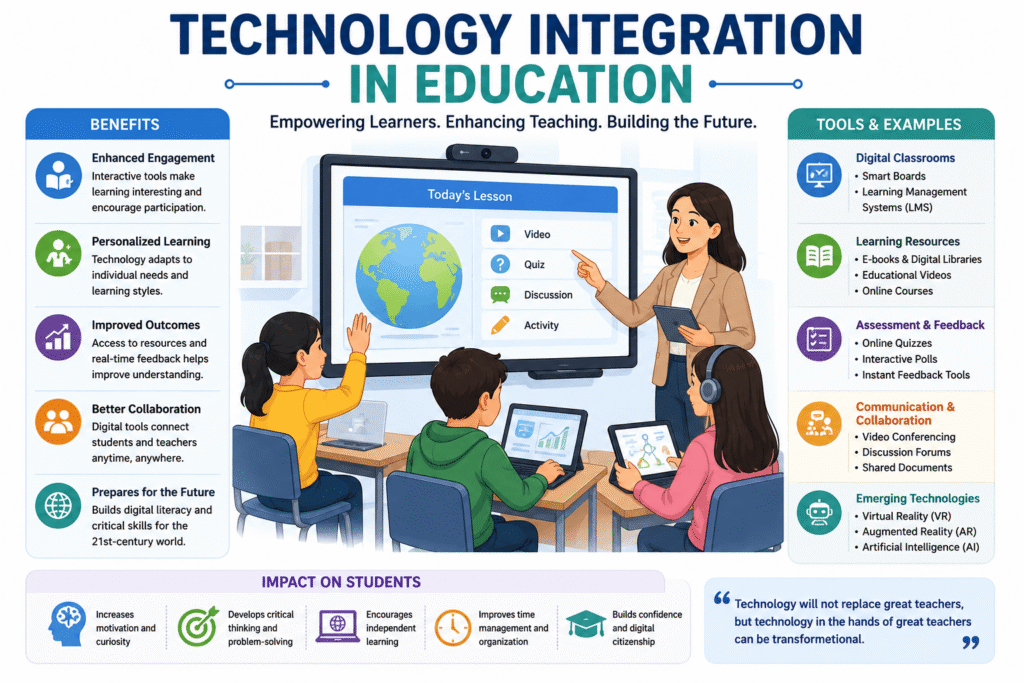
Education is no longer confined to textbooks and classrooms. With the rise of digital tools, technology integration in education has become essential for preparing students for the modern world. From interactive apps to virtual classrooms, technology is reshaping how teachers teach and how students learn.
What Is Technology Integration in Education?
Technology integration means using digital tools and resources to enhance teaching and learning. It’s not just about adding gadgets — it’s about creating meaningful learning experiences.
Examples include:
- Smartboards in classrooms
- Online learning platforms
- Virtual labs and simulations
- AI-powered tutoring systems
Benefits of Technology Integration
1. Improved Student Engagement
Interactive tools like quizzes, videos, and gamified apps make learning fun and engaging.
2. Personalized Learning
AI and adaptive software tailor lessons to individual student needs, helping them learn at their own pace.
3. Collaboration Opportunities
Students can work together on projects using online platforms, even across different locations.
4. Access to Global Resources
Technology connects students to worldwide knowledge, from online libraries to expert lectures.
5. Skill Development
Students gain digital literacy, problem-solving, and critical thinking skills essential for future careers.
Challenges of Technology Integration
- Digital Divide: Not all students have access to devices or internet.
- Teacher Training: Educators need training to use tools effectively.
- Overreliance on Technology: Balance is needed to avoid replacing human interaction.
- Cybersecurity Risks: Protecting student data is crucial.
Strategies for Effective Technology Integration
1. Blended Learning
Combine traditional teaching with digital tools for a balanced approach.
2. Flipped Classroom
Students learn content online at home and apply knowledge in class through discussions and activities.
3. Gamification
Use game elements like points, badges, and challenges to motivate students.
4. Project-Based Learning
Technology supports real-world projects, encouraging creativity and problem-solving.
5. Continuous Teacher Training
Provide workshops and resources to help teachers stay updated with digital tools.
Future of Technology in Education
Emerging technologies like AI, VR, AR, and blockchain will further transform education. Imagine virtual field trips, AI tutors, and secure digital certificates — the possibilities are endless.

