
Introduction
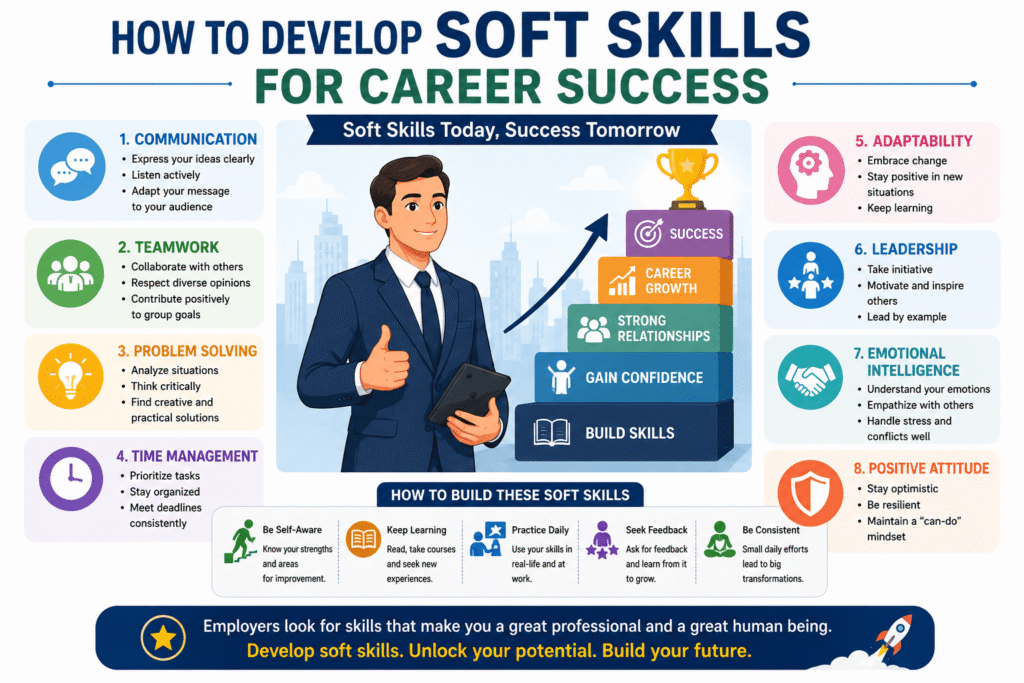
In today’s competitive job market, technical expertise alone isn’t enough. Employers value professionals who can communicate effectively, collaborate with teams, and adapt to challenges. These abilities, known as soft skills, are critical for long-term career success.
This guide explores the importance of soft skills, practical strategies to develop them, and how they can help you thrive in your career.
What Are Soft Skills?
Soft skills are personal attributes that enable you to interact harmoniously with others and succeed in professional environments. Unlike hard skills (technical abilities), soft skills focus on behavior, communication, and emotional intelligence.
Examples of Soft Skills:
- Communication
- Teamwork
- Problem-Solving
- Adaptability
- Leadership
- Emotional Intelligence
- Time Management
Why Soft Skills Matter
- Career Growth: Employers promote individuals who demonstrate leadership and collaboration.
- Better Relationships: Strong communication builds trust with colleagues and clients.
- Adaptability: Soft skills help you navigate change and uncertainty.
- Problem-Solving: Creative thinking leads to innovative solutions.
- Global Opportunities: In multicultural workplaces, empathy and adaptability are essential.
Strategies to Develop Soft Skills
1. Practice Active Listening
Pay attention, avoid interruptions, and respond thoughtfully. This improves communication and builds trust.
2. Seek Feedback
Constructive criticism helps identify strengths and areas for improvement.
3. Join Team Projects
Collaboration enhances teamwork, leadership, and conflict resolution skills.
4. Improve Emotional Intelligence
Understand your emotions and empathize with others to strengthen workplace relationships.
5. Work on Public Speaking
Confidence in presentations boosts communication and leadership abilities.
6. Adapt to Change
Embrace new technologies and processes with a positive mindset.
7. Manage Time Effectively
Prioritize tasks, set deadlines, and avoid procrastination to increase productivity.
Real-Life Examples
- A project manager who uses communication and leadership to guide teams.
- A software developer who collaborates effectively with designers and marketers.
- A teacher who adapts to digital tools while maintaining empathy for students.
Common Mistakes to Avoid
- Ignoring feedback.
- Overemphasizing technical skills while neglecting interpersonal growth.
- Poor time management.
- Lack of adaptability in changing environments.

