
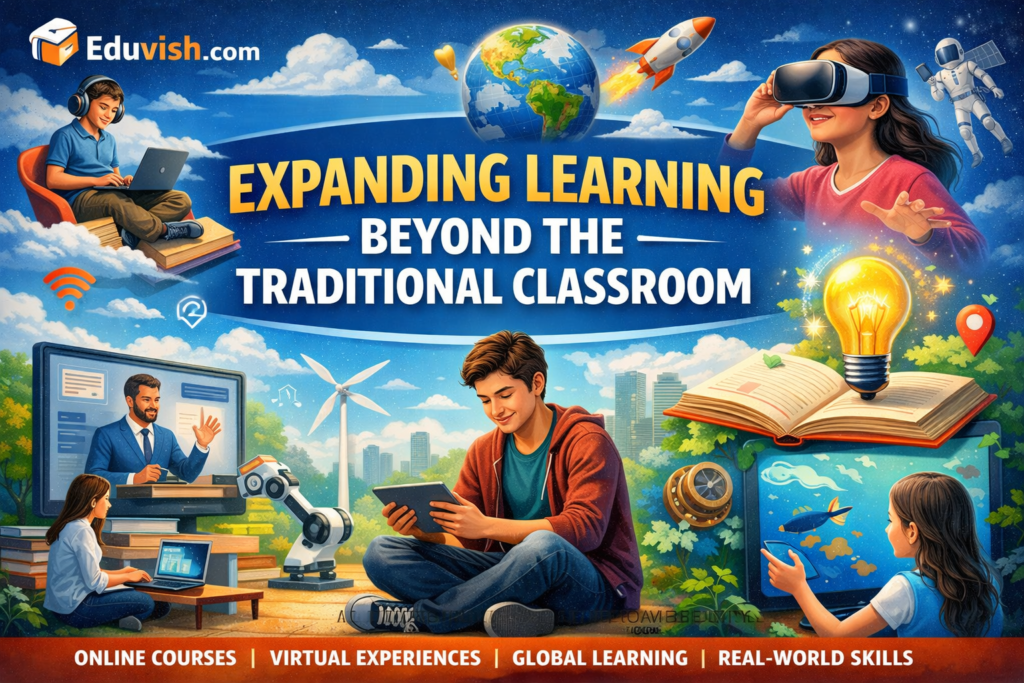
Expanding Learning Beyond the Traditional Classroom
Introduction
Education is no longer confined to four walls. With the rise of online education, education technology, and global learning, students today have access to knowledge anytime, anywhere. This article explores how learning is expanding beyond traditional classrooms, why it matters, and how it shapes the future of education.
Why Learning Beyond the Classroom Matters
- Flexibility: Students can learn at their own pace.
- Accessibility: Education reaches rural and underserved communities.
- Real-world skills: Practical experiences complement theoretical knowledge.
- Global collaboration: Learners connect across borders.
Key Modes of Expanded Learning
- Online courses: Platforms like Coursera, Udemy, and Khan Academy.
- Virtual reality classrooms: Immersive learning experiences.
- Educational apps: Gamified learning for engagement.
- Community projects: Hands-on social learning.
- Global exchange programs: Cultural and academic exposure.
The Role of Technology in Modern Learning
Technology bridges the gap between theory and practice. Through virtual classrooms, AI tutors, and cloud-based education, students can access lessons anytime, anywhere.
Examples of Tech Integration
| Tool | Purpose | Impact |
|---|---|---|
| Learning Management Systems | Organize and deliver content | Streamlined learning |
| Virtual Reality | Immersive simulations | Enhanced engagement |
| AI Chatbots | Instant doubt resolution | Personalized support |
| Gamified Apps | Interactive learning | Motivation and retention |
Experiential Learning: Beyond Books
Experiential learning encourages students to learn by doing. It connects classroom theories to real-world applications.
Examples
- Internships and volunteer programs build professional confidence.
- Field trips and community projects foster social awareness.
- Research-based learning develops analytical skills.
This approach nurtures critical thinking, problem-solving, and leadership — essential for success in the modern world.
Global Learning and Cultural Exchange
Learning beyond borders promotes empathy and understanding. Through student exchange programs and virtual collaborations, learners gain exposure to diverse perspectives.
Benefits
- Builds cross-cultural communication skills.
- Encourages global citizenship.
- Expands career opportunities internationally.
Hybrid Learning: The Best of Both Worlds
Hybrid learning combines physical classrooms with digital tools. It’s the perfect balance between face-to-face interaction and online flexibility.
Advantages
- Personalized pace and schedule.
- Access to recorded lectures and digital resources.
- Enhanced teacher-student engagement through analytics.
.
Popular Platforms
- Duolingo for languages
- Coursera for professional courses
- YouTube for visual tutorials
Conclusion
Expanding learning beyond the traditional classroom is a revolution in education. It empowers students to become innovators, thinkers, and global citizens. Eduvish.com stands at the forefront of this transformation — inspiring learners to explore, connect, and grow.

