
Introduction
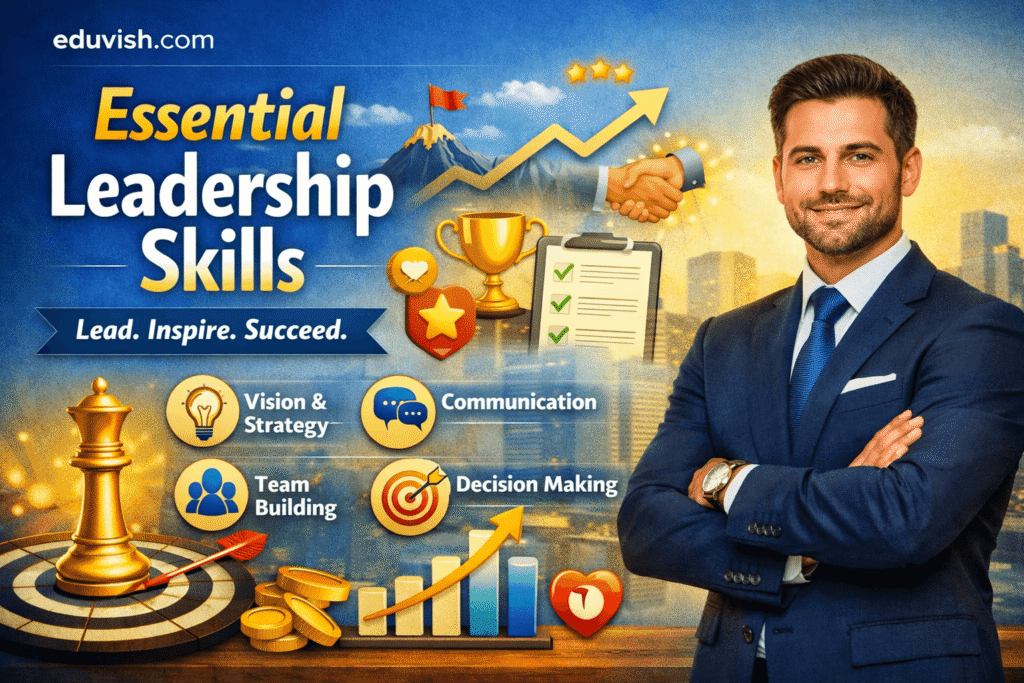
Leadership is not just about authority — it’s about influence, vision, and empathy. Whether you’re managing a team, running a business, or guiding a community, developing essential leadership skills helps you inspire others and achieve meaningful results. This guide explores the key traits, techniques, and habits that define great leaders.
Understanding Leadership
- What is leadership: The ability to guide, motivate, and empower people toward a shared goal.
- Why leadership matters: Strong leadership drives innovation, productivity, and morale.
- Different leadership styles: Transformational, democratic, autocratic, and servant leadership.
Core Leadership Skills
a. Communication
Clear communication builds trust and ensures alignment. Great leaders listen actively, express ideas clearly, and adapt their message to different audiences.
b. Decision‑Making
Effective leaders make informed decisions under pressure. They analyze data, consider perspectives, and act decisively.
c. Emotional Intelligence
Empathy and self‑awareness help leaders connect with their teams and manage conflicts gracefully.
d. Vision and Strategy
A clear vision gives direction. Strategic planning turns that vision into actionable goals.
e. Team Building
Strong leaders create cohesive teams by recognizing strengths, fostering collaboration, and celebrating success.
Developing Leadership Mindset
- Growth mindset: Embrace challenges as opportunities to learn.
- Accountability: Own decisions and outcomes.
- Adaptability: Stay flexible in changing environments.
- Integrity: Lead with honesty and ethical values.
Building Trust and Influence
Trust is the foundation of leadership.
- Lead by example: Actions speak louder than words.
- Empower others: Delegate responsibility and encourage autonomy.
- Recognize achievements: Appreciation boosts motivation.
Conflict Resolution
- Identify root causes.
- Mediate effectively.
- Promote collaboration. Leaders turn disagreements into opportunities for growth.
Decision‑Making Under Pressure
- Gather information.
- Evaluate risks.
- Act confidently. Decisive leadership inspires trust even in uncertainty.
Motivating and Inspiring Teams
- Set clear goals.
- Provide feedback.
- Celebrate milestones. Motivation thrives when people feel valued and purposeful.
Continuous Learning
Leadership is a lifelong journey.
- Seek mentorship.
- Attend workshops.
- Read leadership books.
- Reflect regularly.
Common Leadership Challenges
- Managing diverse teams.
- Balancing empathy with authority.
- Navigating organizational politics.
- Maintaining work‑life balance. Each challenge strengthens resilience and wisdom.
The Future of Leadership
Modern leaders must embrace digital transformation, sustainability, and inclusive practices. The future belongs to those who lead with compassion and innovation.
Conclusion
Leadership is not a title — it’s a responsibility. By mastering essential skills like communication, emotional intelligence, and strategic thinking, you can lead, inspire, and succeed in any environment.

