
Introduction
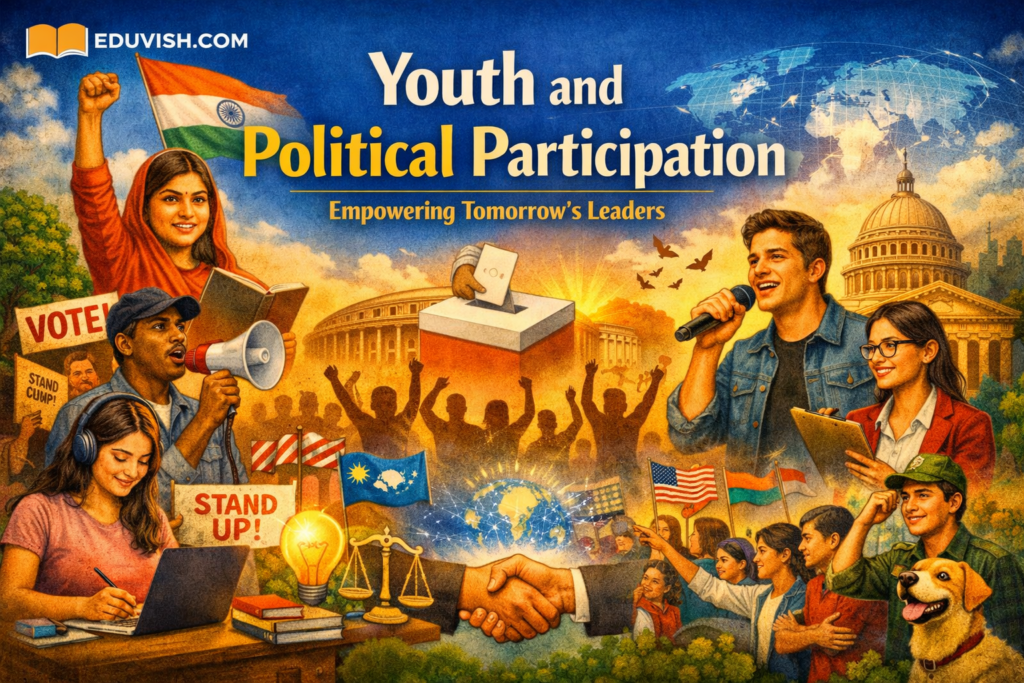
The youth are the heartbeat of every nation. Their energy, creativity, and vision have the power to transform societies. Youth and political participation is not just about voting—it’s about being active citizens who influence decisions, policies, and leadership. This article explores how young people can engage in politics, why their involvement matters, and how it shapes the future of democracy.
The Importance of Youth in Politics
Young people represent the future of governance. Their participation ensures that policies reflect modern challenges and aspirations.
Key reasons why youth involvement matters:
- Representation – Young voices bring fresh perspectives to political debates.
- Innovation – Youth introduce new ideas and digital tools for civic engagement.
- Accountability – Active youth demand transparency and ethical leadership.
- Inclusivity – Diverse participation strengthens democracy.
Historical Examples of Youth-Led Change
Throughout history, youth movements have driven social and political transformation.
- Indian Independence Movement – Young leaders like Bhagat Singh and Subhas Chandra Bose inspired millions.
- Civil Rights Movement – Students played a key role in fighting racial injustice.
- Arab Spring – Digital activism led by youth reshaped political landscapes.
- Climate Activism – Figures like Greta Thunberg mobilized global awareness.
Why Youth Participation Is Low
Despite their potential, many young people remain disengaged from politics.
Common barriers include:
- Lack of awareness – Limited understanding of political systems.
- Distrust in leaders – Perception of corruption and inefficiency.
- Limited access – Few opportunities to voice opinions.
- Socioeconomic challenges – Financial and educational constraints.
How to Encourage Youth Political Participation
1. Education and Awareness
Schools and universities should teach civic responsibility and democratic values.
2. Digital Engagement
Social media platforms can be used to spread awareness and mobilize youth movements.
3. Youth Representation in Governance
Political parties should include young candidates and advisors.
4. Community Involvement
Local initiatives and volunteer programs help youth understand real-world issues.
5. Mentorship Programs
Experienced leaders can guide young activists and help them navigate political systems.
The Role of Technology in Political Participation
Technology has revolutionized how youth engage with politics.
| Tool | Purpose | Example |
|---|---|---|
| Social Media | Awareness and mobilization | Twitter, Instagram |
| Online Petitions | Advocacy and reform | Change.org |
| Virtual Campaigns | Digital outreach | YouTube, Facebook Live |
| E-Governance Platforms | Policy feedback and transparency | MyGov India |
Benefits of Youth Political Participation
- Empowered citizenship – Builds confidence and leadership skills.
- Policy innovation – Encourages creative solutions to social issues.
- Stronger democracy – Ensures representation of all generations.
- Social progress – Promotes equality and justice.
Real-Life Examples of Youth Leaders
- Kanhaiya Kumar – Advocated for student rights and political awareness in India.
- Jacinda Ardern – Became one of the youngest world leaders, inspiring youth globally.
- Greta Thunberg – Mobilized millions for climate action.
Challenges Faced by Youth in Politics
- Age barriers – Legal restrictions on candidacy.
- Financial constraints – Campaigning requires resources.
- Gender inequality – Women face additional hurdles.
- Lack of mentorship – Few role models for guidance.
The Future of Youth Political Participation
The future is promising. With digital literacy, global connectivity, and rising awareness, youth are becoming more politically active. Governments and organizations must continue to create spaces for young voices to be heard.
Conclusion
Youth and political participation are essential for a vibrant democracy. When young people engage in politics, they bring innovation, accountability, and hope. Empowering youth means empowering the future—because today’s young citizens are tomorrow’s leaders.

