
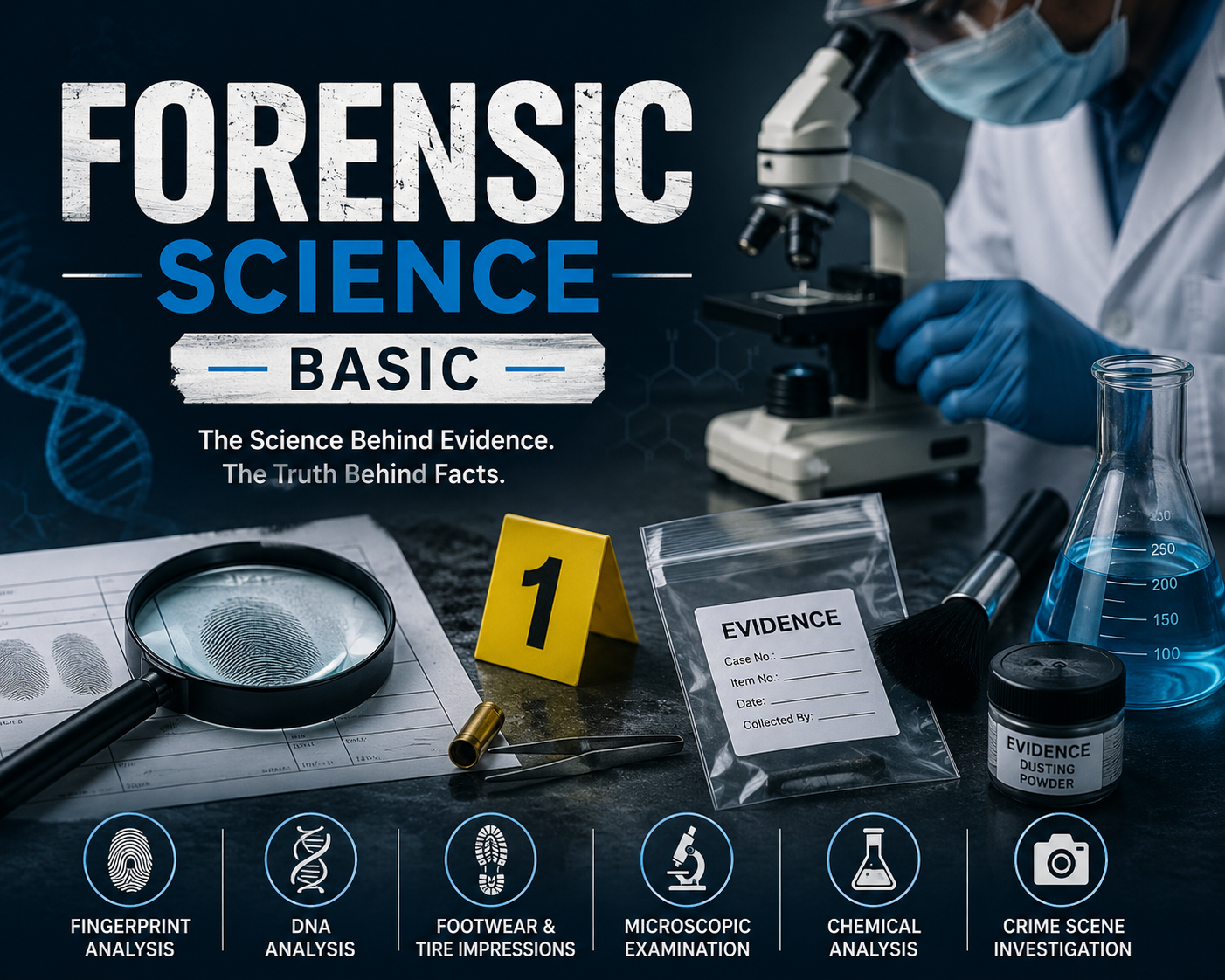
The Forensic Science Basics Course is a beginner-friendly training program designed to introduce learners to the scientific methods used in criminal investigations and evidence analysis.
Forensic science combines biology, chemistry, physics, and investigative techniques to help solve crimes and support the justice system. With increasing demand for forensic professionals in India, this course provides foundational knowledge that can support academic and professional growth.
Whether you are a student, aspiring forensic expert, law enforcement aspirant, or science enthusiast, this course will help you understand the role of science in solving real-world criminal cases.
Why Learn Forensic Science?
Forensic science plays a critical role in modern criminal investigations. Scientific evidence helps investigators identify suspects, reconstruct events, and support legal proceedings.
Learning forensic science can help you understand how scientific methods contribute to justice and public safety.
Industries and sectors using forensic science include:
- Law enforcement agencies
- Forensic laboratories
- Legal organizations
- Government agencies
- Research institutions
- Educational institutions
- Private investigation firms
- Cybersecurity organizations
What You Will Learn
Introduction to Forensic Science
Understand the history, principles, and importance of forensic science.
Crime Scene Investigation
Learn how crime scenes are secured, documented, and analyzed.
Evidence Collection
Understand how evidence is collected, preserved, and processed.
Fingerprint Analysis
Learn basic fingerprint identification techniques.
DNA Analysis Fundamentals
Understand how DNA evidence is used in investigations.
Forensic Toxicology
Learn how toxic substances are analyzed.
Digital Forensics Basics
Get introduced to computer and digital evidence analysis.
Criminal Justice System
Understand how forensic science supports legal proceedings.
Skills You Will Gain
After completing this course, learners will develop:
- Analytical thinking
- Observation skills
- Critical reasoning
- Problem-solving abilities
- Scientific investigation skills
- Evidence handling knowledge
- Research capabilities
- Documentation skills
- Ethical awareness
- Communication skills
Who Should Enroll?
This course is ideal for:
- Students
- Science graduates
- Law aspirants
- Criminology enthusiasts
- Law enforcement aspirants
- Researchers
- Teachers
- Working professionals
- Career changers
- Forensic science enthusiasts
No prior experience is required.
Career Opportunities
Completing a Forensic Science Basics Course can support careers such as:
- Forensic Science Technician
- Crime Scene Investigator
- Forensic Analyst
- Laboratory Assistant
- Digital Forensics Analyst
- Research Assistant
- Evidence Technician
- Legal Investigator
- Forensic Consultant
- Criminal Intelligence Analyst
Industries Hiring
Professionals with forensic science knowledge are valuable in:
- Government laboratories
- Police departments
- Cybersecurity firms
- Research institutions
- Educational organizations
- Private investigation agencies
- Legal organizations
Certification Benefits
Upon successful completion, learners receive a certificate that validates their foundational forensic science knowledge.
Benefits include:
- Improved employability
- Enhanced analytical skills
- Strong academic foundation
- Better career opportunities
- Professional development
9. FAQ SECTION
1. What is a Forensic Science Basics Course?
A Forensic Science Basics Course teaches the scientific principles used in criminal investigations, evidence analysis, and crime scene examination.
2. Who should enroll in this course?
Students, science graduates, law aspirants, and anyone interested in criminal investigations can enroll.
3. Do I need prior knowledge?
No. This course is designed for beginners.
4. What topics will I learn?
You will learn crime scene investigation, evidence collection, fingerprint analysis, DNA basics, and forensic toxicology.
5. How long does the course take?
Most courses can be completed within 4 to 8 weeks.
6. Will I receive a certificate?
Yes. A certificate is provided after successful completion.
7. Is forensic science a good career option in India?
Yes. Demand is increasing in law enforcement, forensic laboratories, and cybersecurity sectors.
8. Is this course suitable for students?
Yes. It is ideal for students interested in science, law, or criminal investigations.
9. Will I learn practical forensic techniques?
Yes. The course introduces practical forensic methods and investigation concepts.
10. Can this course help me prepare for advanced forensic studies?
Yes. It provides a strong foundation for advanced forensic science programs.





Reviews
There are no reviews yet.