
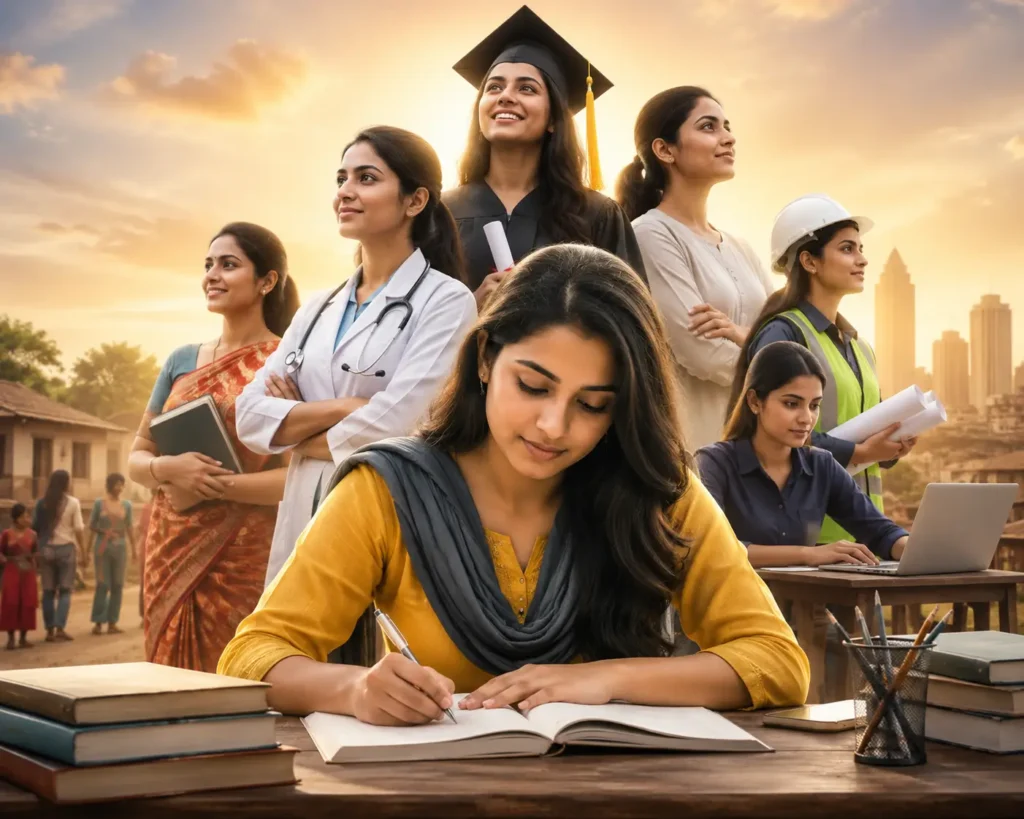
Women Empowerment Through Education
Introduction
Education is the foundation of empowerment. In India, where women constitute nearly 48.5% of the population, empowering them through education is essential for social progress and economic growth. As Pandit Nehru famously said: “If you educate a woman, you educate a family.”
Role of Education in Empowerment
- Self-confidence – Women gain the ability to make independent decisions.
- Economic independence – Education opens doors to jobs, entrepreneurship, and financial stability.
- Social equality – Educated women challenge stereotypes and reduce discrimination.
- Political participation – More women leaders emerge when education levels rise.
Government Policies Supporting Women’s Education
- Beti Bachao Beti Padhao – Awareness campaigns to educate girls.
- Working Women Hostels – Safe accommodation for women pursuing careers.
- Scholarship programs – Financial support for higher education.
- Skill development initiatives – Training women for employa
Case Studies
Case Studies
Kerala – Highest female literacy rate in India, linked to better health and social outcomes.
NFHS-6 Survey – Child marriage dropped to 20.1%, showing education’s impact on delaying marriage.
Maharashtra Single Women Policy – Focused on holistic development of single women through education and welfare.
Challenges
- Cultural barriers – Patriarchal norms restrict girls’ education.
- Dropout rates – Many girls leave school due to early marriage or household duties.
- Digital divide – Rural women lack access to online learning tools.
- Health concerns – Rising obesity and NCDs among educated women highlight the need for holistic empowerment.
Future Prospects
- Technology integration – E-learning platforms for rural women.
- Flexible policies – Age-limit extensions for women in government jobs.
- Community engagement – Awareness campaigns to reduce stigma.
- Global collaboration – Partnerships with NGOs and international bodies.
Conclusion
Education is the key driver of women’s empowerment. It enables women to break barriers, achieve independence, and contribute meaningfully to society. With strong policies, community support, and technology-driven solutions, India can ensure that every woman has the right to learn, lead, and thrive.

