
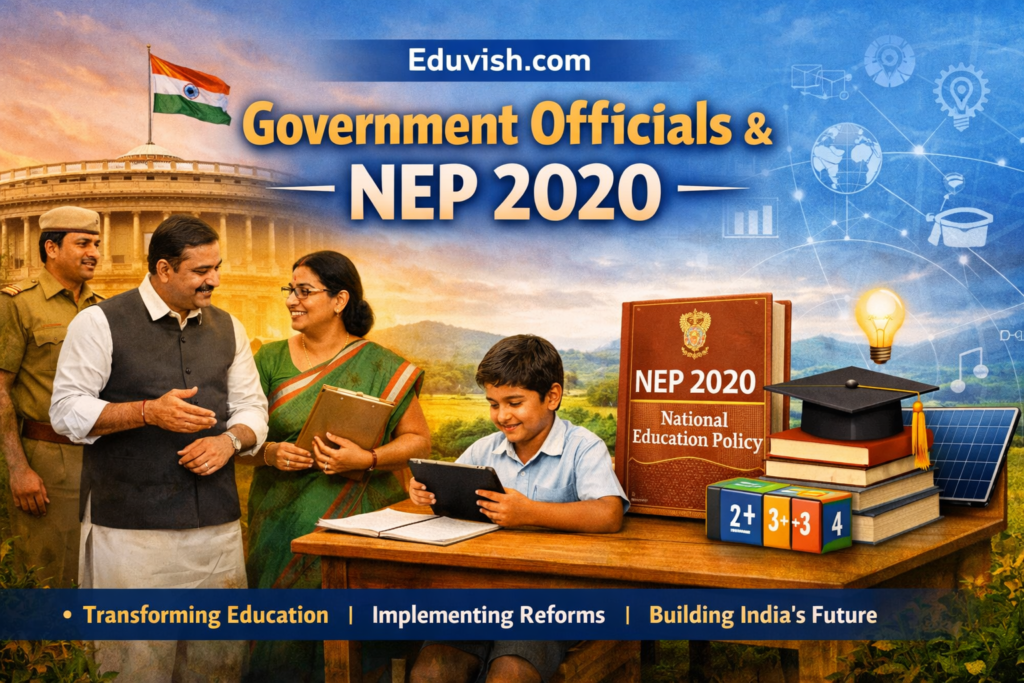
Government Officials and NEP 2020
1. Introduction to NEP 2020
The National Education Policy (NEP) 2020 marks a transformative step in India’s education system. It aims to make learning holistic, flexible, multidisciplinary, and aligned with the needs of the 21st century. Government officials play a vital role in implementing this policy across states and institutions.
2. Vision and Objectives
- Universal access to education from preschool to secondary level.
- Emphasis on critical thinking, experiential learning, and vocational training.
- Integration of technology and digital platforms for inclusive education.
3. Role of Government Officials
- Policy Implementation: Officials ensure NEP guidelines are adapted to local contexts.
- Monitoring and Evaluation: They track progress through district-level education boards.
- Teacher Training: Officials coordinate capacity-building programs for educators.
- Infrastructure Development: They oversee digital classrooms, labs, and libraries.
4. Key Reforms Under NEP 2020
- 5+3+3+4 structure replaces the old 10+2 system.
- Multilingual education promotes regional languages.
- Skill-based learning prepares students for future careers.
- Higher education autonomy empowers universities to innovate.
5. Challenges in Implementation
- Limited awareness among rural educators.
- Funding constraints for infrastructure upgrades.
- Need for continuous teacher training and digital literacy
Government Initiatives Supporting NEP 2020
- PM eVIDYA for digital learning.
- DIKSHA platform for teacher resources.
- National Curriculum Framework (NCF) aligned with NEP goals.
- Skill India Mission integrated with vocational education.
7. Impact on Rural and Urban Education
- Rural schools gain access to digital tools and teacher training.
- Urban institutions adopt flexible curricula and research-driven learning.
- Bridging the gap between traditional and modern education systems.
8. Future Outlook
Government officials envision NEP 2020 as a foundation for India’s global educational leadership. With sustained collaboration between ministries, educators, and communities, the policy promises to create a generation of skilled, creative, and responsible citizens.

