
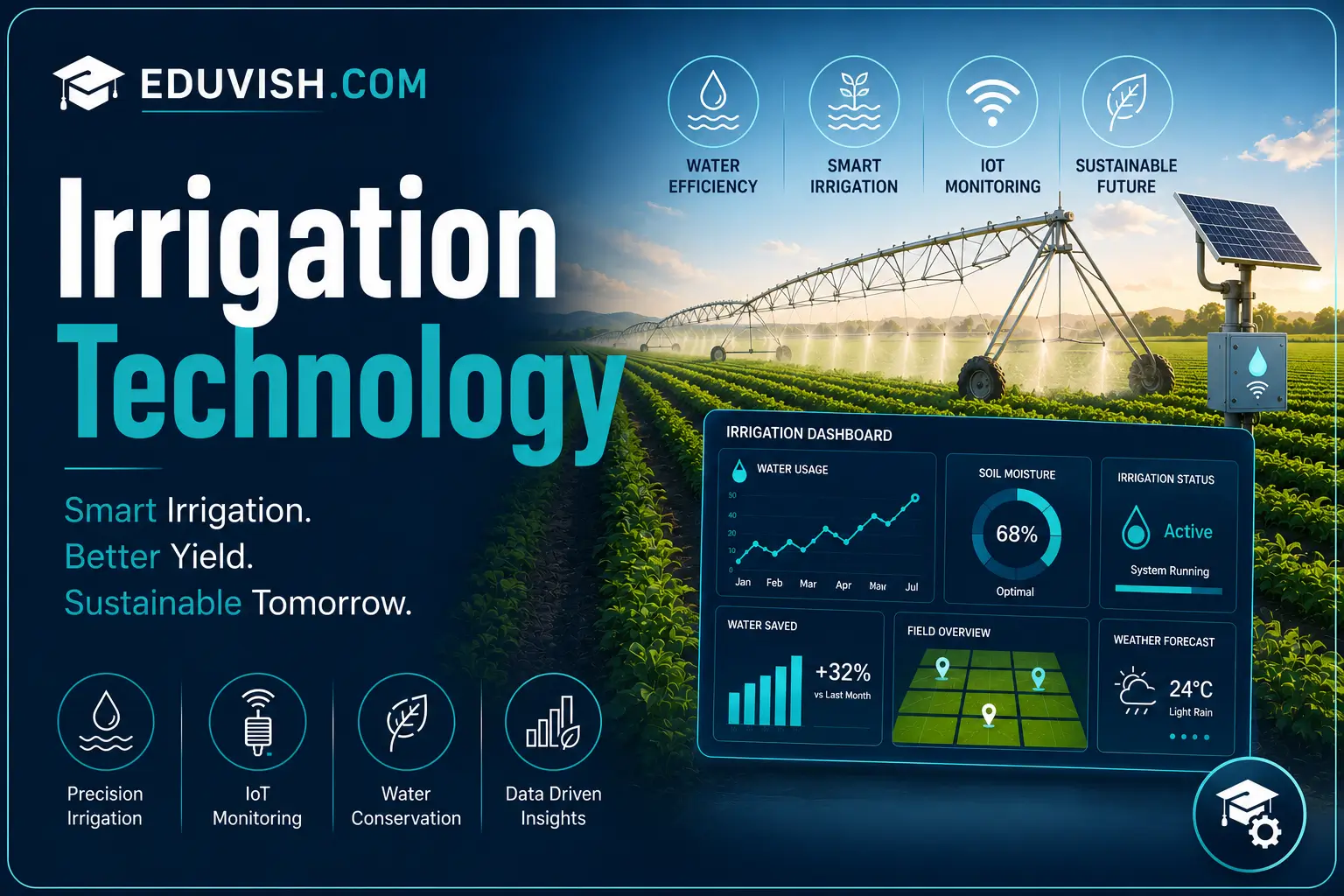
Irrigation Technology is a practical course designed to introduce learners to modern methods of water management in agriculture. This program covers the fundamentals of irrigation systems, water conservation techniques, soil-water relationships, and the role of technology in sustainable farming.
Students will gain insights into traditional and advanced irrigation methods such as surface irrigation, sprinkler systems, drip irrigation, and smart irrigation technologies. The course also emphasizes efficiency, sustainability, and the integration of sensors, automation, and GIS mapping for precision agriculture.
By the end of this course, participants will be able to:
- Understand the principles of irrigation and water management.
- Differentiate between traditional and modern irrigation systems.
- Apply drip and sprinkler irrigation techniques for crop efficiency.
- Explore smart irrigation technologies using sensors and automation.
- Evaluate soil-water relationships and crop water requirements.
- Implement sustainable practices to conserve water resources.
- Analyze case studies of irrigation technology in global agriculture.
This course is ideal for students, farmers, agricultural engineers, and professionals interested in sustainable farming and resource management. With practical examples, field-based assignments, and industry-focused training, you’ll gain the confidence to apply irrigation technologies that improve productivity and conserve water.
FAQ SECTION
What is the Irrigation Technology Course?
The Irrigation Technology Course teaches modern irrigation methods, water management practices, and irrigation system design for agricultural applications.
Who can enroll in this course?
Students, farmers, agricultural engineers, technicians, farm managers, and agriculture professionals can enroll.
Is prior agricultural experience required?
No. Beginners and experienced professionals can benefit from this course.
What topics are covered in the course?
The course covers irrigation principles, drip irrigation, sprinkler systems, water management, system design, and maintenance.
Will I receive a certificate after completion?
Yes, participants receive a course completion certificate.
What are the benefits of learning irrigation technology?
Learners gain practical skills that improve water efficiency, crop productivity, and career opportunities.
Is this course suitable for farmers?
Yes, farmers can use the knowledge to improve irrigation practices and reduce water wastage.
What career opportunities are available after completing the course?
Graduates can work as irrigation technicians, consultants, farm managers, agricultural officers, and irrigation system designers.
How does irrigation technology support sustainable agriculture?
It promotes efficient water use, reduces resource wastage, and enhances crop production.
Can irrigation technology help improve farm productivity?
Yes, effective irrigation management can significantly increase crop yields and operational efficiency.





Reviews
There are no reviews yet.