
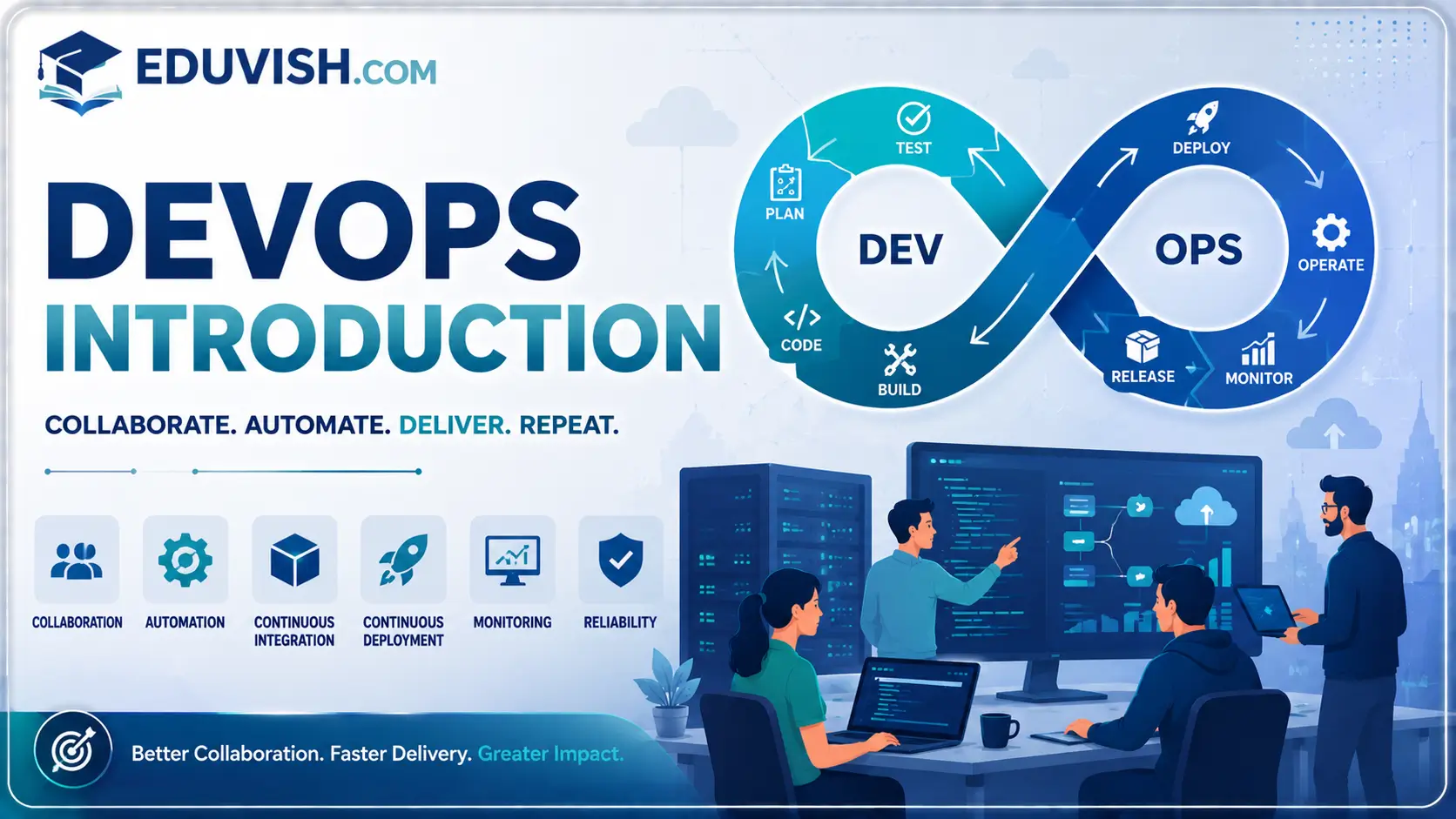
Step into the future of software development and IT operations with this beginner-friendly course on DevOps Introduction. DevOps is a modern methodology that bridges the gap between development and operations, enabling faster delivery, improved collaboration, and higher-quality software.
This course explains the core principles of DevOps, including continuous integration (CI), continuous delivery (CD), automation, and monitoring. You will learn how DevOps fosters collaboration between developers, testers, and system administrators, creating a culture of shared responsibility. The training also introduces popular DevOps tools such as Jenkins, Docker, Kubernetes, Git, and CI/CD pipelines.
Key learning outcomes include:
- Understanding the philosophy and benefits of DevOps.
- Exploring the DevOps lifecycle: planning, coding, building, testing, releasing, deploying, operating, and monitoring.
- Learning about automation and infrastructure as code (IaC).
- Using CI/CD pipelines to streamline software delivery.
- Exploring containerization and orchestration with Docker and Kubernetes.
- Applying DevOps practices to improve scalability, reliability, and efficiency.
By the end of this course, learners will have a solid foundation in DevOps concepts and tools, enabling them to contribute to modern software development environments. This training is ideal for developers, IT professionals, system administrators, and students who want to understand how DevOps transforms workflows and accelerates innovation.
FAQ SECTION
1. What is DevOps?
DevOps is a methodology that combines software development and IT operations to improve collaboration, automation, and software delivery efficiency.
2. Who should enroll in this course?
Students, software developers, IT professionals, system administrators, cloud engineers, and beginners interested in DevOps can benefit from this course.
3. Do I need programming experience?
No, this introductory course is designed for beginners and provides foundational DevOps knowledge.
4. What will I learn in the course?
You will learn DevOps principles, CI/CD, version control, cloud fundamentals, automation concepts, and modern software delivery practices.
5. Does the course cover Git?
Yes, learners are introduced to Git concepts and version control best practices.
6. What is CI/CD?
CI/CD stands for Continuous Integration and Continuous Delivery/Deployment, which automate software testing and release processes.
7. Is certification provided?
Yes, participants receive a certificate upon successful completion of the course.
8. Does the course include cloud computing concepts?
Yes, cloud fundamentals and their role in DevOps environments are covered.
9. Can this course help me start a DevOps career?
Yes, it provides foundational knowledge required for further DevOps specialization and professional growth.
10. What career opportunities are available after learning DevOps?
Career paths include DevOps Engineer, Cloud Engineer, Site Reliability Engineer, System Administrator, Release Manager, and Infrastructure Engineer.




Reviews
There are no reviews yet.