
Introduction
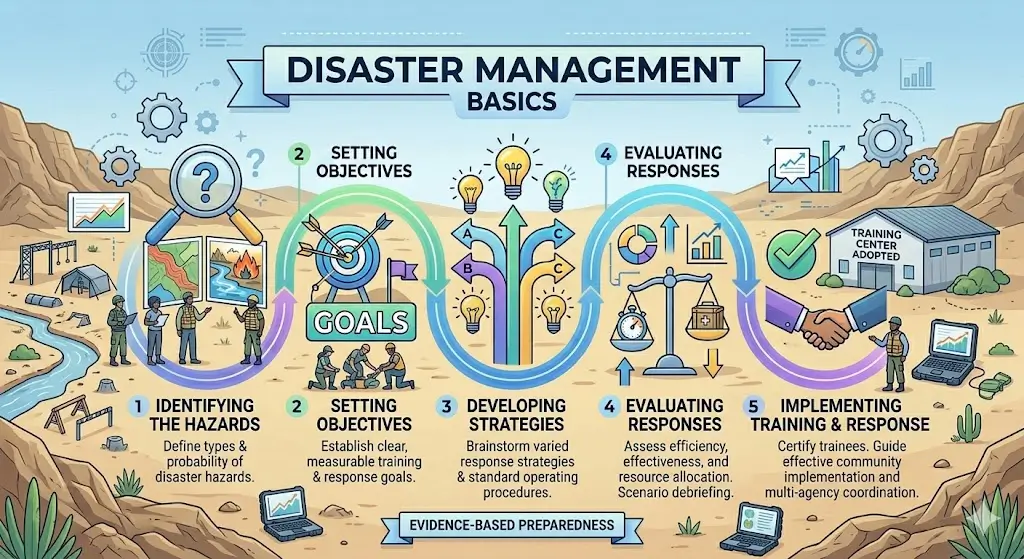
The Disaster Management Training Course is a comprehensive training program designed to help learners understand how to effectively prepare for, respond to, and recover from disasters. As climate change, urbanization, and population growth increase the risk of emergencies, disaster management has become an essential component of public safety and sustainable development.
This course introduces learners to the principles of disaster management, emergency preparedness, disaster risk reduction, and crisis response strategies. Moreover, participants gain practical knowledge of disaster planning, resource management, and community resilience practices.
Whether you are a student, government employee, healthcare professional, NGO worker, educator, safety officer, volunteer, or someone interested in public safety, this course provides valuable industry knowledge and practical skills that support professional growth and community development.
Course Overview
Disasters can occur unexpectedly and have significant impacts on people, infrastructure, and economies. Therefore, understanding disaster management is essential for reducing risks and protecting communities.
In this course, learners explore the foundations of disaster management and understand how organizations prepare for emergencies and coordinate response efforts. Additionally, participants gain an understanding of disaster prevention, mitigation, preparedness, response, and recovery processes.
The course combines theoretical concepts with practical applications, helping learners understand how effective disaster management saves lives and reduces long-term impacts.
What You Will Learn
The Disaster Management Training Course covers a broad range of emergency management and public safety topics. First, learners study the importance of disaster management and its role in protecting communities.
Next, they explore disaster risk assessment, hazard identification, and emergency planning techniques. Furthermore, the course explains disaster mitigation strategies, evacuation planning, and emergency communication systems.
Learners also gain knowledge of resource management, relief operations, and community participation during disasters.
In addition, participants examine climate-related disasters, technological emergencies, and emerging trends in disaster risk reduction. These topics provide a complete understanding of modern disaster management practices.
Skills You Will Gain
Upon successful completion of the course, learners will develop valuable skills, including:
- Disaster preparedness
- Emergency response planning
- Risk assessment
- Crisis management
- Disaster mitigation techniques
- Community resilience planning
- Problem-solving abilities
- Resource management
- Emergency communication
- Decision-making skills
Moreover, these skills are highly valued across government agencies, NGOs, healthcare organizations, educational institutions, and emergency response departments.
Benefits of the Course
The Disaster Management Training Course offers numerous benefits for learners interested in public safety and emergency management. First, it provides a strong understanding of disaster preparedness and response systems.
Additionally, the course helps learners develop practical skills for managing emergencies and reducing risks.
Furthermore, participants gain industry-relevant knowledge that supports career growth in disaster management and public administration. Because emergency preparedness is increasingly important worldwide, employers highly value professionals with disaster management expertise.
The course also enhances leadership abilities, critical thinking, and decision-making capabilities. As a result, learners become better prepared to contribute to safer and more resilient communities.
Who Should Enroll?
This course is ideal for:
- Students
- Government employees
- Healthcare professionals
- NGO workers
- Educators
- Safety officers
- Community volunteers
- Public administration professionals
- Emergency response personnel
- Individuals interested in disaster management
No prior experience is required. Therefore, beginners can confidently enroll and gain practical disaster management knowledge.
Career Opportunities
After completing the course, learners may pursue opportunities such as:
- Disaster Management Officer
- Emergency Response Coordinator
- Risk Management Executive
- Public Safety Officer
- NGO Program Coordinator
- Community Development Officer
- Disaster Relief Coordinator
- Safety and Compliance Officer
- Emergency Preparedness Specialist
- Public Administration Executive
Additionally, learners can apply their disaster management skills across government agencies, NGOs, healthcare institutions, educational organizations, and humanitarian organizations.
Certification
Upon successful completion of the Disaster Management Training Course, participants receive a certification recognizing their understanding of disaster preparedness, emergency response systems, risk management strategies, and community resilience practices. This certification can strengthen professional credibility and improve career opportunities in emergency management and public safety sectors.
Why Choose This Course?
The Disaster Management Training Course combines emergency preparedness principles with practical response strategies to provide a comprehensive learning experience. Moreover, it equips learners with professional skills that can be applied in various sectors.
The curriculum focuses on disaster preparedness, risk reduction, emergency response, and community resilience. Furthermore, learners gain industry-relevant insights that support long-term professional development.
Whether your goal is to work in emergency management, improve public safety knowledge, support community resilience, or build a career in disaster response, this course provides the knowledge, confidence, and practical understanding needed to succeed.
Enroll today and build a strong foundation in disaster management, emergency preparedness, and crisis response strategies.
FAQ SECTION
1. What is the Disaster Management Training Course?
The course teaches the fundamentals of disaster preparedness, emergency response, risk reduction, and disaster recovery.
2. Is this course suitable for beginners?
Yes. The course is designed for beginners and does not require prior experience.
3. What topics are covered?
Topics include disaster preparedness, risk assessment, emergency planning, disaster mitigation, and crisis management.
4. Will I receive a certificate?
Yes. Participants receive a certificate upon successful completion of the course.
5. Do I need prior emergency management experience to enroll?
No. The course is beginner-friendly and does not require prior experience.
6. Who should enroll in this course?
Students, government employees, healthcare workers, NGO professionals, and individuals interested in public safety can benefit from this course.
7. Is the course fully online?
Yes. The course offers flexible online learning opportunities.
8. What skills will I gain?
You will gain skills in disaster preparedness, emergency response, risk assessment, and crisis management.
9. Can this course help my career?
Yes. Disaster management skills are valuable across government agencies, NGOs, healthcare organizations, and emergency response sectors.
10. Why is Disaster Management important?
Disaster management helps reduce risks, protect communities, save lives, and improve resilience during emergencies.


Reviews
There are no reviews yet.