
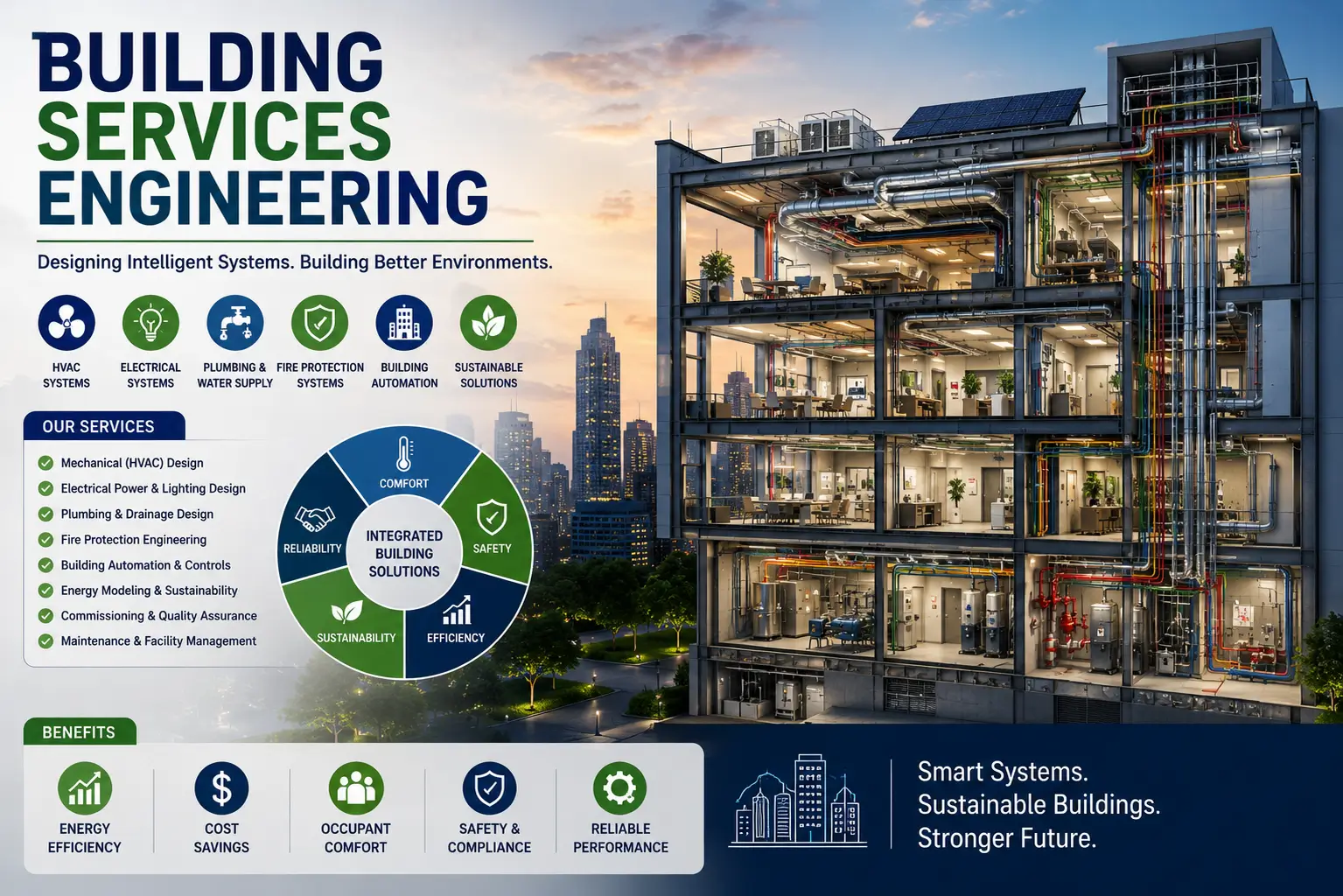
Building Services Engineering Course
The Building Services Engineering Course is designed to help learners understand the systems that make modern buildings safe, comfortable, and energy-efficient. Moreover, the course provides practical knowledge of HVAC systems, electrical installations, plumbing networks, fire protection systems, energy management, and smart building technologies. As a result, learners gain the skills required to design, manage, and maintain building infrastructure effectively.
Building Services Engineering Course Overview
Building services engineering plays a vital role in the construction and operation of residential, commercial, and industrial buildings. Therefore, professionals in this field ensure that buildings provide essential services such as heating, cooling, lighting, water supply, and safety systems. This Building Services Engineering Course provides a comprehensive understanding of modern building systems and engineering practices.
In addition, learners explore sustainability principles, energy-efficient technologies, and facility management techniques. Furthermore, they gain practical insights into how integrated building systems improve performance and occupant comfort.
Fundamentals of Building Services Engineering
The course begins with the fundamentals of building services engineering. Therefore, students learn about the key systems that support building functionality, safety, and efficiency. Moreover, they understand how engineering principles are applied in modern construction projects.
These foundations help learners build strong technical knowledge.
HVAC Systems and Climate Control
Heating, Ventilation, and Air Conditioning (HVAC) systems are essential for indoor comfort. Consequently, learners study HVAC design principles, climate control technologies, ventilation systems, and energy-efficient cooling solutions. In addition, they explore maintenance practices that improve system performance.
As a result, students gain practical HVAC engineering expertise.
Electrical Systems in Buildings
Electrical systems provide power for lighting, equipment, and building operations. Therefore, the course covers electrical distribution, wiring systems, lighting design, power management, and electrical safety practices. Furthermore, learners understand how electrical systems contribute to efficient building performance.
These skills support effective building system management.
Plumbing and Water Supply Systems
Water supply and drainage systems are critical components of every building. Consequently, students learn plumbing design, water distribution networks, drainage systems, and wastewater management techniques. In addition, they explore methods for improving water efficiency and sustainability.
These concepts strengthen infrastructure planning capabilities.
Fire Safety and Building Protection
Safety is a major priority in building design and operation. Therefore, learners study fire detection systems, fire suppression technologies, emergency planning, and building safety regulations. Moreover, they understand how protective systems reduce risks and improve occupant safety.
As a result, students develop valuable safety management skills.
Energy Management and Sustainability
Modern buildings must balance performance with environmental responsibility. Consequently, the course introduces energy conservation techniques, renewable energy integration, green building concepts, and sustainability practices. In addition, learners explore methods for reducing energy consumption and operational costs.
These skills support sustainable building development.
Smart Building Technologies
Technology is transforming the way buildings operate. Therefore, students learn about building automation systems, smart sensors, IoT applications, and intelligent building management solutions. Furthermore, they understand how digital technologies improve efficiency, comfort, and security.
These concepts prepare learners for future-ready building systems.
Practical Learning and Case Studies
The Building Services Engineering Course includes practical assignments, building system analysis, and real-world case studies. Moreover, learners apply engineering concepts to realistic building management and infrastructure scenarios.
As a result, students gain hands-on experience and industry-relevant knowledge.
Learning Outcomes
By the end of this course, learners will be able to:
- Understand building services engineering principles and applications.
- Analyze HVAC, electrical, plumbing, and safety systems.
- Support energy-efficient building operations.
- Apply sustainable engineering practices in construction projects.
- Manage building infrastructure and facility systems effectively.
- Utilize smart building technologies and automation solutions.
- Contribute to safe, comfortable, and efficient building environments.
Who Should Enroll?
This course is ideal for engineers, architects, construction professionals, facility managers, students, and individuals interested in building infrastructure systems. Moreover, it benefits anyone seeking expertise in modern building technologies and services engineering.
Conclusion
The Building Services Engineering Course provides comprehensive training in HVAC systems, electrical services, plumbing, fire protection, energy management, and smart building technologies. Furthermore, it combines theoretical concepts with practical applications. As a result, learners gain the expertise needed to support efficient, sustainable, and high-performing buildings.
9. FAQ SECTION
What is a Building Services Engineering Course?
A Building Services Engineering Course teaches HVAC systems, electrical services, plumbing, fire protection, and building infrastructure management.
Who can enroll in this course?
Students, engineers, architects, facility managers, and beginners can enroll.
Do I need prior engineering experience?
No, beginners can learn the fundamentals, although technical knowledge can be beneficial.
What skills will I learn?
You will learn HVAC systems, electrical services, plumbing design, energy management, and smart building technologies.
Is practical training included?
Yes, the course includes projects, engineering exercises, and case studies.
Will I receive a certificate?
Yes, learners receive a course completion certificate.
Does the course cover sustainable building design?
Yes, sustainability and energy-efficient building practices are important parts of the curriculum.
What career opportunities are available?
Career options include Building Services Engineer, Facility Manager, HVAC Specialist, Energy Consultant, and Building Maintenance Engineer.
Are smart building technologies included?
Yes, the course covers building automation and smart infrastructure systems.
Why should I study Building Services Engineering?
The course helps develop technical skills needed for modern building design, operation, and maintenance.





Reviews
There are no reviews yet.