
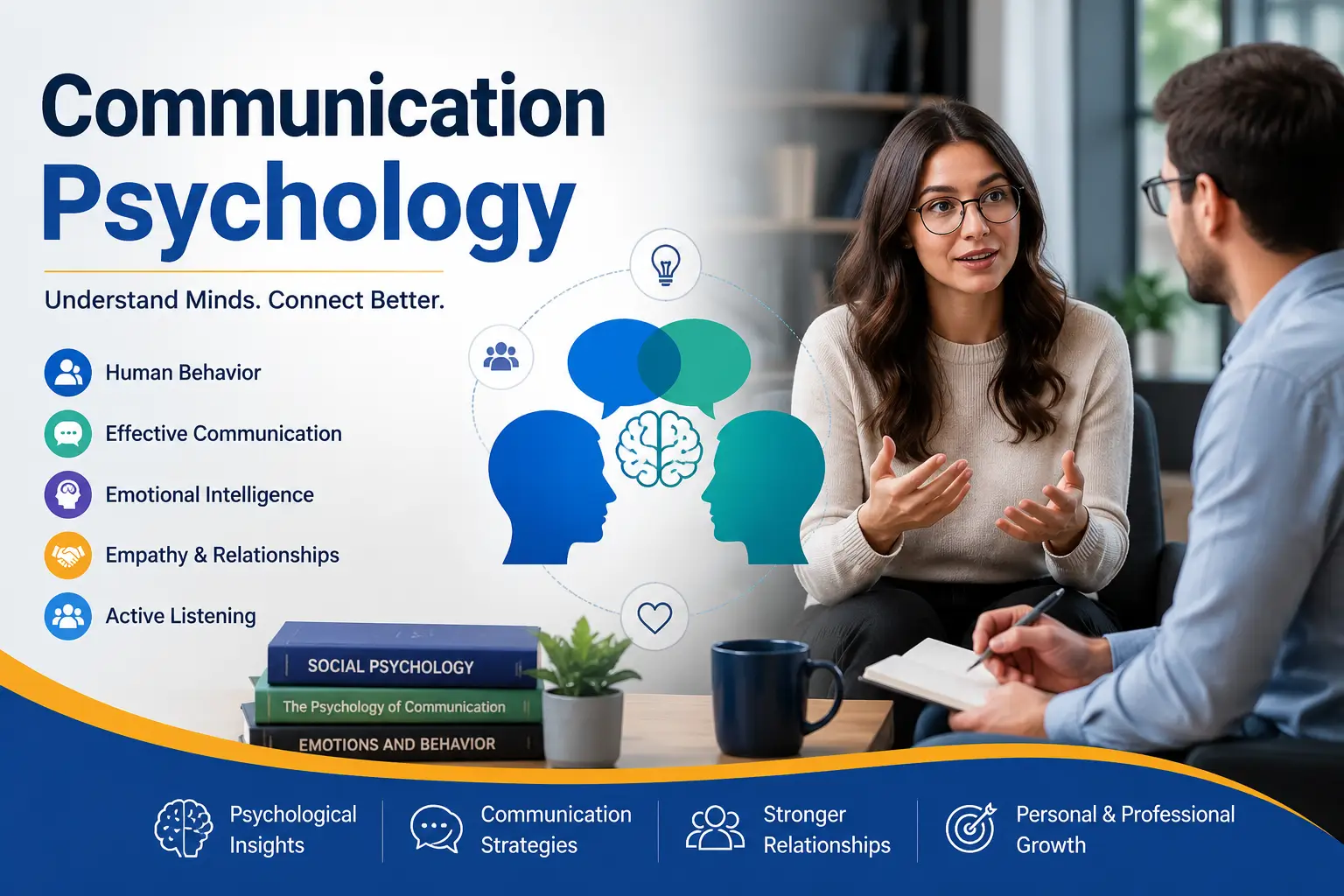
The Communication Psychology Course is a specialized behavioral science and communication training program designed for students, professionals, and individuals who want to understand how human psychology influences communication in personal and professional life.
Communication is not just about speaking or writing—it is deeply connected to human thoughts, emotions, behavior, and perception.
This course provides complete training in psychological communication principles, emotional intelligence, social behavior, and interpersonal interaction.
Course Overview
The Communication Psychology Course introduces learners to the science behind human communication.
Students will learn how people interpret messages, respond emotionally, and behave in different communication environments.
The curriculum blends psychology, behavioral science, and communication theory.
What You Will Learn
Throughout this course, students will learn:
- Fundamentals of communication psychology
- Human behavior and communication patterns
- Verbal communication psychology
- Non-verbal communication cues
- Emotional intelligence in communication
- Social interaction psychology
- Cognitive biases in communication
- Persuasion and influence techniques
- Conflict resolution strategies
- Group communication behavior
Skills You Will Gain
After completing this course, you will develop:
- Strong interpersonal communication skills
- Emotional intelligence awareness
- Behavioral analysis skills
- Active listening abilities
- Persuasion and influence techniques
- Conflict management skills
- Social awareness in communication
- Critical thinking in conversations
- Empathy and understanding skills
- Professional communication behavior
Benefits of the Communication Psychology Course
Understand Human Behavior
Learn why people communicate the way they do.
Improve Relationships
Enhance personal and professional interactions.
Career Advantage
Useful in HR, marketing, leadership, and counseling.
Strong Emotional Intelligence
Develop better emotional awareness.
Practical Communication Skills
Apply psychology in real-world conversations.
Who Should Enroll?
This course is ideal for:
- Psychology students
- Communication students
- HR professionals
- Managers and leaders
- Teachers and trainers
- Counselors and coaches
- Marketing professionals
- Anyone improving communication skills
No prior experience is required.
Career Opportunities
After completing the Communication Psychology Course, learners can pursue:
- HR Specialist
- Communication Coach
- Behavioral Analyst (Entry Level)
- Corporate Trainer
- Marketing Executive
- Counselor Assistant
- Customer Relationship Manager
Career opportunities exist in:
- Corporate organizations
- Education sector
- HR departments
- Marketing agencies
- Counseling centers
- Training institutes
Certification Details
Students who complete the course receive a certification validating their understanding of communication psychology, human behavior, and interpersonal communication principles.
Why Choose This Course?
Course highlights include:
- Psychology-based communication training
- Real-world behavioral case studies
- Beginner-friendly structure
- Career-oriented curriculum
- Emotional intelligence development
- Practical communication exercises
- Certification support
Build a strong foundation in human communication behavior.
9. FAQ SECTION
What is Communication Psychology?
It is the study of how human behavior affects communication.
Who can join this course?
Students, professionals, and communication learners can join.
Is psychology knowledge required?
No, it is beginner-friendly.
What will I learn?
Human behavior, emotional intelligence, and communication skills.
How long is the course?
Typically 1 to 3 months.
Will I get certification?
Yes, certification is provided after completion.
Is this course useful for careers?
Yes, it is useful in HR, marketing, and counseling.
Does it improve communication skills?
Yes, significantly improves interpersonal skills.
Is this course online?
Yes, it can be delivered online.
Does it include practical learning?
Yes, behavioral exercises and case studies are included.





Reviews
There are no reviews yet.