
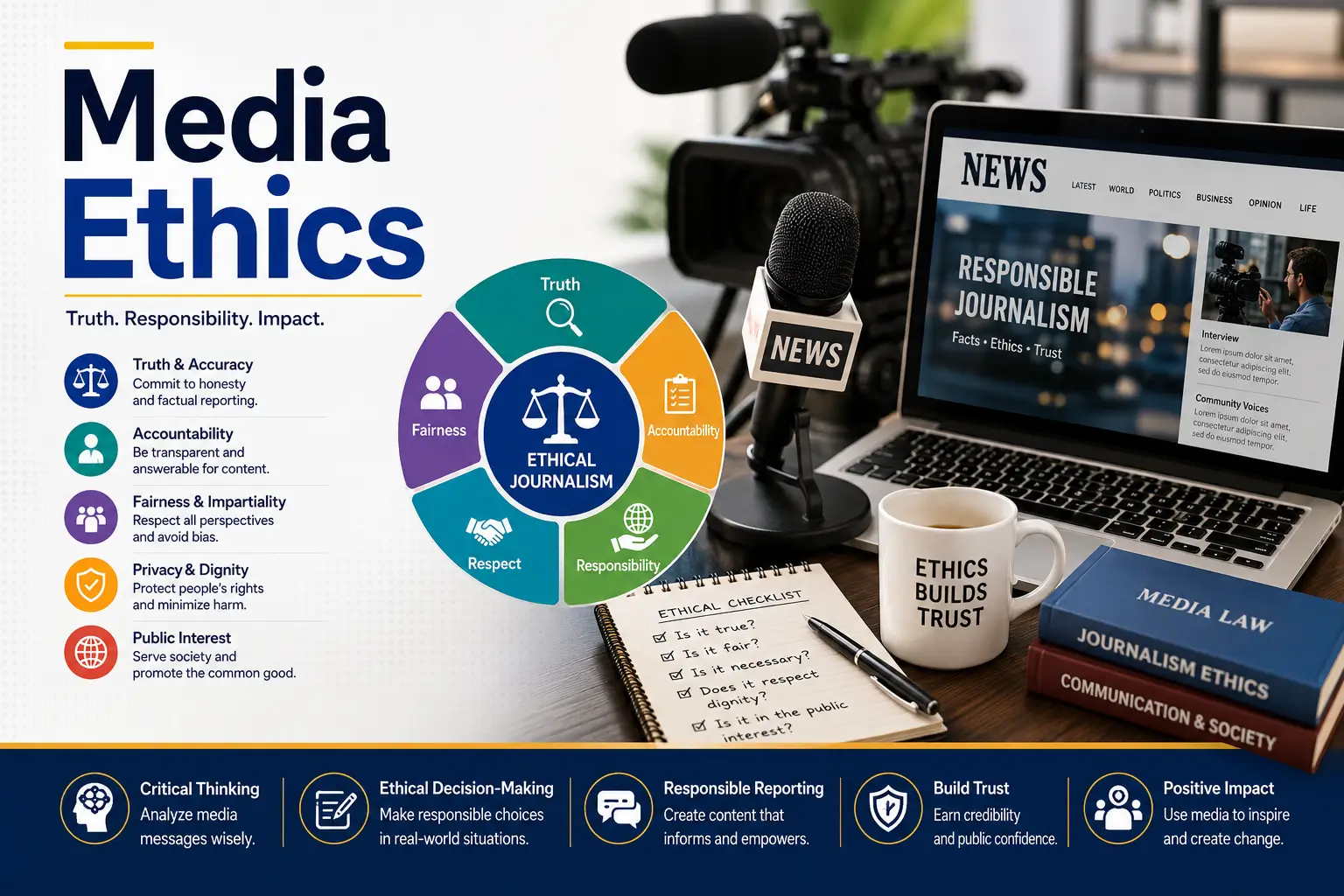
The Media Ethics Course is a professional journalism and communication training program designed for students, journalists, content creators, and media professionals who want to understand ethical standards in media and responsible reporting practices.
Media ethics is the foundation of journalism and mass communication. It ensures that news, information, and digital content are delivered accurately, fairly, and responsibly to the public.
This course provides complete training in journalism ethics, media laws, fake news awareness, and responsible communication practices.
Course Overview
The Media Ethics Course introduces learners to ethical principles that guide journalism and modern media industries.
Students will learn how media organizations maintain credibility, handle sensitive information, and ensure responsible reporting.
The curriculum is aligned with global journalism standards and media regulations.
What You Will Learn
Throughout this course, students will learn:
- Fundamentals of media ethics
- Journalism principles and standards
- Press freedom and responsibility
- Media laws and regulations basics
- Ethical news reporting practices
- Fake news and misinformation control
- Digital media ethics
- Advertising and media responsibility
- Case studies in journalism ethics
- Responsible communication practices
Skills You Will Gain
After completing this course, you will develop:
- Ethical decision-making skills
- Responsible journalism practices
- Media law awareness
- Critical thinking in reporting
- Communication integrity
- Content evaluation skills
- Digital media awareness
- Professional journalism ethics
- Analytical reporting skills
- Media compliance understanding
Benefits of the Media Ethics Course
Essential for Journalism Careers
Ethics is core to media credibility.
Strong Professional Foundation
Build trust in communication roles.
Digital Media Relevance
Important for social media and online news.
Legal Awareness
Understand media laws and regulations.
Career Growth Support
Enhances journalism and communication careers.
Who Should Enroll?
This course is ideal for:
- Journalism students
- Mass communication students
- Content creators
- Social media managers
- News reporters
- Editors and writers
- PR professionals
- Digital marketers
No prior experience is required.
Career Opportunities
After completing the Media Ethics Course, learners can pursue roles such as:
- Journalist
- News Reporter
- Content Editor
- Media Analyst
- Public Relations Executive
- Digital Content Manager
- Fact-Checking Specialist
Career opportunities exist in:
- News agencies
- Media houses
- Digital media platforms
- PR firms
- Government communication departments
- OTT and content platforms
Certification Details
Students who complete the course receive a certification validating their understanding of media ethics, journalism standards, and responsible communication practices.
Why Choose This Course?
Course highlights include:
- Industry-relevant journalism ethics training
- Real-world media case studies
- Beginner-friendly structure
- Strong focus on digital media
- Career-oriented curriculum
- Global journalism standards
- Certification support
Build a strong foundation in ethical media practice.
9. FAQ SECTION
What is Media Ethics?
It is the study of moral principles guiding journalism and media practices.
Who can join this course?
Students, journalists, and content creators can join.
Is technical knowledge required?
No, it is beginner-friendly.
What industries are covered?
Media, journalism, PR, and digital communication.
How long is the course?
Typically 1 to 3 months.
Will I get certification?
Yes, certification is provided after completion.
Is media ethics important?
Yes, it ensures responsible journalism.
What jobs can I get?
Journalist, editor, content writer, PR executive.
Is this course beginner-friendly?
Yes, it starts from basics.
Does it include case studies?
Yes, real journalism case studies are included.



Reviews
There are no reviews yet.