
Introduction
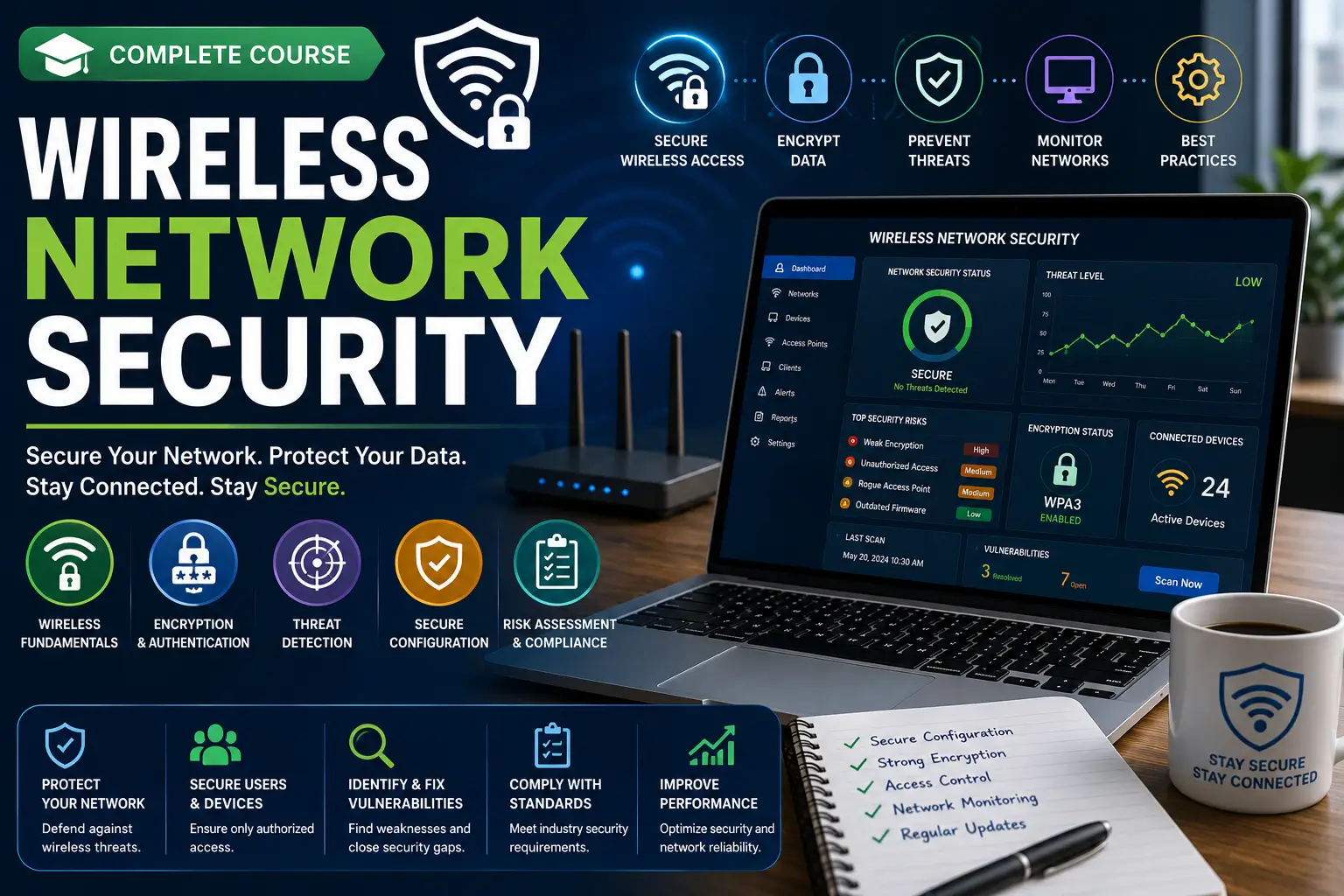
The Wireless Network Security Course is a comprehensive training program designed to equip learners with the knowledge and practical skills required to protect wireless networks from security threats, unauthorized access, and cyber risks. Wireless networks have transformed the way individuals and organizations communicate by enabling flexible, mobile, and convenient access to digital resources. However, because wireless communication occurs over radio frequencies rather than physical cables, it presents unique security challenges that require specialized protection strategies.
Organizations rely on secure wireless networks to support business operations, cloud computing, remote work, mobile devices, Internet of Things (IoT) technologies, and enterprise communication. Weak wireless security can expose organizations to unauthorized access, data breaches, service disruptions, and financial losses. Effective wireless network security combines secure configurations, encryption, authentication, monitoring, risk management, and security policies to protect organizational assets.
Whether you are a student, IT professional, network administrator, cybersecurity enthusiast, system engineer, cloud professional, or technology learner, this course provides practical knowledge to build expertise in wireless network security.
Why Wireless Network Security is Important
Wireless network security protects sensitive information, business operations, and users from cyber threats targeting wireless communication.
Key benefits of wireless network security include:
- Protects confidential business and personal data
- Prevents unauthorized network access
- Strengthens cybersecurity defenses
- Supports secure remote connectivity
- Improves regulatory compliance
- Reduces cybersecurity risks and vulnerabilities
- Protects wireless infrastructure and devices
- Enhances network availability and reliability
- Supports secure cloud and mobile environments
- Builds trust in organizational technology systems
For example, organizations implement strong Wi-Fi encryption, authentication mechanisms, and network monitoring to safeguard wireless communications and reduce the risk of cyberattacks.
Course Overview
This course provides a structured understanding of wireless networking security principles and protection strategies.
Learners will explore:
- Introduction to wireless networking
- Wireless network architecture
- Wi-Fi standards and technologies
- Wireless security principles
- Authentication methods and access control
- Wireless encryption technologies
- Secure wireless configuration practices
- Wireless vulnerabilities and threat awareness
- Network monitoring and logging fundamentals
- Wireless security policies and compliance
- Mobile device and BYOD security concepts
- Wireless intrusion detection awareness
- Risk assessment and mitigation strategies
- Incident response fundamentals
- Best practices in wireless network security
What You Will Learn
By the end of this course, learners will be able to:
- Understand wireless networking fundamentals
- Identify common wireless security risks and vulnerabilities
- Explain authentication and encryption concepts
- Apply secure wireless configuration principles
- Understand wireless access control techniques
- Monitor wireless network activity and security events
- Support wireless risk management initiatives
- Promote cybersecurity awareness in wireless environments
- Apply industry best practices for wireless security
- Contribute to secure wireless infrastructure management
Key Components of Wireless Network Security
1. Wireless Networking Fundamentals
Learn how wireless communication, Wi-Fi technologies, access points, and wireless infrastructure operate.
2. Authentication and Encryption
Understand authentication methods, user verification, encryption techniques, and secure communication protocols that protect wireless networks.
3. Wireless Threat Awareness
Explore common wireless security threats, vulnerabilities, misconfigurations, and strategies for reducing organizational risk.
4. Secure Network Management
Learn how organizations configure, monitor, maintain, and secure wireless networks using industry best practices.
5. Security Policies and Compliance
Understand the importance of governance, regulatory compliance, security policies, and continuous monitoring in maintaining secure wireless environments.
Skills You Will Gain
After completing this course, learners will develop valuable professional skills, including:
- Wireless network security
- Wi-Fi security management
- Authentication concepts
- Encryption fundamentals
- Network monitoring awareness
- Wireless risk assessment
- Secure network configuration
- Cybersecurity fundamentals
- Access control principles
- Security policy awareness
- Problem-solving
- Analytical thinking
- Incident awareness
- IT security best practices
- Network administration fundamentals
Benefits of This Course
Completing this course offers several professional advantages, including:
- Strong understanding of wireless network security principles
- Better career opportunities in networking and cybersecurity
- Improved wireless infrastructure protection skills
- Practical understanding of authentication and encryption technologies
- Better awareness of wireless threats and vulnerabilities
- Enhanced IT security and risk management capabilities
- Increased employability across technology industries
- Competitive advantage in cybersecurity and networking careers
- Strong foundation for advanced networking, cybersecurity, ethical hacking, cloud security, and information security certifications
Who Should Enroll?
This course is suitable for:
- Students interested in networking and cybersecurity
- Network administrators
- System administrators
- IT support professionals
- Cybersecurity enthusiasts
- Security analysts
- Cloud professionals
- Infrastructure engineers
- Technical support engineers
- Anyone interested in wireless network security
No previous wireless security experience is required, although basic networking knowledge can be beneficial.
Career Opportunities
After completing this course, learners may pursue roles such as:
- Network Security Analyst
- Wireless Network Administrator
- Cybersecurity Analyst
- Information Security Associate
- Network Support Engineer
- Systems Administrator
- IT Security Technician
- Infrastructure Support Engineer
- Security Operations Center (SOC) Analyst
- Technical Support Engineer
- Network Operations Associate
Certification
Upon successful completion of the Wireless Network Security Course, learners receive a professional certificate recognizing their knowledge of wireless networking, Wi-Fi security, authentication, encryption, access control, wireless risk management, network monitoring, security policies, cybersecurity fundamentals, and secure wireless infrastructure management. This certification enhances career opportunities across IT companies, cloud service providers, telecommunications organizations, cybersecurity firms, financial institutions, government agencies, healthcare organizations, educational institutions, and multinational technology companies.
Conclusion
The Wireless Network Security Course provides learners with practical knowledge and professional skills to protect wireless networks against modern cybersecurity threats. By mastering wireless networking fundamentals, authentication methods, encryption technologies, secure configuration practices, wireless monitoring, access control, risk management, and cybersecurity best practices, learners will be well prepared for rewarding careers in networking, information security, cybersecurity, and IT infrastructure management.
Whether your goal is to become a Network Security Analyst, strengthen your cybersecurity expertise, secure enterprise wireless infrastructure, or build a successful career in information security, this course provides a strong foundation for long-term professional success.
FAQ
1. What is the Wireless Network Security Course?
It is a course that teaches the principles and best practices of securing wireless networks, including Wi-Fi security, authentication, encryption, access control, and cybersecurity fundamentals.
2. Who should enroll in this course?
Students, network administrators, IT professionals, cybersecurity enthusiasts, system administrators, cloud professionals, infrastructure engineers, and anyone interested in wireless security.
3. Do I need prior networking experience?
No. The course is beginner-friendly, although basic networking knowledge can make it easier to understand wireless networking concepts.
4. What topics are covered in this course?
The course covers wireless networking, Wi-Fi technologies, authentication, encryption, wireless vulnerabilities, secure configuration, access control, network monitoring, wireless security policies, risk management, and cybersecurity best practices.
5. Will I learn how to secure Wi-Fi networks?
Yes. The course explains wireless security principles, secure Wi-Fi configurations, authentication methods, encryption technologies, and best practices for protecting wireless networks.
6. Does this course include cybersecurity and risk management concepts?
Yes. You will learn wireless threat awareness, risk assessment, security monitoring, incident response fundamentals, and cybersecurity best practices.
7. Will I receive a certificate after completing the course?
Yes. A professional course completion certificate is awarded upon successful completion.
8. Is wireless network security an in-demand skill?
Yes. Wireless security professionals are highly sought after by IT companies, cloud providers, telecommunications organizations, financial institutions, government agencies, healthcare organizations, educational institutions, and cybersecurity firms.
9. How does wireless network security benefit organizations?
It protects sensitive information, prevents unauthorized access, strengthens cybersecurity defenses, supports regulatory compliance, reduces security risks, and ensures reliable wireless communication.
10. What career opportunities are available after this course?
You can pursue roles such as Network Security Analyst, Wireless Network Administrator, Cybersecurity Analyst, Information Security Associate, Network Support Engineer, Systems Administrator, IT Security Technician, Infrastructure Support Engineer, SOC Analyst, or Network Operations Associate.





Reviews
There are no reviews yet.