
Introduction
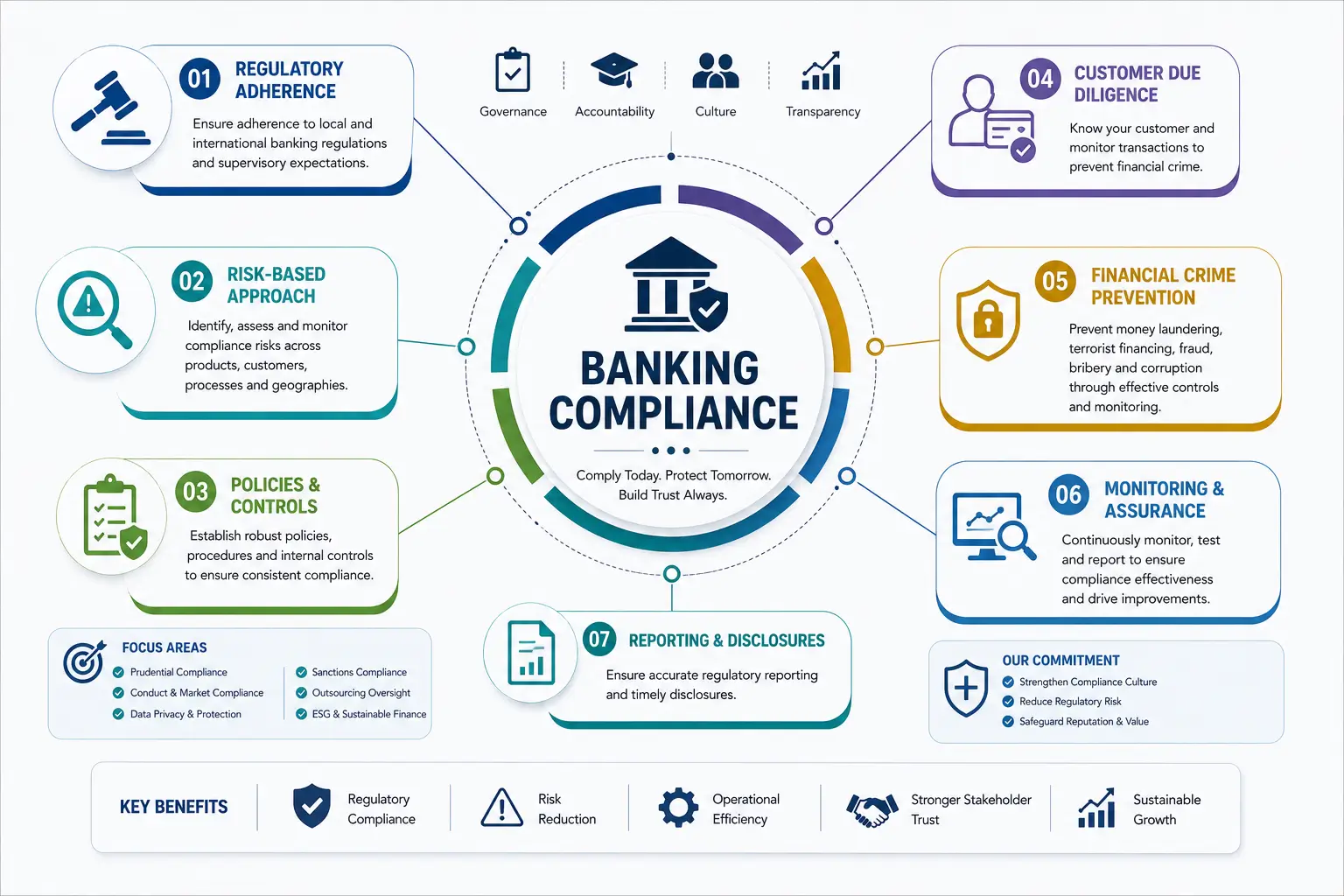
The Banking Compliance Course is a comprehensive training program designed to help learners understand how financial institutions follow laws, regulations, and internal policies to ensure safe and transparent operations. In modern banking systems, compliance is a critical function that protects institutions from legal and financial risks.
Banking compliance includes AML (Anti-Money Laundering), KYC (Know Your Customer), fraud prevention, regulatory reporting, and internal auditing. Therefore, banks require skilled professionals who can ensure strict adherence to these rules.
This course introduces learners to banking regulations, compliance frameworks, risk management principles, and governance systems. Moreover, participants gain practical knowledge of how compliance departments operate in real banking environments.
Whether you are a student, banking professional, auditor, or aspiring compliance officer, this course provides essential skills for banking compliance.
Course Overview
In today’s financial industry, regulatory compliance is mandatory for all banking institutions. Consequently, organizations must maintain strong compliance systems to avoid penalties and reputational damage.
The Banking Compliance Course provides learners with a structured understanding of financial regulations, AML/KYC procedures, auditing systems, and risk control mechanisms. Additionally, participants explore how banks ensure legal and ethical operations.
The course combines regulatory theory with practical applications, helping learners understand how compliance works in real banking systems.
What You Will Learn
The Banking Compliance Course covers a wide range of regulatory and financial topics. First, learners study the fundamentals of banking compliance and regulatory systems.
Next, participants explore AML (Anti-Money Laundering), KYC (Know Your Customer), fraud detection, and customer due diligence processes. Furthermore, the course explains banking regulations, reporting requirements, and audit procedures.
In addition, learners gain knowledge of risk management, governance frameworks, and compliance monitoring systems. These topics provide a complete understanding of banking compliance operations.
Moreover, learners also study real-world compliance case studies, financial crimes prevention, and regulatory best practices.
Skills You Will Gain
Upon successful completion of the course, learners will develop valuable skills, including:
- Banking compliance management
- AML and KYC procedures
- Regulatory understanding
- Risk and fraud detection
- Financial auditing basics
- Governance and ethics
- Compliance reporting
- Policy implementation
- Decision-making in compliance
- Monitoring and control systems
Moreover, these skills are highly valuable across banks, NBFCs, fintech companies, insurance firms, and financial regulatory bodies.
Benefits of the Course
The Banking Compliance Course offers numerous benefits for learners interested in banking and financial regulation. First, it builds strong regulatory and analytical skills.
Additionally, the course improves understanding of financial laws and risk control systems. Furthermore, participants gain practical knowledge that helps organizations maintain legal and ethical operations.
Because compliance is mandatory in banking, professionals with these skills are highly in demand. As a result, learners can improve career opportunities in banking, audit, and risk management roles.
The course also develops attention to detail, critical thinking, and decision-making skills.
Who Should Enroll?
This course is ideal for:
- Banking professionals
- Compliance officers
- Finance students
- Auditors
- Risk managers
- NBFC employees
- Legal professionals
- Fintech professionals
- Business graduates
- Aspiring banking specialists
No prior experience is required. Therefore, beginners can confidently enroll and build foundational banking compliance skills.
Career Opportunities
After completing the course, learners may pursue opportunities such as:
- Compliance Officer
- Banking Auditor
- AML Analyst
- KYC Analyst
- Risk Compliance Manager
- Financial Compliance Analyst
- Regulatory Affairs Executive
- Fraud Prevention Analyst
- Banking Operations Officer
- Governance Specialist
Additionally, learners can apply these skills across banks, financial institutions, fintech companies, insurance firms, and regulatory organizations.
Certification
Upon successful completion of the Banking Compliance Course, participants receive a certification recognizing their understanding of banking regulations, AML/KYC processes, risk management, and compliance systems.
This certification can strengthen professional credibility and support career growth in banking, compliance, and financial governance roles.
Why Choose This Course?
The Banking Compliance Course combines financial regulations with practical banking operations to provide a real-world learning experience. Moreover, it equips learners with skills essential for safe and compliant financial systems.
The curriculum focuses on AML, KYC, and regulatory frameworks. Furthermore, learners gain insights into real-world compliance challenges and solutions.
Whether your goal is to become a compliance officer, work in banking, or specialize in financial regulations, this course provides the knowledge and confidence needed to succeed.
Conclusion
The Banking Compliance Course provides a strong foundation in financial regulations, AML/KYC processes, auditing, and risk management. Through topics such as governance, compliance monitoring, and fraud prevention, learners gain valuable knowledge applicable across modern financial industries.
Moreover, as financial regulations become stricter, professionals with banking compliance expertise are becoming highly valuable. Therefore, this course serves as an excellent starting point for individuals seeking careers in banking, finance, and regulatory compliance.
FAQ SECTION
1. What is the Banking Compliance Course?
It teaches banking regulations, AML/KYC, and financial compliance systems.
2. Is this course suitable for beginners?
Yes. Beginners can easily understand compliance concepts.
3. What topics are covered in this course?
It includes AML, KYC, banking laws, and risk management.
4. Will I receive a certificate?
Yes. A certificate is provided after completion.
5. Do I need legal experience?
No. The course starts from basic concepts.
6. Who should enroll in this course?
Banking professionals, students, auditors, and compliance officers.
7. Is this course practical?
Yes. It includes real-world banking compliance examples.
8. What skills will I gain?
You will gain skills in compliance, auditing, and regulatory systems.
9. Can this course help my career?
Yes. It improves opportunities in banking, compliance, and risk roles.
10. Why is banking compliance important?
It ensures legal operations, prevents fraud, and protects financial systems.





Reviews
There are no reviews yet.