
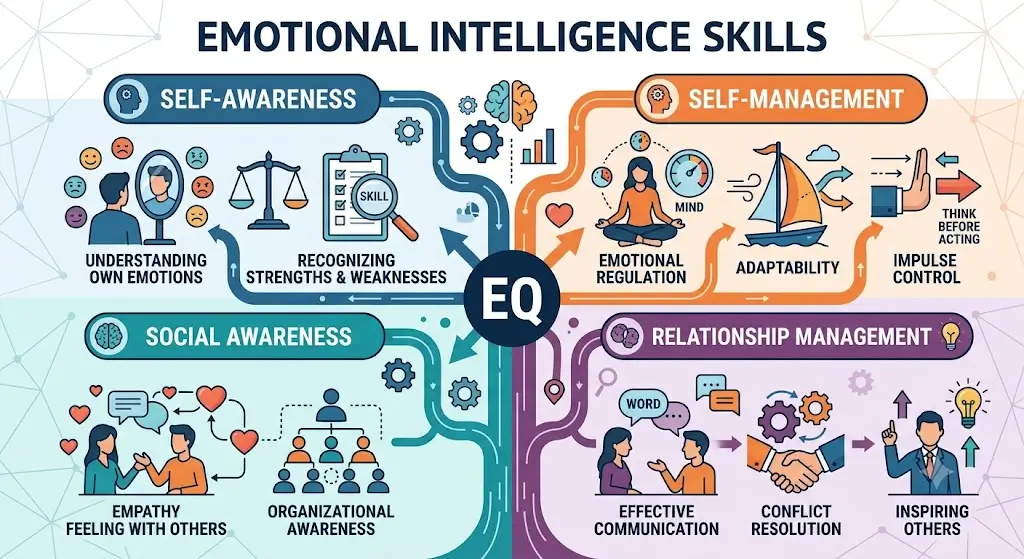
Emotional Intelligence Skills Course
Success in personal and professional life depends not only on knowledge and technical expertise but also on the ability to understand and manage emotions effectively. Emotional intelligence is a critical skill that helps individuals build strong relationships, communicate effectively, resolve conflicts, and make better decisions. Our Emotional Intelligence Skills Course is designed to help learners develop emotional awareness, empathy, self-control, and interpersonal skills that contribute to long-term success.
Emotional intelligence, often referred to as EQ, involves recognizing, understanding, and managing emotions while also understanding the emotions of others. Individuals with strong emotional intelligence are often more effective leaders, communicators, and team members.
Why Learn Emotional Intelligence Skills?
Emotional intelligence plays a major role in workplace performance, leadership effectiveness, and personal well-being. Therefore, developing emotional intelligence can significantly improve both personal and professional outcomes.
Learning emotional intelligence skills can help you:
- Improve self-awareness
- Strengthen emotional control
- Enhance communication skills
- Build stronger relationships
- Increase empathy
- Improve leadership abilities
- Resolve conflicts effectively
- Boost career growth
Furthermore, emotional intelligence contributes to better decision-making and overall life satisfaction.
What You Will Learn
The Emotional Intelligence Skills Course provides practical strategies for understanding and managing emotions.
Key Learning Areas
- Emotional intelligence fundamentals
- Self-awareness development
- Emotional self-management
- Empathy and compassion
- Social awareness
- Relationship management
- Communication skills
- Conflict resolution
- Leadership development
- Workplace emotional intelligence
- Emotional resilience
- Stress management techniques
- Team collaboration
- Active listening skills
- Personal growth strategies
Understanding Emotional Intelligence
The course begins by introducing the core principles of emotional intelligence.
Topics include:
- Definition of emotional intelligence
- Components of EQ
- Emotional awareness
- Personal strengths and weaknesses
- Emotional impact on behavior
As a result, learners gain a deeper understanding of how emotions influence actions and decisions.
Self-Awareness and Self-Management
Understanding personal emotions is the first step toward emotional intelligence.
Learners will explore:
- Emotional recognition
- Self-reflection techniques
- Emotional regulation
- Managing reactions
- Personal development strategies
Moreover, practical activities help learners improve emotional control and confidence.
Empathy and Social Awareness
Empathy helps individuals understand and connect with others more effectively.
This module covers:
- Understanding perspectives
- Active listening
- Emotional awareness in relationships
- Social sensitivity
- Building trust
Students learn how empathy strengthens communication and collaboration.
Relationship Management Skills
Strong relationships are essential for personal and professional success.
Topics include:
- Effective communication
- Conflict resolution
- Relationship building
- Teamwork strategies
- Interpersonal skills
Emotional Intelligence in the Workplace
Workplace success often depends on emotional intelligence.
Learners will study:
- Professional communication
- Team collaboration
- Workplace relationships
- Customer interactions
- Emotional intelligence at work
Leadership and Emotional Intelligence
Effective leaders use emotional intelligence to motivate and inspire others.
Students will learn:
- Leadership communication
- Emotional influence
- Employee engagement
- Decision-making skills
- Team leadership techniques
Skills You Will Gain
After completing the course, learners will develop:
- Emotional intelligence skills
- Self-awareness abilities
- Emotional management techniques
- Communication skills
- Empathy and social awareness
- Leadership capabilities
- Conflict resolution skills
- Relationship-building expertise
- Team collaboration abilities
- Personal development skills
Benefits of the Course
This course provides valuable benefits for learners across different industries and life stages.
Benefits Include
- Improved emotional awareness
- Better communication
- Stronger relationships
- Enhanced leadership skills
- Increased workplace effectiveness
- Better conflict resolution
- Improved teamwork
- Greater personal growth
Additionally, emotional intelligence supports long-term career advancement and personal success.
Who Should Enroll?
This course is ideal for:
- Students
- Professionals
- Managers
- Team leaders
- Entrepreneurs
- Customer service professionals
- Human resource professionals
- Educators
- Sales professionals
- Anyone interested in personal development
No prior experience is required.
Career Opportunities and Growth
Emotional intelligence skills are highly valued in modern workplaces.
These skills support careers in:
- Management
- Human Resources
- Customer Service
- Sales
- Leadership Roles
- Project Management
- Training and Development
- Education
- Business Administration
- Entrepreneurship
Certification
Upon successful completion, learners receive a certificate validating their emotional intelligence and interpersonal communication skills.
Enroll Today
Develop stronger self-awareness, empathy, and leadership abilities with our Emotional Intelligence Skills Course. Learn practical emotional intelligence strategies that help you succeed in relationships, education, and the workplace.
10. FAQ SECTION
1. What is an Emotional Intelligence Skills Course?
It teaches self-awareness, empathy, emotional management, communication, and relationship-building skills.
2. Who should take this course?
Students, professionals, managers, entrepreneurs, and anyone interested in personal growth can benefit.
3. Is prior knowledge required?
No, the course is suitable for beginners.
4. Will I receive a certificate?
Yes, learners receive a certificate after successful completion.
5. Does the course teach empathy skills?
Yes, empathy and social awareness are major parts of the curriculum.
6. Can emotional intelligence improve workplace performance?
Yes, emotional intelligence enhances communication, teamwork, and leadership effectiveness.
7. Is this course useful for managers?
Absolutely. Emotional intelligence is an essential leadership skill.
8. Does the course include conflict resolution?
Yes, practical conflict management techniques are covered.
9. How long does it take to complete?
The duration depends on the course format and learning schedule.
10. What skills will I gain?
You will gain emotional awareness, communication, empathy, leadership, teamwork, and relationship management skills.



Reviews
There are no reviews yet.