
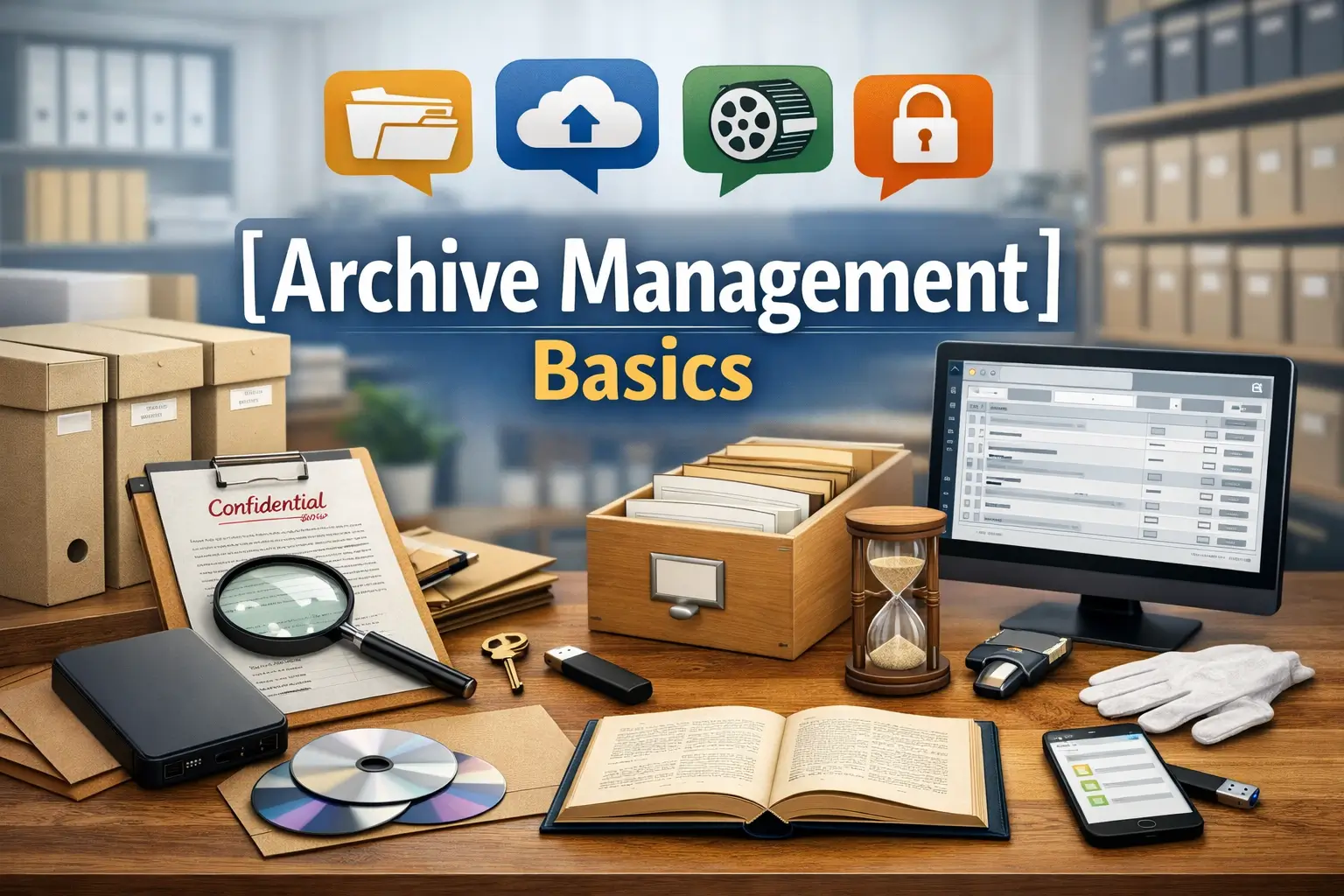
Archive Management Basics Course
The Archive Management Basics Course is designed to provide learners with the essential knowledge and practical skills required to organize, preserve, manage, and protect archival records and historical documents. Effective archive management ensures that valuable information remains accessible, secure, and preserved for future use.
This course introduces learners to archival principles, records management, document preservation, digital archiving, classification systems, storage techniques, and information retrieval. Whether you are a student, librarian, records officer, office administrator, researcher, or documentation professional, this course offers a solid foundation in archive management.
Why Learn Archive Management?
Organizations generate large volumes of records that must be stored, maintained, and retrieved efficiently. Proper archive management helps preserve important information, supports legal and regulatory compliance, and improves organizational efficiency.
Learning archive management enables professionals to organize physical and digital records systematically while ensuring long-term preservation and secure access to valuable information.
What You Will Learn
This course covers key topics, including:
- Introduction to archive management
- Principles of records management
- Archive organization techniques
- Document classification systems
- Records retention and disposal
- Physical document preservation
- Digital archive management
- Metadata and indexing basics
- Archive security and confidentiality
- Information retrieval methods
Practical Learning Experience
Learners will explore real-world examples of archive management in libraries, government offices, educational institutions, museums, and corporate organizations. Practical exercises and case studies will help participants understand document organization, archival storage methods, digital preservation, and retrieval processes.
The course also introduces best practices for maintaining secure, accurate, and well-organized archives.
Benefits of the Course
By completing this course, learners will:
- Understand archive management principles
- Learn document preservation techniques
- Improve records organization skills
- Develop digital archiving knowledge
- Enhance information retrieval abilities
- Build archive security awareness
- Strengthen administrative and documentation skills
- Increase career opportunities in records management
- Earn a recognized certification
Who Should Enroll?
This course is ideal for:
- Students
- Librarians
- Records officers
- Office administrators
- Documentation professionals
- Researchers
- Government employees
- Museum staff
- Information management professionals
- Anyone interested in archive management
No prior experience is required. The course is beginner-friendly.
Career Opportunities
After completing the Archive Management Basics Course, learners can pursue roles such as:
- Archive Assistant
- Records Management Officer
- Documentation Officer
- Archive Administrator
- Information Management Assistant
- Records Coordinator
- Library Archive Assistant
- Document Control Assistant
- Administrative Officer
- Digital Archive Support Specialist
These roles are available in government departments, educational institutions, libraries, museums, healthcare organizations, corporations, and nonprofit organizations.
Certification
Upon successful completion of the course, learners receive a certification demonstrating their knowledge of archive management, document preservation, records organization, and digital archiving.
Conclusion
The Archive Management Basics Course equips learners with practical archive management skills that are essential for preserving valuable information and maintaining efficient record-keeping systems. Whether you are seeking a career in records management or wish to improve your administrative skills, this course provides a strong foundation for professional success.
9. FAQ SECTION
Q1. What is archive management?
Archive management is the process of organizing, preserving, storing, and retrieving historical and organizational records efficiently.
Q2. Who should enroll in this course?
Students, librarians, records officers, administrators, researchers, and anyone interested in archive management.
Q3. Is this course suitable for beginners?
Yes. No prior knowledge or experience is required.
Q4. What topics are covered?
Archive management, records organization, document preservation, digital archiving, classification, and information retrieval.
Q5. Why is archive management important?
It helps preserve valuable records, improves information access, supports compliance, and protects organizational knowledge.
Q6. Does the course cover digital archives?
Yes. Learners will understand the basics of digital archive management and electronic record preservation.
Q7. Will I learn document preservation techniques?
Yes. The course includes physical and digital document preservation methods.
Q8. Can this course help in administrative careers?
Yes. Archive management skills are valuable for administrative, records management, and documentation roles.
Q9. Will I receive a certificate?
Yes. A certificate is awarded after successful completion.
Q10. Is archive management different from records management?
Archive management focuses on preserving valuable long-term records, while records management covers the complete lifecycle of organizational documents.



Reviews
There are no reviews yet.