
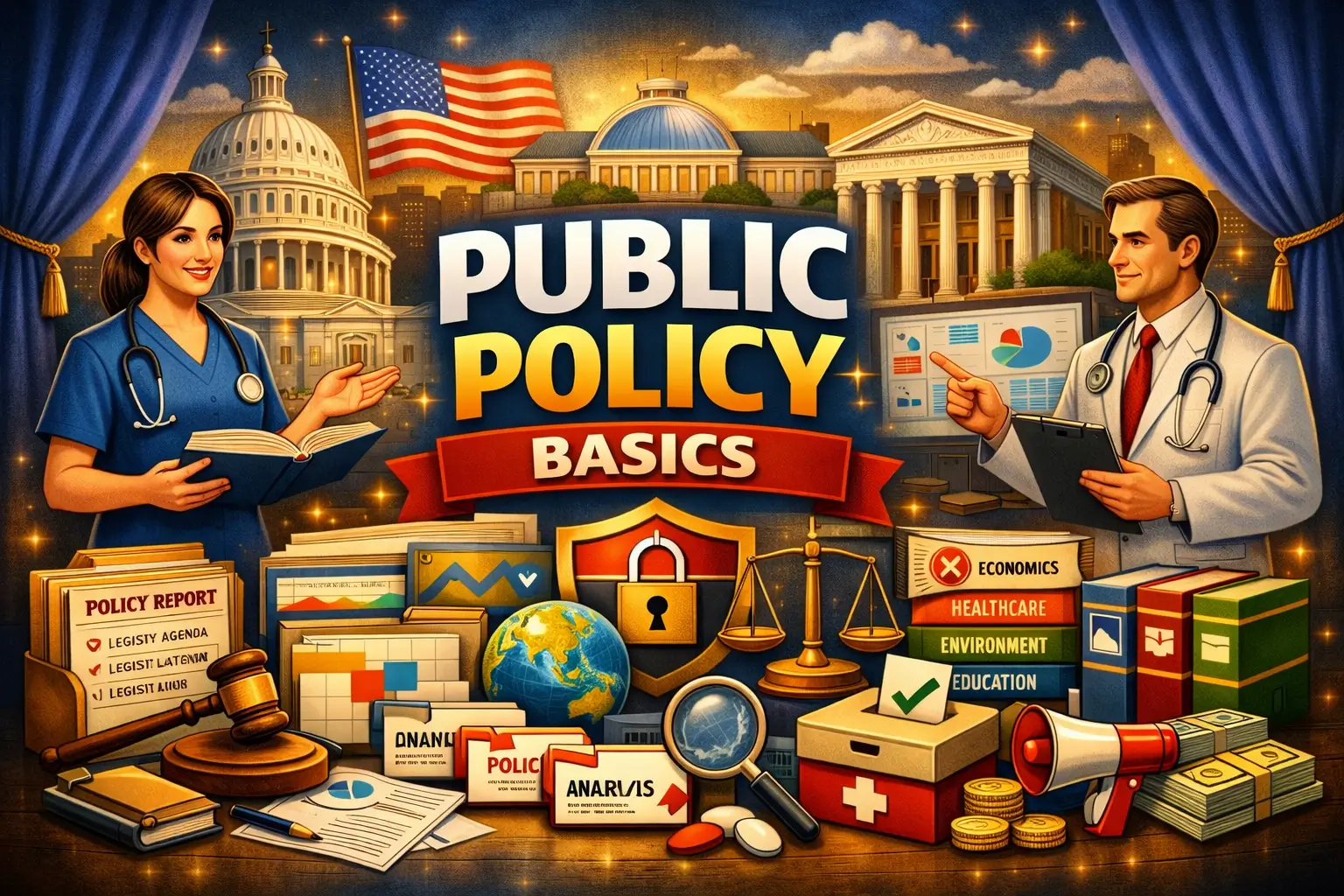
Public Policy Basics Course
The Public Policy Basics Course is designed to provide learners with a foundational understanding of how governments and institutions design, implement, and evaluate public policies. Public policy plays a crucial role in shaping society, influencing economic development, healthcare systems, education, infrastructure, and environmental governance.
This course introduces learners to the principles of public policy, policy-making processes, governance structures, policy analysis, public administration, and decision-making frameworks. Whether you are a student, aspiring civil servant, NGO worker, or public sector professional, this course provides essential knowledge for understanding how policies impact society.
Why Learn Public Policy Basics?
Public policy affects every aspect of daily life, from healthcare and education to transportation and environmental protection. Understanding how policies are created and implemented helps individuals participate more effectively in civic life and governance.
Learning public policy basics enables learners to analyze social issues, understand government decision-making, and contribute to policy development and evaluation. Additionally, policy skills are highly valuable in government roles, NGOs, research organizations, and international development agencies.
What You Will Learn
This course covers essential topics, including:
- Introduction to public policy
- Policy-making cycle and stages
- Government structure and governance systems
- Policy formulation and implementation
- Policy analysis fundamentals
- Public administration basics
- Stakeholders in policy development
- Social and economic policy overview
- Evaluation of public policies
- Ethics in public decision-making
Practical Learning Experience
Learners will explore real-world policy scenarios and understand how governments address public issues through structured decision-making processes. Through case studies and examples, participants will gain insights into how policies are designed, evaluated, and improved.
The course also highlights real governance challenges and how public institutions respond to societal needs.
Benefits of the Course
Completing the Public Policy Basics Course offers numerous benefits:
- Understand governance systems
- Learn policy-making processes
- Develop analytical thinking skills
- Improve understanding of public administration
- Gain insight into government decision-making
- Build foundation for civil service careers
- Enhance research and policy analysis skills
- Increase opportunities in public sector roles
Who Should Enroll?
This course is ideal for:
- Students of political science and social sciences
- Civil service aspirants
- NGO workers
- Public administration students
- Government employees
- Policy enthusiasts
- Researchers and analysts
- Development sector professionals
- Anyone interested in governance and society
No prior experience is required. The course is beginner-friendly.
Career Opportunities
After completing this course, learners can support or pursue roles such as:
- Policy Assistant
- Public Administration Support Staff
- Research Assistant (Policy)
- NGO Program Coordinator
- Government Project Assistant
- Governance Analyst (Junior level)
- Development Sector Associate
These roles exist in government departments, NGOs, think tanks, research institutions, and international organizations.
Certification
Upon successful completion of the Public Policy Basics Course, learners receive a certification demonstrating their understanding of governance systems, policy-making processes, and public administration fundamentals.
Conclusion
Public policy shapes the functioning of societies and governments. The Public Policy Basics Course equips learners with essential knowledge of governance, policy analysis, and decision-making systems. Enroll today to build a strong foundation in public policy and open doors to careers in government and development sectors.
9. FAQ SECTION
Q1. What is public policy?
Public policy refers to the decisions, actions, and plans made by governments to address public issues.
Q2. Who should take this course?
Students, civil service aspirants, NGO workers, and anyone interested in governance and policy-making.
Q3. Do I need prior experience?
No. This course is designed for beginners.
Q4. What topics are covered?
Topics include policy-making, governance systems, public administration, and policy analysis basics.
Q5. Why is public policy important?
It determines how governments solve social, economic, and environmental problems.
Q6. Will I learn policy analysis?
Yes. The course includes foundational policy analysis skills.
Q7. Is this useful for civil services?
Yes. It provides strong conceptual grounding for civil service preparation.
Q8. Are real-world examples included?
Yes. Case studies and policy examples are included.
Q9. Will I get a certificate?
Yes. A certification is provided after completion.
Q10. Is this course beginner-friendly?
Yes. It is designed for learners with no prior background.




Reviews
There are no reviews yet.