
Introduction
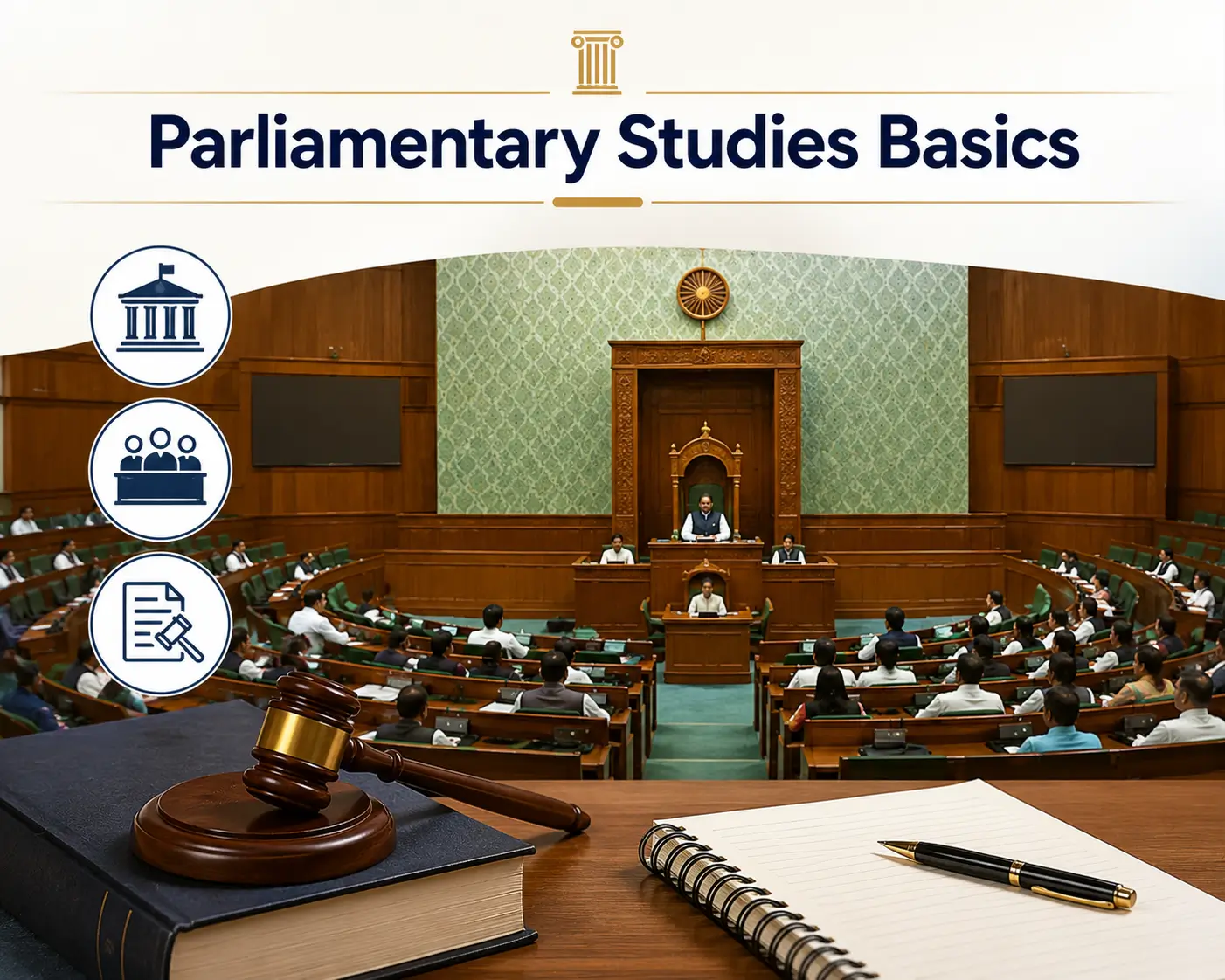
The Parliamentary Studies Basics Course is a comprehensive introductory program designed to help learners understand the structure and functioning of parliamentary democracy. As parliaments form the backbone of democratic governance, they play a crucial role in law-making and accountability. Therefore, learning parliamentary studies is highly important.
A parliament is a legislative body responsible for making laws and representing citizens. As a result, it ensures democratic governance and public representation.
Whether for academic learning or civic awareness, this course provides essential knowledge of parliamentary systems.
Course Overview
Modern democracies rely on strong legislative institutions. Therefore, understanding parliamentary systems is critical.
In this course, learners explore parliament structure, roles of members, legislative procedures, committees, debates, and voting systems. Additionally, participants gain knowledge of governance and political decision-making.
The course combines theoretical understanding with practical civic knowledge.
What You Will Learn
First, learners will understand the basics of parliament. Next, they will learn how laws are created and passed.
After that, learners will explore the roles of elected representatives. Moreover, the course explains parliamentary debates and decision-making processes.
Finally, participants will gain practical awareness of how democratic legislatures function.
Skills You Will Gain
- Parliamentary system understanding
- Legislative process knowledge
- Governance structure awareness
- Political system basics
- Law-making process understanding
- Democratic institution knowledge
- Critical thinking in governance
- Public policy awareness
- Civic responsibility skills
- Analytical thinking in politics
Additionally, these skills are valuable for students, civil service aspirants, and political learners.
Benefits of the Course
First and foremost, this course improves understanding of democratic systems. In addition, it enhances civic awareness.
Furthermore, learners gain knowledge of law-making processes. As a result, they become more informed citizens.
At the same time, parliamentary knowledge supports better understanding of governance.
Who Should Enroll?
This course is ideal for:
- Students
- Beginners
- Civil service aspirants
- Political science learners
- Teachers
- NGO workers
- Law students (basic level)
- Social studies learners
- Career changers
- Anyone interested in governance
No prior experience is required. Therefore, beginners can easily start learning.
Career Opportunities
After completing this course, learners may pursue roles such as:
- Parliamentary Research Assistant
- Policy Support Staff
- Civic Education Assistant
- Government Scheme Support Staff
- NGO Policy Assistant
- Legislative Support Assistant
- Administrative Support Staff
- Public Administration Assistant
- Governance Awareness Worker
- Political Research Intern
Moreover, these skills are useful in government offices, NGOs, and policy organizations.
Certification
Upon completion, learners receive a certification validating their parliamentary studies basics and governance knowledge. This certificate demonstrates readiness for entry-level policy and administrative roles.
Conclusion
In conclusion, the Parliamentary Studies Basics Course provides a strong foundation for understanding how democratic legislatures work. Overall, it helps learners develop civic awareness, analytical thinking, and governance understanding.
Moreover, it prepares individuals to understand law-making and parliamentary systems effectively. As a result, learners become more informed and responsible citizens.
Finally, whether for education or career growth, this course builds essential parliamentary knowledge for democratic participation.
FAQ Section
1. What is Parliamentary Studies Basics?
It is a course that teaches how parliament and law-making systems work.
2. Is this course suitable for beginners?
Yes, it is designed for beginners with no prior experience.
3. What topics are covered?
Parliament structure, law-making, and governance are covered.
4. Do I need experience?
No prior experience is required.
5. Will I get a certificate?
Yes, a certificate is provided after completion.
6. Who should take this course?
Students, civil service aspirants, and beginners should take it.
7. What skills will I learn?
You will learn parliamentary systems and governance basics.
8. Where are these skills used?
These skills are used in government, NGOs, and policy sectors.
9. Can this course help in getting a job?
Yes, it helps in administrative and policy-related roles.
10. What jobs can I get after this course?
You can work as Policy Assistant, Research Assistant, or Governance Support Staff.




Reviews
There are no reviews yet.